Shared experiences in the context of extreme violence: what is the Church’s role?

Over the past decades, both Peru and Colombia have experienced internal conflicts which involved extreme levels of violence in many regions and high loss of life. While the conflicts were political (pitting far left groups against the government and/or far right paramilitary groups) they directly impacted ordinary civilians and civil society, including churches.

In many cases, Christians, especially church leaders, were targeted for different reasons by the various armed actors. This directly affected freedom of religion or belief (FoRB) in those areas.

In both countries, the larger Church (composed of many different denominations) found itself looking for ways to respond to the conflict and especially how to support the churches, Christians and others living in conflict zones.

Continue reading “Shared experiences in the context of extreme violence: what is the Church’s role?”

FoRB in China: The UK needs to speak out


Prime Minister Theresa May’s first official visit to China, which begins today, is billed as an opportunity to boost trade with an important ally. But it will also take place against the backdrop of the country’s violations of fundamental human rights, including freedom of religion or belief.

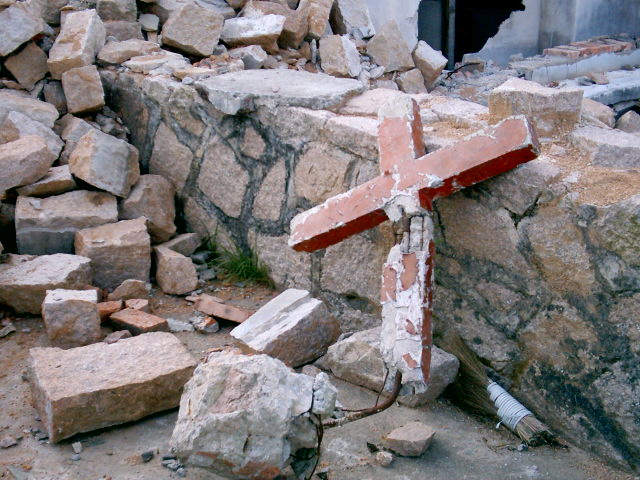
In the last month, Christians have been detained, and unregistered churches shut down or destroyed ahead of the implementation of revised Regulations on Religious Affairs, which strengthen state control over religious activities in China.

Unregistered churches, sometimes called house churches, are independent churches which have not registered with the state-sanctioned Three Self Patriotic Movement. The new regulations are due to come into force tomorrow, giving Mrs May a rare opportunity to speak directly to the Chinese government and publicly to reiterate the UK’s commitment to defending human rights.

Continue reading “FoRB in China: The UK needs to speak out”

The Freedom of Religion Law in Jharkhand, India: A recycled law that’s repressive on all counts

Religious conversion was criminalised in India’s Jharkhand State on 11 September with the introduction of the so-called ‘Freedom of Religion’ law, making Jharkhand the seventh State to introduce such legislations after Odhisa (1967), Madhya Pradesh (1968), Chhattisgarh (1968), Arunachal Pradesh (1978), Gujarat (2003) and Himachal Pradesh (2006).

Section 3 of the Jharkhand Freedom of Religion Act 2017 declares “no person shall convert or attempt to convert, either directly or otherwise, any person from one religion/ religious faith to another by the use of force or by allurement or by any fraudulent means, nor shall any person abet any such conversion.” The punishment includes a prison term of up to three years and/or a fine up to fifty thousand rupees (equivalent to about £580).

Continue reading “The Freedom of Religion Law in Jharkhand, India: A recycled law that’s repressive on all counts”

Guilty by Association: Increased Targeting of Family Members in Cuba

The Cuban government has a long-standing policy of targeting the children and other family members of church leaders and activists who it deems to be a problem; one of many tactics designed to ratchet up the pressure on them.

Religious leaders are increasingly standing up to government pressure and becoming bold in their efforts to defend religious freedom in the country, as the Cuban government’s Office for Religious Affairs (ORA) cracks down on unregistered religious groups and other groups that it perceives to be unsupportive of the government.

CSW’s latest report on freedom of religion or belief (FoRB) in Cuba reveals that the death of Fidel Castro in November 2016 failed to mark any significant improvements to FoRB in Cuba; instead, the arbitrary detention, harassment, restriction and surveillance of religious leaders and adherents has continued throughout the first half of 2017, as has the confiscation of church properties. In addition, several cases of family members of church leaders and activists singled out for harassment and discrimination have been brought to CSW’s attention in recent months.

Continue reading “Guilty by Association: Increased Targeting of Family Members in Cuba”

Eritrea Protest Vigil 2017

Three years ago, I found myself at the United Nations Human Rights Council (HRC), playing a game with an eight year old girl – I would say the name of an animal and she would draw it.  She was an Eritrean refugee and had come to the HRC with her parents as part of a delegation who were there to give testimony at a side event. Her entire family had been detained by the government, locked up with others in a shipping container. She shared memories of the entire place smelling awful, of being freezing cold at night and roasting hot during the day and of how she and her other siblings joked about which family member was covered with the most lice. A serious issue was turned into a game as their parents did  their best to shield their children from the full force of the horrors they were experiencing.

Continue reading “Eritrea Protest Vigil 2017”