Mexico’s Culture of Impunity Part 1: Mediation in lieu of justice

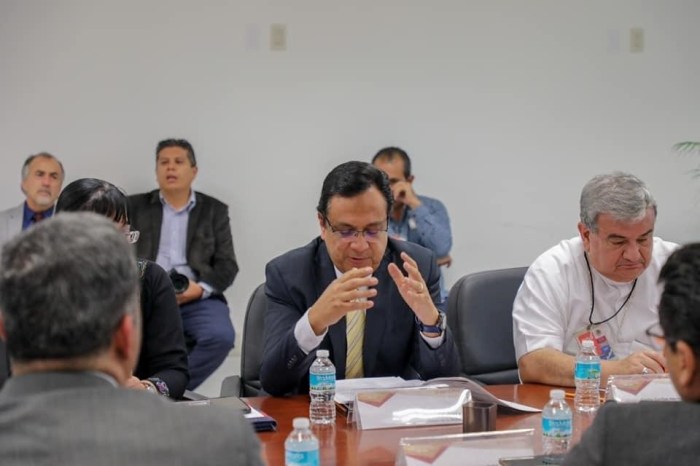
While Mexico’s drug trade is far from vanished, President Andrés Manuel López Obrador (AMLO) recently stated that “there is no longer a war.” He has a new strategy. The president says they are no longer trying to arrest drug lords, but instead want to look at the causes of violence.

“We have not detained the bosses [of criminal gangs] because this is not our main function. The government’s main function is to guarantee public security…What is important to me is lowering the number of homicides, robberies, that there are no kidnappings. This is what is essential! Not the spectacular, because we lost a lot of time in this and it resolved nothing.”

To achieve this, AMLO appears to be looking to religious groups.

Continue reading “Mexico’s Culture of Impunity Part 1: Mediation in lieu of justice”

‘Renounce your faith or leave’: The Ultimatum facing a number of Protestant families in Mexico

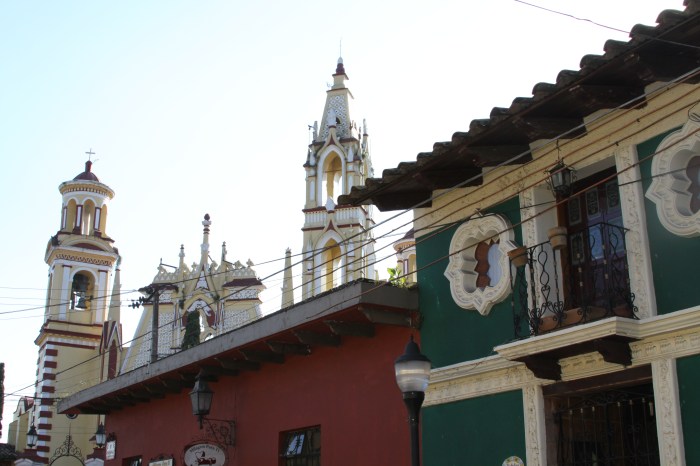
While the Mexican constitution provides strong protections for freedom of religion or belief (FoRB), moderate to severe violations of this right are regular occurrences in many parts of the country, particularly the states of Chiapas, Hidalgo and Oaxaca. Often these violations take the form of local authorities attempting to enforce conformity on religious minorities, for example, by denying access to basic services to Protestant families in majority Catholic villages.

CSW’s latest fact-finding visit to Mexico revealed a number of cases where Protestant families have been presented with an ultimatum to either renounce their faith or leave their village before a specific deadline.

To take one example, last year in Colonia Los Llanos in the San Cristóbal de las Casas Municipality, Chiapas, several Protestant families were forced to leave their village after they defied orders to renounce their religious beliefs. CSW also found evidence of similar experiences in two more communities in Chiapas and another in Oaxaca during the visit.

These ultimatums do not come out of nowhere and tend to follow years of religious tension.

Tensions include but are not limited to threats, cutting off basic services and attempts to force minority groups to pay fines or participate in religious activities. In another example, just last month community leaders in another part of Chiapas refused to allow the burial of a Protestant woman in the village cemetery and her family were forced to bury her in a nearby city.   The Mexican government regularly fails to act to reduce such tensions or to stop the deliverance of ultimatums. A culture of impunity surrounds the local authorities responsible for these violations of FoRB.

Continue reading “‘Renounce your faith or leave’: The Ultimatum facing a number of Protestant families in Mexico”

Justice Delayed is Justice Denied

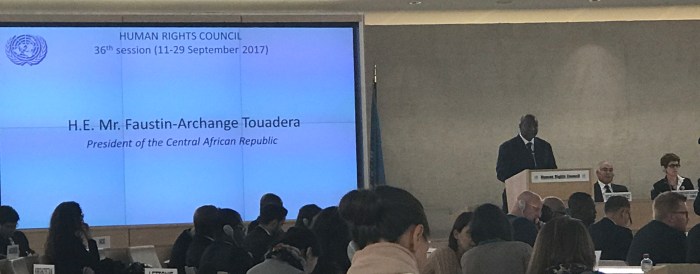
Next week the United Nations’ (UN) Human Rights Council (HRC) is holding a high level dialogue to assess the situation in the Central African Republic (CAR). The last time the HRC considered the situation of CAR was in September 2017, when President Faustin-Archange Touadéra made an unexpected appearance, and addressed member states, nongovernmental organisations (NGOs) and human rights mandate holders.

Christian Solidarity Worldwide (CSW) was present during this address and noted the positive engagement CAR maintains with the UN’s human rights mechanisms, including by granting access to the Independent Expert on CAR, Ms. Marie-Therese Keita Bocoum.

End of transition was not the end of the security crisis

During his speech, President Touadéra noted that the end of the transitional government and the return to democracy did not bring an end to the security crisis in CAR. Since November 2016, armed groups that were once part of the Seleka Alliance have clashed in the north and eastern regions. This violence has been characterised by the targeting of civilians and destruction of civilian infrastructure leading to mass displacement.

Continue reading “Justice Delayed is Justice Denied”

Burma: Stop the Block on Aid

No one should be denied food or medicine on account of their ethnicity or religion, but that is what is increasingly happening to some people in Burma. A humanitarian crisis is emerging because in some parts of the country, the authorities are blocking aid access. In other areas, international agencies are cutting aid. Blocks and cuts combined are resulting in displaced people who have fled conflict going hungry at night. That is why we have launched our new campaign: “Real Change”.

When we talk about refugees today, we think of Syria and Iraq. But Burma remains a country where significant numbers of people are fleeing conflict and persecution. Thousands escape to other countries, but others are internally displaced. Over 120,000 in Kachin and northern Shan states, and over 130,000 Rohingyas in Rakhine state.

Continue reading “Burma: Stop the Block on Aid”

The Power of Personal Testimony: A Mexican Delegation Visits Congress

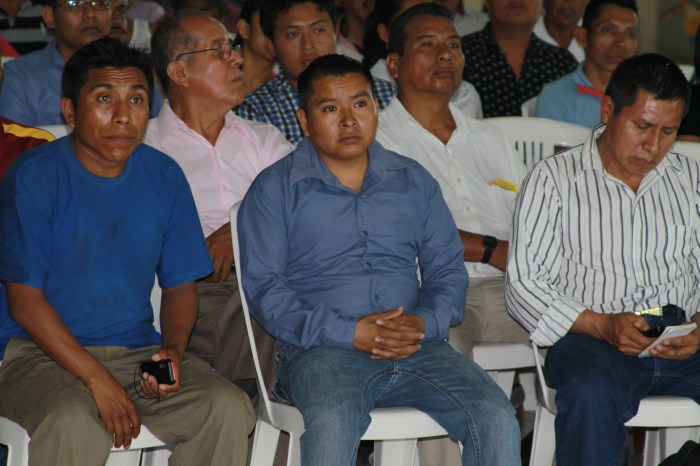
Casto Hernandez Hernandez and Fidel Lopez Hernandez are from indigenous ethnic groups in Mexico, speak Spanish as second language and live in remote, subsistence farming communities. Both were forcibly displaced because of their religious beliefs. This year, they made an unprecedented trip to Washington DC, facilitated by CSW, to give their testimony to Congress in person – the first time victims of similar offences from Mexico have done so.

Their stories are depressingly similar. Fidel Lopez Hernandez was one of a group of 47 protestant Christians violently expelled from their village by the Roman Catholic majority in July 2012. In March 2015 the group were able to return to their homes and only then under an agreement which included a fine of 10,000 pesos per family (equivalent to 530 US dollars). Additionally, in their absence, the villagers had used their homes as rubbish dumps and the government did not follow through with promised funds to restore their houses.*

Casto’s case will be familiar to regular readers of this blog; read more about him here and here. Casto and his cousin were illegally arrested in their town in Hidalgo State in March 2015 by the local authorities and held for 30 hours with no water, food or access to sanitary facilities in an effort to pressure them to renounce their faith. Although an agreement established by the Hidalgo State Public Ministry allowed the men to return home in February 2016, they, like Fidel, are still subject to illegal restrictions on their right to freedom of religion or belief (FoRB) in their hometown.

Continue reading “The Power of Personal Testimony: A Mexican Delegation Visits Congress”