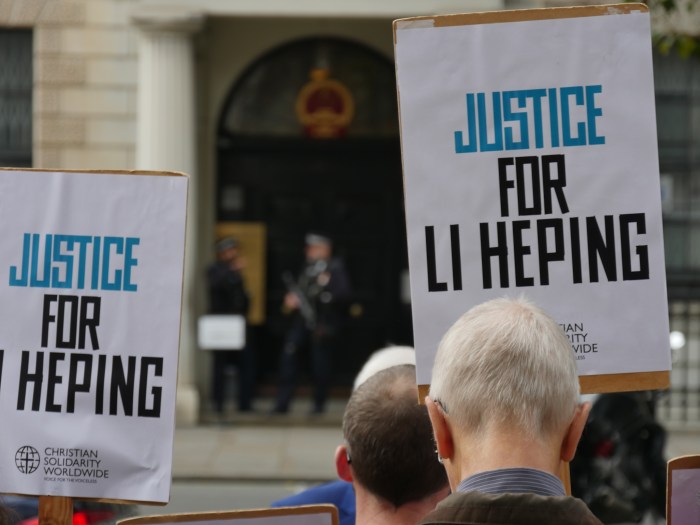
Li Heping’s Release – A Moment to Celebrate or a Continuing Case of Concern?

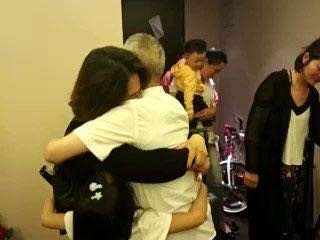
Li Heping’s reunion with his family on 9 May 2017 was a moment for celebration; the celebration of an innocent man’s reunion with his long-suffering family and the celebration of the end of a period of torture, interrogation and imprisonment. But the joy of Li Heping’s reunion with his family is tempered by continuing concerns for his safety, and the injustice of his situation.
Who is Li Heping?

Li Heping is one of China’s most experienced and high profile human rights lawyers. He began working on sensitive cases around 2002 and is well known for defending the human rights of religious minorities, including Christians and Falun Gong practitioners, as well as activists and victims of torture.

His work on these cases led to a confrontation with the state. A Chinese security agent reportedly once told him that, in the eyes of Beijing, Li had become “more dangerous than Bin Laden”. In September 2007, Li was abducted, stripped and tortured by security forces. He then had his lawyers’ license revoked in 2009, and continued to be consistently monitored.

Continue reading “Li Heping’s Release – A Moment to Celebrate or a Continuing Case of Concern?”
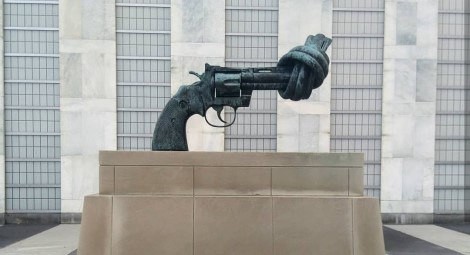

From Pledges to Action: Human Rights Defenders play a vital role in advancing justice

Moving from official commitments to tangible changes people’s lives remains a key challenge in the realisation of human rights. I am reminded of the wonderful quote from African-American civil rights campaigner, Philip Randolph, who said, “Freedom is never granted; it is won. Justice is never given; it is exacted.”

“Freedom is never granted; it is won. Justice is never given; it is exacted.” – Philip Randolph

This quote draws attention to the importance of promoting human rights while reminding us that very rarely do human rights “just happen”; they are regularly contested, challenged and often only progressed through the active work of individual human rights defenders (HRDs) and NGOs who promote and defend human rights through activities such as advocacy, campaigning, demonstrations, and human rights journalism – whether paid or unpaid and regardless of geographical location.

The right and responsibility to promote human rights – either individually or in association with others – is the cornerstone of all human rights work.

Continue reading “From Pledges to Action: Human Rights Defenders play a vital role in advancing justice”

In the Lead up to the G20 Summit, Questions Must be Asked About the Direction China is Taking.

When leaders of the G20 nations arrive in Zhejiang Province, China, next week for the G20 summit, they will be greeted by a different skyline than they might have seen five years ago.

The sky scrapers and shopping malls that have become the hallmark of China’s phenomenal economic growth will still be there, but the bright red Christian crosses which were once just as much a feature of Zhejiang have been taken down.

Removal of crosses in Zhejiang Province

Hundreds of crosses have been removed by the authorities since early 2014, as part of a campaign allegedly introduced to rid the province of structures which violate building regulations. Under draft regulations, crosses now have to be flat against outer walls, and their size and colour are restricted. The authorities have sometimes employed violent tactics in the face of protests by church members. Christian leaders who have opposed the cross removals through letters or peaceful gatherings have been arrested and accused of economic crimes.

It may be no coincidence that the site of the cross removal campaign is the same province selected to host the G20.

Continue reading “In the Lead up to the G20 Summit, Questions Must be Asked About the Direction China is Taking.”

The Lawyers That Were Left

It has been a year since over 300 human rights lawyers, activists, as well as those connected to them (including their friends and family), were detained by the Chinese government. That’s equivalent to one person harassed or disappeared every day since last July. Some of these lawyers have since vanished into China’s prison system. Others were released, but have lived with the threat of re-arrest hanging over them ever since.

Continue reading “The Lawyers That Were Left”

Interview with a Sri Lankan Human Rights Advocate – Part 1

Patterns of discrimination against religious minorities

CSW spoke to a human rights advocate in Sri Lanka whose identity for security reasons has been withheld. This post has been edited for clarity.

Q: Could you comment on religious extremism in Sri Lanka?

A: A recent surge of religious extremism in Sri Lanka began sometime in 2012 during the tenure of the previous government, with the emergence of extremist groups such as Bodu Bala Sena (Buddhist Force Army), or the Sinhala Ravaya, or Hela Bodu Pawura. These groups emerged after the ethnic war, which ended in May 2009. These extremist groups led violent attacks against religious minorities. Most violent attacks were led with impunity and tacit approval. The judiciary was also very much biased.

For example, there was one particular case that was filed against the General Secretary of the Bodu Bala Sena. There was video-document evidence submitted in the High Court of Colombo in that particular case. Even after video evidence was submitted, the General Secretary was released, and the case came to a settlement. The video evidence was not taken into consideration by the court – and this is the High Court of Colombo. That was [how] the situation used to be in Sri Lanka. These Buddhist extremist groups also led a lot of hate campaigns, against Muslim minorities as well. They also used the media as a tool to lead these hate campaigns. And even when they led violent attacks, they also used media to portrayed a biased attitude of the minority victim who actually got attacked rather than the perpetrators themselves.

Continue reading “Interview with a Sri Lankan Human Rights Advocate – Part 1”