FoRB on the Frontlines: Under threat of violence

Nehemiah Thumbnail USE

In the run-up to Human Rights Day on 10 December and the 20th anniversary of the UN Declaration on Human Rights Defenders on 9 December, CSW has been speaking with HRDs across South Asia to find out what it means to be a FoRB defender in the region.

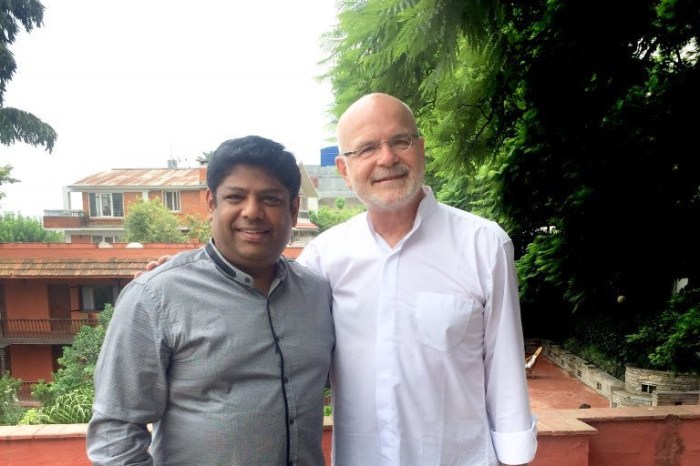
Nehemiah Christie is a human rights defender working in India:

“My experience as a human rights and FoRB defender in South India has worsened ever since the Modi government came to power. With the BJP relying on the backing of Hindu fundamentalist groups, the threat to minorities has increased, especially with regard to Christians in India. In Tamil Nadu, where I and many others work on the front line defending people’s right to freedom of religion and belief (FoRB), we have faced extreme hostility.

HRDs here have been shot, raped, and threatened by both state and non-state actors. Threats are often perpetuated by police and other authorities trying to silence our voices by labelling us as anti-national elements working against the interests of India. Continue reading “FoRB on the Frontlines: Under threat of violence”
Video Footage Shows Stark Reality of Physical attacks on India’s Religious Minorities

Recent years have seen a worrying, increase in attacks against religious minorities in India. Even as the country marks the 68th anniversary of the constitution, which guarantees the freedom to profess, practice and propagate religion, there is evidence that there has been a dramatic rise in tensions between religious groups, due in large part to the validation of Hindu nationalism propagated by the ruling Bharatiya Janata Party (BJP) party, guided by the Rashtriya Swayamsevak Sangh  (RSS), its ideological wing.

Recent video footage obtained by CSW of a physical attack against two Christians portrays the stark reality for many religious minorities in India today.

VIDEO: Two church leaders from Full Gospel Pentecostal Church in Kadamalaikuntu, Tamil Nadu are seen here being threatened, ridiculed and forcefully detained by six men on motorbikes as they attempted to leave a village after distributing Christian tracts. They also had sacred ash forcefully applied on them.

Continue reading “Video Footage Shows Stark Reality of Physical attacks on India’s Religious Minorities”

Latent Justice: The Unfinished Gujarat Story

“The Gujarat Carnage 2002, is certainly one of the bloodiest chapters of post-independent India. The painful reality is, that those responsible for it, are now at the helm of power in India” – Father Cedric Prakash (Human Rights Activist)

Confronting past crimes is unsettling, particularly when the perpetrators continue to enjoy political immunity. Fifteen years ago on 28 February 2002, violence in Gujarat, India covered the news headlines as an estimated 2,000 Muslims were massacred over several months across 16 districts in the country.

Continue reading “Latent Justice: The Unfinished Gujarat Story”

India: Striving for Hindu rashtra at the expense of democracy

Recognise that restrictions on public freedoms, extreme inequalities and the mainstreaming of hate around the world are “shearing off the protections that maintain respect”, the High Commissioner for Human Rights, Zeid Ra’ad Al Hussein pleaded with Member States at the 32nd session of the Human Rights Council (HRC).

This sentiment is usually associated with states experiencing severe human rights violations, but the remark is equally relevant to states where human rights violations take place but appear less visible and fail to make news headlines.

The world’s largest democracy

The words ‘largest democracy’ are synonymous with India as a nation state with an electorate of 1.25 billion people and growing. The choice of the Bharatiya Janata Party (BJP) to lead the country may have come as a result of Modi’s election promises of a market orthodoxy for economic revival and open trade.

As such, any proposition that religious freedom in India is deteriorating is deflected by the ‘democracy’ rhetoric despite research showing that understanding freedom of religion or belief is good for business; it comes as no surprise that this defence is readily used by those who have trade and business interests in India, thus casting a cloak of invisibility about the violence against minorities based on religious grounds.

Continue reading “India: Striving for Hindu rashtra at the expense of democracy”

The Elephant in the Room: Raising Human Rights in Bilateral Talks

Since October 2015, the UK has hosted a state visit for the President of China and the first official UK visits of the President of Egypt and the Prime Minister of India.

While it is the responsibility of any government to foster good bilateral relationships, this should include full and frank discussions about human rights. The Conservative party committed to this in its 2015 manifesto where it stated:

“Our long-term security and prosperity depend on a stable international system that upholds our values… We will stand up for the freedom of people of all religions – and non-religious people – to practise their beliefs in peace and safety, for example by supporting persecuted Christians in the Middle East… and we will continue to support universal human rights.”  2015 Conservative Party Manifesto

During these visits, CSW made calls for the Prime Minister and his Government to honour their manifesto commitment and to raise the religious freedom situation in all three countries as part of bilateral talks. The Government was disappointingly quiet on human rights during all three visits, prompting many to question whether trade was being prioritised above human rights.

Continue reading “The Elephant in the Room: Raising Human Rights in Bilateral Talks”