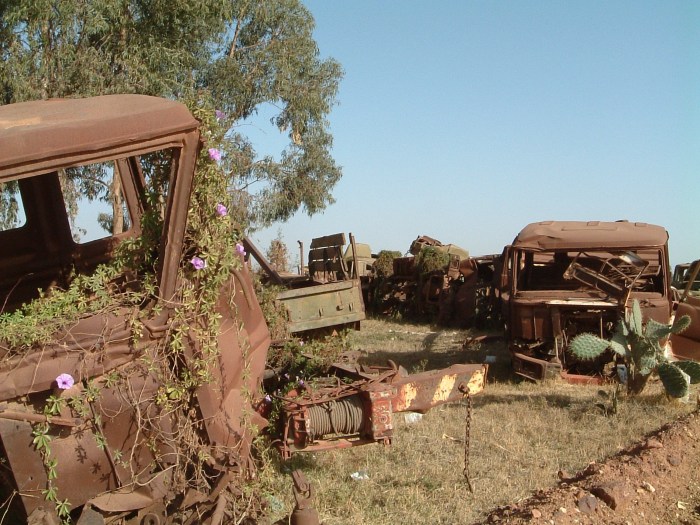
A thick layer of dust coats everything inside the Eritrean embassy in the Ethiopian capital, which was unlocked this week for the first time since 1998. Photos of this ‘time capsule’ were published by the BBC, which, along with the world’s media, is charting the remarkable thaw in relations between Eritrea and Ethiopia. The two nations went to war in 1998 but maintained a war footing due to Ethiopia’s refusal to allow demarcation of their common border, in accordance with a 2003 ruling.
Continue reading “Does a thaw in relations between Eritrea and Ethiopia offer hope for Christians?”Tag: prison
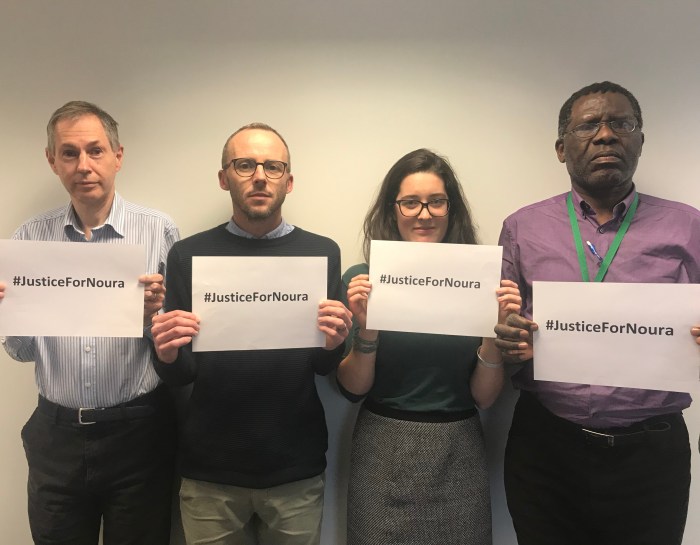
Justice for Noura, Justice for Sudanese women
A petition is circulating for Noura Hussein, a young Sudanese woman, to receive clemency after she was sentenced to death by hanging by a court in Khartoum last week.
Noura was charged with pre-meditated murder after she stabbed and killed a man who raped her six days after she was forced to marry him.
Her case has brought to light the legal discrimination that women in Sudan face regularly. The name of the person being charged may change, but the oppressive laws that discriminate against women of all religious and ethnic identities remain in place.
Four years ago the case of Meriam Ibrahim, a Sudanese Christian woman, caused international outcry after she was sentenced to death for apostasy and adultery. Noura’s case has yet to garner the same level of attention.
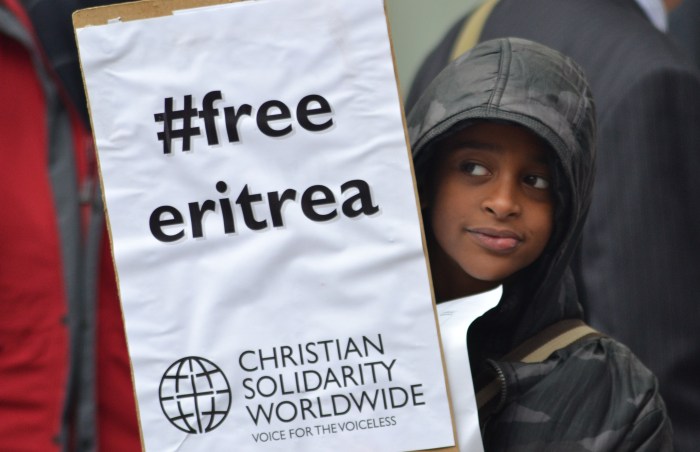
Continue reading “Justice for Noura, Justice for Sudanese women”Thousands of Eritreans of all faiths and none are detained without charge or trial in Eritrea. Join us as we protest for change.
Germano Nati Gojo, an Eritrean politician, was arrested at his home by security agents as he listened to the radio on his veranda. One agent stood outside the gate. The other entered and said: “Sir, we need you on a work-related issue”. Saying nothing, Germano Nati Gojo stood up, went to change his clothes and left with them. His two younger children, then aged 16 and 12, witnessed this. The family has not seen or heard from him in 17 years, despite inquiring.
His eldest son, Yona Germano Nati, addressed the UN Human Rights Council in Geneva in March 2018. He spoke of how his father had joined the struggle for independence of Eritrea in 1976, shared the story of his father’s enforced disappearance in September 2001, and described their poignant last meeting prior to the arrest, during which his father expressed his readiness to be jailed alongside his pro-reform colleagues who are now known collectively as the G 15.
Continue reading “Thousands of Eritreans of all faiths and none are detained without charge or trial in Eritrea. Join us as we protest for change.”The UN Belongs to All of Us: Chinese Prisoners of Conscience Speak Out
Welcome to the United Nations. It’s your world.
Until recently, when you accessed the United Nations (UN) website, these words would appear. They’re still used on some webpages, and the sentiment behind them still stands.
The UN is often the subject of criticism, and its flaws are well-documented, yet it remains one of the most important arenas for raising human rights concerns, including the right to freedom of religion or belief.
Three times a year, in Geneva, Switzerland, the UN Human Rights Council comes together and UN staff, member state delegations and non-governmental Organisations (NGOs) all rub shoulders in meetings, formal sessions and – frequently – impromptu chats over coffee and in canteen queues.
On the agenda are some of the most serious human rights situations in the world.
This is also an opportunity for NGOs like Christian Solidarity Worldwide (CSW) to organise side events running parallel to discussions at the Council, where victims of human rights violations, as well as experts and activists, can present their cases in an open forum. In March 2018, CSW hosted one of its first side events at the UN Human Rights Council since obtaining ECOSOC Consultative Status: an opportunity to discuss some of the most severe and complex challenges to religious communities in China.
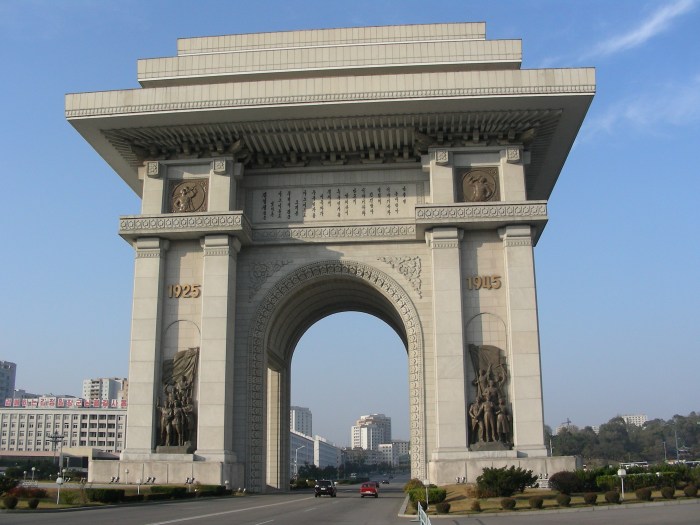
Continue reading “The UN Belongs to All of Us: Chinese Prisoners of Conscience Speak Out”North Korea A Decade On: The Regime has not changed, but the people have.
A decade ago, Christian Solidarity Worldwide (CSW) published one of the first comprehensive reports on North Korea’s human rights disaster, with the conclusion that it amounts to crimes against humanity.
North Korea: A Case to Answer, A Call to Act was also one of the first reports to call on the United Nations to establish a Commission of Inquiry to investigate. Initially, we were almost alone in making this call – a voice crying in the wilderness, dismissed by some for pursuing an action that, it was predicted, would never happen. We were banging our heads against a brick wall, some said. We took the view that if enough of us bang our heads for long enough, we might dislodge some bricks.
Four years later, other human rights organisations were making the same call, and we founded the International Coalition to Stop Crimes Against Humanity in North Korea, together with over forty other organisations from around the world, to campaign for a UN inquiry. In early 2013 the UN High Commissioner for Human Rights added her support to this call, and a few months later the UN Human Rights Council established an inquiry. What some said could never be done was happening.
Continue reading “North Korea A Decade On: The Regime has not changed, but the people have.”