The Lawyers That Were Left

It has been a year since over 300 human rights lawyers, activists, as well as those connected to them (including their friends and family), were detained by the Chinese government. That’s equivalent to one person harassed or disappeared every day since last July. Some of these lawyers have since vanished into China’s prison system. Others were released, but have lived with the threat of re-arrest hanging over them ever since.

Continue reading “The Lawyers That Were Left”

From the Darkness into the Light: the Hope for Justice in North Korea

Today, marching, singing and dancing will flood the capital of one the most notoriously secretive and closed nations in the world. 15 April is the “Day of the Sun” in North Korea, one of the most important national holidays in the country because it venerates the late founder and perpetual leader, Kim Il-Sung.

Despite the awesome displays of colourful dance events and firework displays to celebrate Kim Il-Sung’s perceived achievements in creating the ‘revered’ nation, the reality is far from being a day in the sun, but more a descent into darkness.

The ‘Great’ Leader Who Founded a Despotic Regime

Kim Il-Sung, the ‘Father’ of North Korea, was highly instrumental in establishing one of the most authoritarian regimes in the world. Between the late 1940s and early 1990s he oversaw the creation of a country ruled by fear. The Workers’ Party he founded crushed dissent, abducted foreign nationals, created an extremely discriminatory and hierarchical ‘songbun’ caste system, and forcibly detained hundreds of thousands into a hidden prison system, which still subjects North Koreans to forced labour, torture and even execution. Both his son, Kim Jong-Il, and his grandson, Kim Jong-Un have continued the brutal legacy.

Continue reading “From the Darkness into the Light: the Hope for Justice in North Korea”

The Courage of Cuba’s Ladies in White

Every Sunday Cuba’s Ladies in White (Damas de Blanco, in Spanish) have been forcibly and often violently prevented from attending Sunday morning services. Every Sunday since the group was formed in 2003, the women attend (or at least attempt to attend) Sunday Mass dressed in white to symbolise peace and walk through the streets in silent protest afterwards.

The Ladies in White movement was formed in response to the Black Spring in 2003 – a mass crackdown by the Cuban government on dissidents and journalists. Since 2010, all of the Black Spring prisoners have now been released. However, political prisoners remain in Cuba and the Ladies in White, a movement largely comprised of wives and other female relatives of former and current political prisoners remain active.

As the world marks International Women’s Day on 8 March, CSW commends their courage and peaceful protest, which saw them awarded the European Parliament’s Sakharov Prize for Freedom of Thought in 2005.

Continue reading “The Courage of Cuba’s Ladies in White”

Mexico: Going Home – Casto’s Case Update

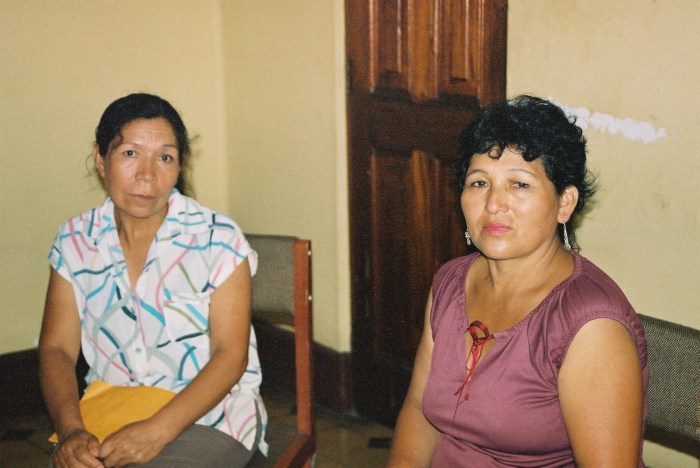
                                               Pictured: Casto Hernández Hernández (right) with his pastor

Casto Hernández Hernández and his cousin Juan Placido Hernández Hernández were first imprisoned and then forcibly displaced in March 2015 after they refused to renounce their Protestant beliefs. Despite the open admission by a village leader in early court hearings that he had attempted to force the men to change their religious beliefs, the case dragged on for almost eleven months, with the Public Ministry repeatedly cancelling or postponing hearings [See more].

Agreement on religious freedom allows the men to return home

On 2 February, the Public Ministry in the state of Hidalgo, Mexico, reached a decision and put in place an agreement between Casto Hernández and Juan Placido Hernández and authorities from the village of Chichiltepec.

The agreement – drafted by the lawyers affiliated with CSW’s Mexican partner Impulso 18 and endorsed by the Public Ministry – guarantees total freedom of religion or belief (FoRB) in the village of Chichiltepec and Casto and Juan Placido’s right to return, with their full religious rights recognised.

According to the director of Impulso 18, Jorge Lee, the village authorities came to the meeting prepared to fight. When they realized they were ‘one step away from going to jail’, however, they changed their position, signed agreement and promised to uphold religious freedom in Chichiltepec.

While none of the village authorities spent any time in prison despite their criminal actions, we, and most importantly Casto and Juan Placido, feel that this agreed outcome is the right course of action.

It establishes their constitutional rights in a very clear way but also allows them to re-join their community in as harmoniously a way as possible. The concern was that if the authorities were thrown in prison, the levels of hostility would be so high, and the rupture in the indigenous community network so profound that it would be impossible for the two men to ever return home.

Continue reading “Mexico: Going Home – Casto’s Case Update”