NGOs in Partnership with International Parliamentarians

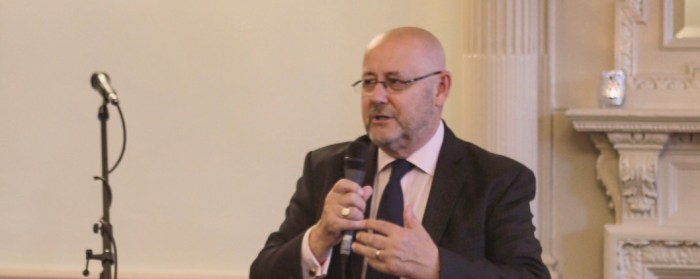
LONG READ: “NGOs in Partnership with International Parliamentarians” is the speech delivered by CSW’s Chief Executive Mervyn Thomas at the UK’s Foreign and Commonwealth’s (FCO) Conference,  ‘Preventing violent extremism by building inclusive and plural societies: How freedom of religion or belief can help’, 19 -20 October 2016. 


As we’ve already heard today, the fundamental human right to Freedom of Religion or Belief (FoRB), embedded in Article 18 of the International Covenant on Civil and Political Rights is one that at first can appear daunting and difficult to raise. Professor Heiner Bielefeldt, UN Special Rapporteur on FoRB has said that “it is the most challenging of all human rights, it is the spice in the soup of human rights.” However, although daunting it is extremely important to intensify our joint efforts to promote it.

The latest information from the Pew Research Center stated that in 2014, 74% or roughly ¾ of the world’s population, live in countries with either high or very high restrictions on religious freedom. That means that over 5.1 billion people in this world are not able to fully recognise their inalienable human right to practice or change the religion or belief system of their choice.

Furthermore, FoRB is part and parcel of peace and stability; a cornerstone of democratic societies, and it can provide an important antidote to rising violent extremism. High-levels of discrimination based on religion or belief and FoRB restrictions can undermine peaceful development and in fact increase the grounds for the rise of extremism.

It is clear that some of the most significant foreign affairs challenges the international community are currently grappling with, involve violent extremism, and many of the challenges are deeply rooted in violations of the right to freedom of religion or belief.

Continue reading “NGOs in Partnership with International Parliamentarians”
North Korea and Human Rights: A State of Denial

“There is almost complete denial of the right to freedom of thought conscience and religion as well as the right to freedom of opinion, expression, information and association.” That was the conclusion reached by the United Nations commission of inquiry into human rights in North Korea over two years ago. Indeed, the UN inquiry went further, noting that the regime in North Korea “considers the spread of Christianity a particularly severe threat” and as a result, “Christians are prohibited from practising their religion and are persecuted”. Severe punishments are inflicted on “people caught practising Christianity”.

Loyalty to the Regime is expected

Our new report – Total Denial: Violations of Freedom of Religion or Belief in North Koreaprovides further evidence that freedom of religion or belief is a human right that is “largely non-existent” in the country. The ruling Kim dynasty is deified. Pictures of the three generations of dictators – Kim Il Sung, Kim Jong-Il and now Kim Jong-Un – are displayed in private homes and public spaces, cleaned daily and inspected regularly by the authorities to ensure they are in the best condition. Allowing one of these photographs to decay or gather dust is akin to a blasphemy. Anything less than total loyalty to the ruling family is severely punished.

Continue reading “North Korea and Human Rights: A State of Denial”

The Refugee Crisis: “What caused them to flee in the first place?”

On World Refugee Day, CSW explores one of the major root causes of the refugee crisis.

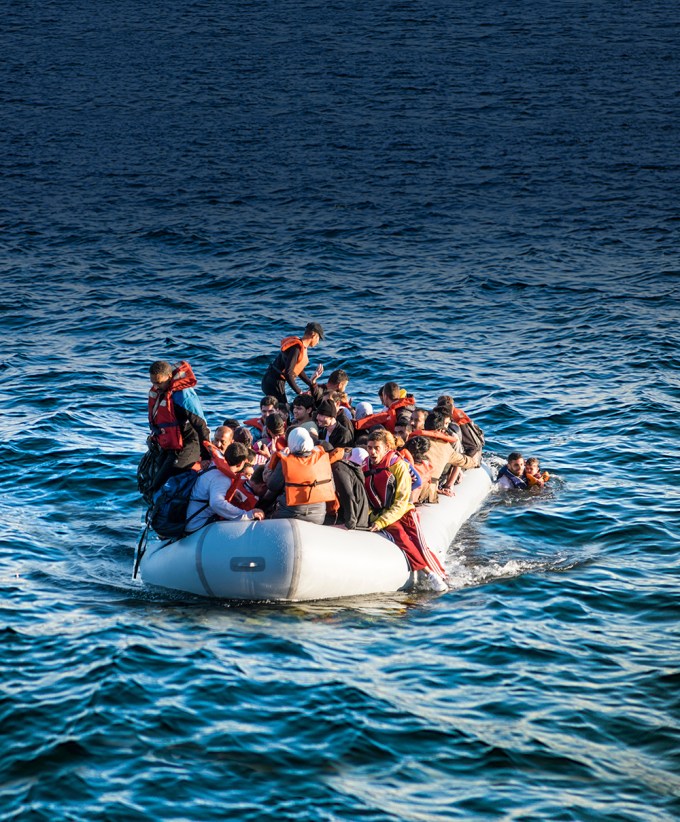
Syrian refugees cross from Turkey to land on a beach on the Greek island of Lesvos. Image shot 06/2015. Exact date unknown.
Syrian refugees cross from Turkey to land on a beach on the Greek island of Lesvos.

The current refugee crisis has become a major news story with much of the focus placed on asking, “Where will they go?”

A seeming backlash against the unprecedented influx into Europe in particular has led some to respond: “Anywhere but here”, and has unleashed what UN High Commissioner for Human Rights Zeid Ra’ad Al Hussein has termed  “widespread anti-migrant rhetoric”, which in turn has fostered “a climate of divisiveness, xenophobia and even… vigilante violence.”

Yet very few people have asked, “What caused them to flee in the first place, and how can we best address this?”

One key reason is the increase in violations of the right to freedom of religion or belief (FoRB) around the world. *Persecution and violence targeting religious communities is resulting in exceptionally high levels of population displacement, contributing to the worldwide refugee crisis.

Persecution and violence targeting religious communities is resulting in exceptionally high levels of population displacement, contributing to the worldwide refugee crisis.”

These violations often take place in societies where other human rights are being abused and in situations generally characterised by an absence of rule of law, corruption, economic disparity and authoritarian rule.

Issues of race, ethnicity, political opinion and gender usually intersect with religious persecution; consequently, religion-based asylum claims often include other grounds as well.

Religious persecution takes many forms

Continue reading “The Refugee Crisis: “What caused them to flee in the first place?””

We Must Use Every Creative Tool To Prise Open North Korea

Exactly two years ago, on 22 February 2014, the United Nations (UN) finally shone a light on the darkest corner of the world, North Korea. Its year-long Commission of Inquiry, chaired by Australian judge Michael Kirby, published a damning report concluding that “the gravity, scale and nature” of the horrific human rights violations in North Korea “reveal a State that does not have any parallel in the contemporary world” and that the catalogue of abuses amounting to crimes against humanity should lead to a referral to the International Criminal Court (ICC).

International community calls for justice and concrete action

In January 2016, the UN Special Rapporteur on human rights in North Korea, Marzuki Darusman, said it is “now imperative to pursue criminal responsibility” of the North Korean leadership. “Not much has changed in the country almost two years after the report of the Commission of Inquiry,” he added.

The European Parliament also passed a resolution calling for an end to impunity and for those responsible for crimes against humanity to be brought before the ICC and be subject to targeted sanctions.

Continue reading “We Must Use Every Creative Tool To Prise Open North Korea”

Freedom of Religion or Belief in Full

Three quarters of the world’s population lives in countries with severe restrictions on the right to freedom of religion or belief (FoRB) – in fact, it’s one of the most widely-violated human rights in the world.

This blog is all about FoRB; how to better understand the different aspects of this often-overlooked right, the situation in countries where this and other rights are violated – and the perpetrators and victims at the centre of it all.

Expert analysis by members of CSW’s advocacy team, who work in over 20 countries across Asia, Africa, the Middle East and Latin America, will put a spotlight on FoRB issues in the news and CSW’s research.

Continue reading “Freedom of Religion or Belief in Full”