For Some, Yellow Butterflies Symbolise Hope in the Midst of Colombia’s Uncertainty

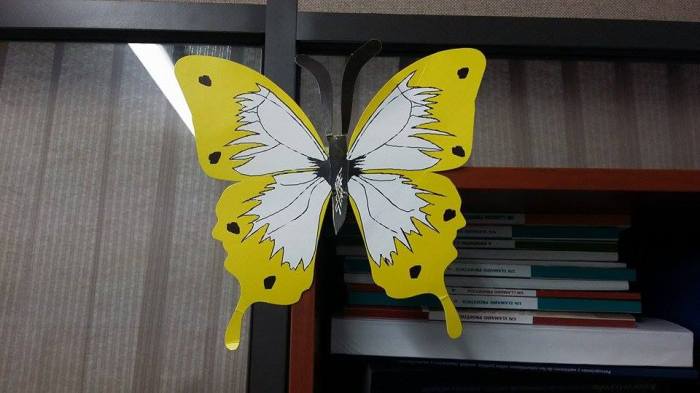
Yellow butterflies covered every wall in the office of one of our partner organisations in Colombia.

The first butterfly was cut out and hung on a wall immediately following the signing of the peace agreement between the government of Colombia and the Revolutionary Armed Forces of Colombia (FARC) on 26 September 2016 in Cartagena on the northern coast of the country.

In their speeches on this momentous occasion, both President Juan Manuel Santos and Timochenco, the commander and Chief of the FARC, referred to the yellow butterflies from celebrated Colombian author Gabriel Garcia Marquez’ famous novel ‘One Hundred Years of Solitude’: Gabriel Garcia Marquez is remembered for his love of yellow butterflies and flowers, which signify that nothing bad will happen.

“The war is over, we are starting to build peace” – Timochenko, Commander and Chief of the FARC

During his speech, Timochenko, stated, “war is over, we are starting to build peace’’ followed by a reference to a character in the novel, Mauricio Babilonia, who is constantly followed by yellow butterflies wherever he goes, as a symbol of infinite love and hope. Ivan Marquez, the FARC’s lead negotiator stated at a national FARC conference, “Tell Mauricio Babilonia he can release the yellow butterflies,” as a direct quote from the novel.

An Unexpected Outcome

These butterflies were a clear example of the hopeful expectancy that surrounded me in Bogota. Everyone was discussing what the peace agreement would mean for the country, especially for the regions most affected by the 52 year long conflict, especially the more rural areas of Colombia.

During the 53 years of internal conflict, hundreds of thousands of lives have been lost. All actors during the conflict have been responsible for major human rights violations; armed actors have also been responsible for a wide range of violations of religious freedom as hundreds of religious leaders have been the victims of targeted assassinations since 2000 and many have received threats, including death threats, by neo-paramilitary groups and guerrillas. Many churches have faced extortion from armed groups or have been forcibly closed.

However, at this point in time, the national plebiscite which was due to be held on 2 October 2016 had not yet taken place and was the final step required to bring the peace agreement into force.

Continue reading “For Some, Yellow Butterflies Symbolise Hope in the Midst of Colombia’s Uncertainty”

India: Striving for Hindu rashtra at the expense of democracy

Recognise that restrictions on public freedoms, extreme inequalities and the mainstreaming of hate around the world are “shearing off the protections that maintain respect”, the High Commissioner for Human Rights, Zeid Ra’ad Al Hussein pleaded with Member States at the 32nd session of the Human Rights Council (HRC).

This sentiment is usually associated with states experiencing severe human rights violations, but the remark is equally relevant to states where human rights violations take place but appear less visible and fail to make news headlines.

The world’s largest democracy

The words ‘largest democracy’ are synonymous with India as a nation state with an electorate of 1.25 billion people and growing. The choice of the Bharatiya Janata Party (BJP) to lead the country may have come as a result of Modi’s election promises of a market orthodoxy for economic revival and open trade.

As such, any proposition that religious freedom in India is deteriorating is deflected by the ‘democracy’ rhetoric despite research showing that understanding freedom of religion or belief is good for business; it comes as no surprise that this defence is readily used by those who have trade and business interests in India, thus casting a cloak of invisibility about the violence against minorities based on religious grounds.

Continue reading “India: Striving for Hindu rashtra at the expense of democracy”

Burma: Stop the Block on Aid

No one should be denied food or medicine on account of their ethnicity or religion, but that is what is increasingly happening to some people in Burma. A humanitarian crisis is emerging because in some parts of the country, the authorities are blocking aid access. In other areas, international agencies are cutting aid. Blocks and cuts combined are resulting in displaced people who have fled conflict going hungry at night. That is why we have launched our new campaign: “Real Change”.

When we talk about refugees today, we think of Syria and Iraq. But Burma remains a country where significant numbers of people are fleeing conflict and persecution. Thousands escape to other countries, but others are internally displaced. Over 120,000 in Kachin and northern Shan states, and over 130,000 Rohingyas in Rakhine state.

Continue reading “Burma: Stop the Block on Aid”

Remembering Kandhamal: a legacy of institutional failure

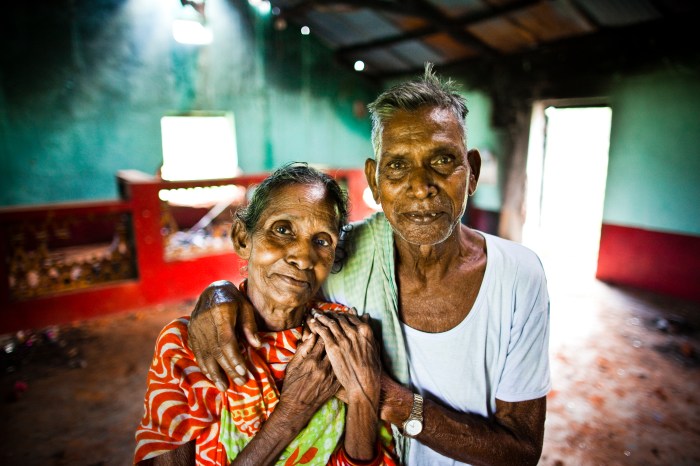
Featured image: Minasi (75) and his wife Sartabati (68) have seen their church in Mukundipur village attacked on five occasions, in 1966, 1975, 1998, 2007 and 2008. They said they did not think they could cope with another attack. Gajapati District, Orissa. Marcus Perkins/CSW 2009.

25 August 2016 is the eighth anniversary of India’s worst instance of communal violence against Christians. Many of the victim-survivors in Kandhamal, Odisha State, continue to wait for justice.

It is estimated that over 90 people were killed, 600 villages ransacked and 5,600 houses looted and burned in the 2008 attack. Approximately 54,000 people were left homeless, while 295 churches and places of worship were destroyed. Furthermore, an estimated 13 schools, colleges and philanthropic institutions for the sick were looted and burned. Approximately 2,000 Christians were forced to renounce their faith during the violence and 10,000 children were robbed of their education.

At every stage, the response of government, law enforcement and the criminal justice system to this tragedy has been woefully inadequate, undermining justice for the victim-survivors.

Continue reading “Remembering Kandhamal: a legacy of institutional failure”

Aleppo Bleeds as the Picture of Another Syrian Child Pricks the World’s Conscience

Many newspapers across the world today have chosen as their main image a photograph of a five year-old Syrian boy who has just survived an airstrike. Like that of another little Syrian boy called Aylan Kurdi, who drowned in the Mediterranean Sea last year, the image has gone viral.

It appears that once again the image of a Syrian child has pricked the world’s collective conscience, igniting renewed efforts to alleviate the suffering of Syrian civilians.

Khalid Albaih Syria cartoon credit Khalid Albaih

Image credit: Khalid Albaih https://www.facebook.com/albaih

 Aleppo as a microcosm for the Syrian Conflict

The Syrian conflict has a prominent sectarian aspect for which the battle for Aleppo is almost a microcosm, with the government and Shi’a militia on one side, and the largely-Islamist armed opposition groups on the other.

Within this complex picture, civilians from all sides are increasingly vulnerable as none of the warring parties have shown commitment to or respect for international humanitarian law, especially in terms of non-combatants, freedom of religion or belief (FoRB) and other human rights.

Aleppo, the second largest city in Syria used to have 4 million inhabitants. Today nearly half are displaced, either internally or externally.

The city has been a battlefield since 2012, and as the overall situation in Syria has deteriorated relentlessly, attention on the suffering of its inhabitants has ebbed and flowed dependent on fresh atrocities.

Continue reading “Aleppo Bleeds as the Picture of Another Syrian Child Pricks the World’s Conscience”