Justice Delayed is Justice Denied

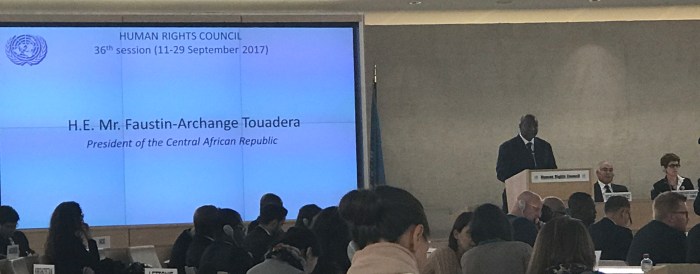
Next week the United Nations’ (UN) Human Rights Council (HRC) is holding a high level dialogue to assess the situation in the Central African Republic (CAR). The last time the HRC considered the situation of CAR was in September 2017, when President Faustin-Archange Touadéra made an unexpected appearance, and addressed member states, nongovernmental organisations (NGOs) and human rights mandate holders.

Christian Solidarity Worldwide (CSW) was present during this address and noted the positive engagement CAR maintains with the UN’s human rights mechanisms, including by granting access to the Independent Expert on CAR, Ms. Marie-Therese Keita Bocoum.

End of transition was not the end of the security crisis

During his speech, President Touadéra noted that the end of the transitional government and the return to democracy did not bring an end to the security crisis in CAR. Since November 2016, armed groups that were once part of the Seleka Alliance have clashed in the north and eastern regions. This violence has been characterised by the targeting of civilians and destruction of civilian infrastructure leading to mass displacement.

Continue reading “Justice Delayed is Justice Denied”

Shared experiences in the context of extreme violence: what is the Church’s role?

Over the past decades, both Peru and Colombia have experienced internal conflicts which involved extreme levels of violence in many regions and high loss of life. While the conflicts were political (pitting far left groups against the government and/or far right paramilitary groups) they directly impacted ordinary civilians and civil society, including churches.

In many cases, Christians, especially church leaders, were targeted for different reasons by the various armed actors. This directly affected freedom of religion or belief (FoRB) in those areas.

In both countries, the larger Church (composed of many different denominations) found itself looking for ways to respond to the conflict and especially how to support the churches, Christians and others living in conflict zones.

Continue reading “Shared experiences in the context of extreme violence: what is the Church’s role?”

Will Lifting Sanctions improve Human Rights in Sudan?

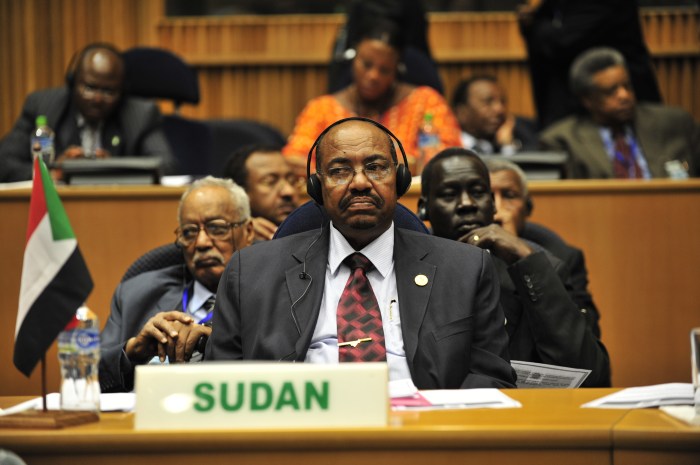
The recent decision by the United States (US) to lift two decades of sanctions on Sudan has been welcomed by some international actors, but received criticism from human rights organisations, campaigners and Sudanese opposition politicians.

The significance of this achievement for the government of Sudan cannot be understated.

Sudan has invested heavily in efforts towards the lifting of sanctions, including bringing the African Union on board and supporting the appointment of the UN Special Rapporteur on the negative impact of the unilateral coercive measures on the enjoyment of human rights. The mandate holder is tasked with investigating the human rights impact of economic measures applied by one State to change policy of another State. After the creation of the role, the Special Rapporteur’s first visit was Sudan, where he advocated for the lifting of US sanctions.

Continue reading “Will Lifting Sanctions improve Human Rights in Sudan?”

Latent Justice: The Unfinished Gujarat Story

“The Gujarat Carnage 2002, is certainly one of the bloodiest chapters of post-independent India. The painful reality is, that those responsible for it, are now at the helm of power in India” – Father Cedric Prakash (Human Rights Activist)

Confronting past crimes is unsettling, particularly when the perpetrators continue to enjoy political immunity. Fifteen years ago on 28 February 2002, violence in Gujarat, India covered the news headlines as an estimated 2,000 Muslims were massacred over several months across 16 districts in the country.

Continue reading “Latent Justice: The Unfinished Gujarat Story”

Bangladesh: How long will impunity rule?

“The culture of impunity can’t go on or violence will increase.” – Ajoy Roy

The words of Ajoy Roy, the frail father of the late Avijit Roy hit us hard. We listened in silence as he shared his despair and disappointment at the lack of judicial process following the murder of his son in 2015. The murder of Avijit Roy, a blogger, made international news and became a case representative of the situation facing not just bloggers but journalists, lawyers, religious leaders and religious minorities in Bangladesh; these members of Bangladesh’s civil society are vulnerable to threats, harassment and attacks.

Continue reading “Bangladesh: How long will impunity rule?”