Long read: Eritreans wonder why their president is “making peace with everyone but the Eritrean people”

On the morning of 17 September, Eritrean security operatives arrested former Minister of Finance Berhane Abrehe in Asmara.  According to local reports, 73 year old Mr Abrehe was out having breakfast with his son when he was approached by security agents and instructed to accompany them.

The arrest followed the publication and launch of a two-volume book authored by Mr Abrehe entitled ‘Eritra Hageray’ (Eritrea My Country) in Washington DC. The book is described on the cover as presenting an Eritrean plan on how to end dictatorship and prevent it from happening again. The book received endorsements from several former Eritrean officials in exile, and were accompanied by an audio clip in which Mr Abrehe called, among other things, for the convening of the National Assembly and challenged President Afwerki to a public debate.

Mr Abrehe is currently in an unknown location.  He has been unwell for some time, and there are legitimate concerns for his wellbeing.  Mr Abrehe’s wife, Almaz Habtemariam, has been detained since early 2018, in reprisal for one of their four children fleeing the country.  Both he and his wife are veterans of the liberation struggle.

Continue reading “Long read: Eritreans wonder why their president is “making peace with everyone but the Eritrean people””

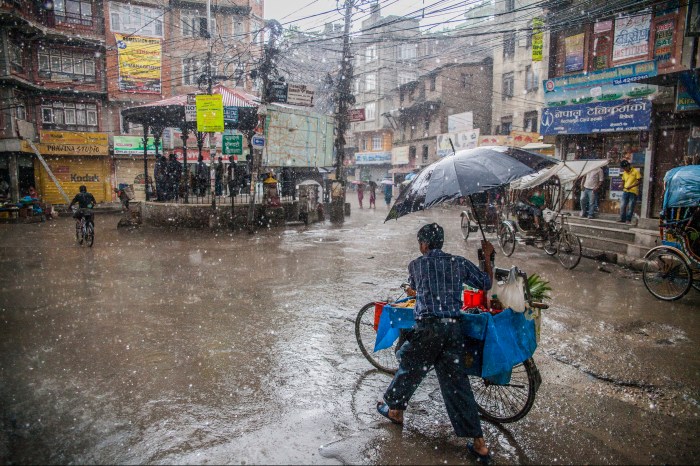
Nepal’s criminalisation of conversion seems to protect Hinduism at the expense of other religions.

Three years on from the date that Nepal adopted its new constitution, there are concerns about its ‘anti-conversion’ clause, which seemed designed to specifically protect Hinduism at the expense of other religions.

The clause, in Article 26 (3) of the constitution, states:

“No person shall, in the exercise of the right conferred by this Article, do, or cause to be done, any act which may be contrary to public health, decency and morality or breach public peace, or convert another person from one religion to another or any act or conduct that may jeopardize other’s religion and such act shall be punishable by law.”

These provisions were strengthened in the Penal Code 2017 which came into force in August 2018. Section 158 states that “No person shall convert any one from one religion to another or make attempt to or abet such conversion”  and carries a punishment of up to five years imprisonment and a fine of up to fifty thousand rupees.

The criminalisation of conversion is a direct infringement on freedom of religion or belief as it robs individuals of the right to change their religion. These provisions also threaten the right to freedom of expression as they could be used to prohibit a range of legitimate expressions of religion or belief such as charitable activities or speaking about one’s faith.

Continue reading “Nepal’s criminalisation of conversion seems to protect Hinduism at the expense of other religions.”

The Special Envoy Mandate: The Litmus Test for EU Policy on Freedom of Religion or Belief

Tomorrow, the European Parliament sub-committee on human rights (DROI) will meet to discuss a draft resolution on EU Guidelines on freedom of religion or belief (FoRB) and the mandate of the Special Envoy on the promotion of freedom of religion or belief outside the EU. It’s a significant milestone, representing the culmination of a year-long reflection within the European institutions on how the EU could more effectively promote and protect FoRB in its foreign policy and external action.

It’s also a document to watch: the recommendations that Parliament chooses to put forward in this resolution are likely to play a key role in shaping the future direction of EU policy on FoRB.

Continue reading “The Special Envoy Mandate: The Litmus Test for EU Policy on Freedom of Religion or Belief”

Will the Surabaya church bombings serve as a wake-up call for Indonesia ahead of next year’s presidential elections?

Father Aloysius Widyawan opened the door of an upstairs room in the Santa Maria Tak Bercela Catholic Church. “Three months ago, this room was completely filled with blood, body parts, teeth, even the faces of the bombers, strewn by the force of the blast,” he told me.

He pointed out windows that had been blown out, and the icons of St Luke and St John, damaged but not destroyed. He told me about the two young Catholic boys, Evan and Nathan, aged 12 and eight, who died as a result of their injuries. They had been baptized only two years before and had just received their first Communion. He described the Muslim security guard who lost both eyes and legs in the explosion, and later told the priest: “Please forgive me because I was not able to protect the church and the people, and am unable to work again.” Six people were killed and more than 30 injured in that one church alone.

Continue reading “Will the Surabaya church bombings serve as a wake-up call for Indonesia ahead of next year’s presidential elections?”

The Rohingya Crisis One Year On: Burma’s Work of Healing Cannot be Postponed Any Longer

On 25 August last year, the Burma army unleashed its attack on the Rohingya people of northern Rakhine state, precipitating the country’s most severe human rights and humanitarian crisis since independence in 1949. The United Nations’ outgoing High Commissioner for Human Rights, Zeid Ra’ad al-Hussein, described this crisis as “a textbook example of ethnic cleansing”, and the UN Special Rapporteur on human rights in Burma, Yanghee Lee, warned of “the hallmarks of genocide”. After the genocides in Rwanda and Srebrenica the world lamented with the words: “Never again”. But a year ago in Burma, “never again” happened all over again.

“They made it impossible for us to stay – how could we survive?”

In March this year, I travelled to the refugee camps on the Bangladesh-Burma border, to meet survivors. Almost everyone I talked to had seen loved ones killed and villages burned. Accounts of mass rape were widespread. I met Rohingyas whose eyes had been shot out and limbs blown off, and heard of others whose eyes had been gouged out, throats slit and limbs hacked off.

Continue reading “The Rohingya Crisis One Year On: Burma’s Work of Healing Cannot be Postponed Any Longer”