Burma’s identity crisis

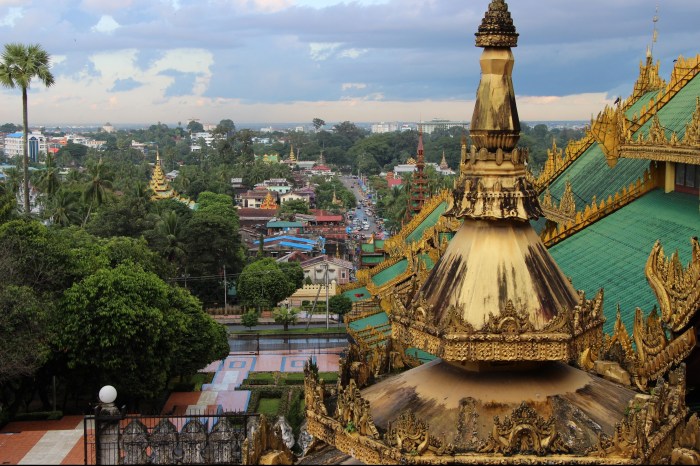
The forced closure last week of three temporary Muslim prayer sites in Yangon is just the latest in a litany of abuses inflicted on Burma’s religious minorities by ultra-nationalist Buddhists. Add this to the decades-long persecution by the Burma Army of non-Burman ethnic minorities, many of whom are also non-Buddhists, and you get a nationwide cocktail of religious intolerance and conflict.

Muslims, Christians, and indeed Buddhists, who oppose the extremists are increasingly living in fear, in a country where ethno-religious nationalism has led to hate speech, intolerance, discrimination, persecution, crimes against humanity and, in one particularly egregious case, genocide.

That is the picture presented by CSW’s new report, Burma’s Identity Crisis: How ethno-religious nationalism has led to religious intolerance, crimes against humanity and genocide, published today. The report is the result of over three years’ work, involving first-hand front-line research, supplemented by information provided by CSW’s contacts in Burma and by other organisations working on these issues. It tells the human stories, it analyses the legislative framework, it assesses the international community’s response and it provides a call for action.

Continue reading “Burma’s identity crisis”

India: A rude awakening in an election year

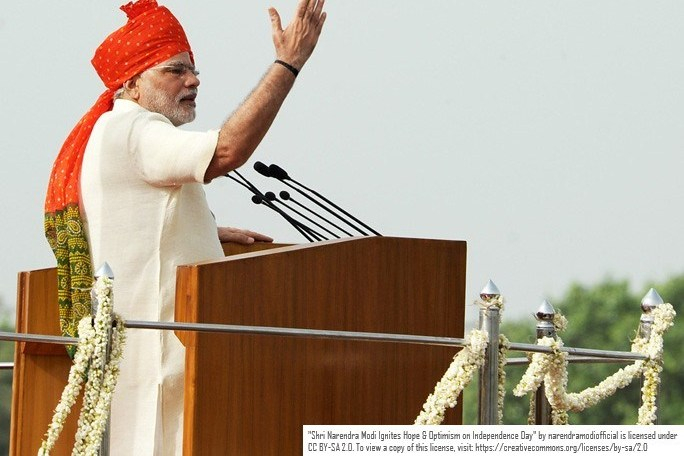
Dr Shashi Tharoor, the former Under Secretary-General of the United Nations, once described Narendra Modi as a paradoxical Prime Minister who says one thing and does another.

Coming into power in 2014 on egalitarian slogans like “ache din aane wale hain” (good days are coming) and “sabka saath, sabka vikas” (togetherness with all and development for all), Modi appealed to the corporate and middle class groups who were already beginning to resent the Congress Party, which was plagued with a series of corruption scandals. Posturing as the “development visionary” while presiding as Gujarat’s Chief Minister (2001-2014), he was fielded as the best candidate who could fix India’s decaying economy and good governance.

This clearly was not the case, as the reckless almost overnight demonetization had a drastic impact, particularly on lower income groups.

The promise of good days is far from being realised. For the religious minorities that make up approximately 16.3% of the population the last five years have been anything but favourable.

Continue reading “India: A rude awakening in an election year”

India’s general election: The church in Jharkhand under direct attack by the state government

In the lead up to India’s elections from 11th April-19th May, CSW is focusing on some of the issues faced by religious minorities in the country.

Last month, CSW’s South Asia Team Leader detailed the anti-conversion narratives that are often used to fuel religious intolerance. In this post, a guest contributor from Jharkhand state, whose name has been kept anonymous for security purposes, outlines the spread of hate speech by government officials in the state:

“On 11 August 2017 the front page of all newspapers in Jharkhand published an advertisement sponsored by the state government with a photograph of Jharkhand Chief Minister Shri Raghuvar Das and Mahatma Gandhi which misused the statement of Shri Mahatma Gandhi claiming that “If Christian missionaries feel that only conversion to Christianity is the path to salvation, why don’t you start with me or Mahadev Desai? Why do you stress on conversion of the simple, illiterate, poor and forest-dwellers? These people can’t differentiate between Jesus and Mohammad and are not likely to understand your preachings. They are mute and simple, like cows. These simple, poor, Dalit and forest-dwellers, whom you make Christians, do so not for Jesus but for rice and their stomach.”

“There is enough place in state prison for all the pastors and preachers if they continue to carry out missionary activity in the state.”

Continue reading “India’s general election: The church in Jharkhand under direct attack by the state government”

India’s general election: the politics of religious conversion in pursuit of a Hindu Rashtra

As India approaches the Lok Shaba (parliamentary) election this year, the right-wing Hindu organisation, Rashtriya Swayamsevek Sangh (RSS) and its affiliates (collectively known as the Sangh Parivar) are likely to take stock of their progress in realising their dreams of making India a Hindu Rashtra (Nation).

Constructed on M.S Golwakar’s ideology that since time immemorial, ‘mother India’ was formed of ‘one culture, one religion,’ the RSS pursues a narrative that the Hindu has fallen ‘victim’ to foreign religions, namely Islam and Christianity, and that the protection of the ‘faithful’ is imperative.

Continue reading “India’s general election: the politics of religious conversion in pursuit of a Hindu Rashtra”

‘Faithful disobedience’ in the face of a relentless crackdown: one year since China’s Revised Regulations on Religious Affairs.

Over the past year, the Chinese government has intensified its crackdown on Christians and other religious groups across China.

The mass incarceration of over one million predominantly Muslim Uyghurs, Kazakhs and members of other ethnic groups in ‘re-education camps’ in Xinjiang since 2017 has alarmed the international community, with the detentions receiving UN condemnation. At the same time, Christians across China are also being relentlessly targeted by the Chinese state apparatus, with countless violations ranging from the arrest and torture of religious practitioners to the forced closure of places of worship remaining a daily reality for those peacefully exercising their universal right to freedom of religion or belief (FoRB).

Since the revised regulations on religious affairs came into effect on 1 February 2018, reports have emerged of the removal of over 7,000 crosses in Henan province alone. Christians in Henan have also reported that unregistered churches across the province have been forcibly shuttered by authorities. Outside of Henan, in the wake of the revised regulations authorities across China continue to harass worshippers and restrict religious observance at state-approved churches by removing religious symbols from buildings, banning under-18s from religious activities, and forcing churches to install cameras and sing pro-Communist songs.

Continue reading “‘Faithful disobedience’ in the face of a relentless crackdown: one year since China’s Revised Regulations on Religious Affairs.”