Voices from Cuba: Yoel Suárez

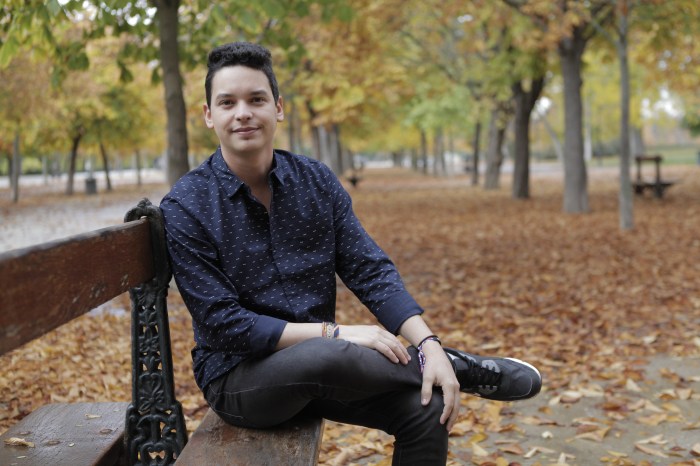
On 5 February 2020 Yoel Suárez was summoned to Siboney Police Station in Havana where he was interrogated for three hours by a state security agent who informed him that he had been declared ‘regulado.’ The declaration effectively subjects Mr Suárez to an indefinite ban on international travel, and is a common tactic used by the Cuban authorities to target individuals who they deem ‘politically sensitive’.

As an independent journalist, Mr Suárez has worked with non-state media outlets in Cuba since 2014 and has written extensively about human rights and freedom of religion or belief issues. As a result of his work, he and his family have been subjected to regular harassment at the hands of the Cuban authorities.

Today, over six months later, Mr Suárez remains unable to travel, and he and members of his family have received multiple visits from Cuban state security agents.

Continue reading “Voices from Cuba: Yoel Suárez”
“No respect for human dignity”: Remembering China’s 709 Crackdown

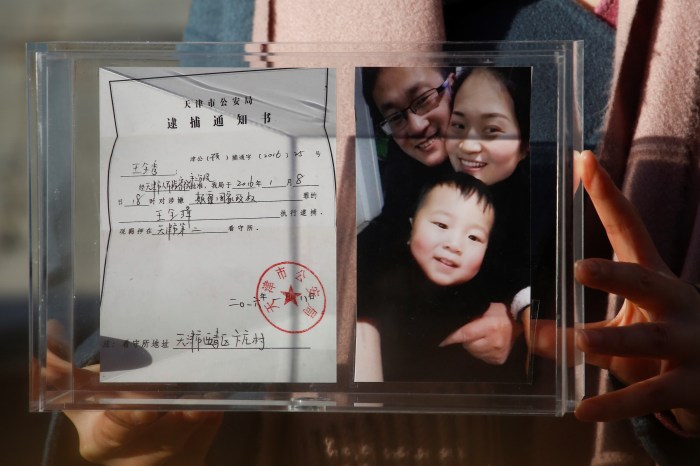
On 9 July 2015 the Chinese authorities began an extensive crackdown on human rights defenders (HRDs) and their friends and family members. Dubbed the ‘709 Crackdown’ after the date on which it began, the campaign saw over 300 lawyers, activists and their associates detained, interrogated or imprisoned.

Some of those detained have since vanished into China’s prison system. Many others have since been released, and with them have emerged reports of physical and psychological torture, including frequent beatings, sleep deprivation, forced medication, violent threats, and prolonged isolation. One of those released is human rights lawyer Wang Quanzhang, who was finally reunited with his family in April 2020 after serving nearly five years in prison. During his imprisonment, Wang suffered several health issues, losing approximately 30 pounds and showing signs of memory loss.

Five years since the crackdown began, pressure on HRDs in China continues to increase, with some forced to scale back their work on ‘sensitive’ cases or leave the profession entirely. Today we reflect on the crackdown, and its repercussions which continue to be felt across China, in the words of those who lived through it:

Continue reading ““No respect for human dignity”: Remembering China’s 709 Crackdown”

Language matters: What is terrorism?

Academic and terrorism researcher David Tucker once wrote: “Above the gates of hell is the warning that all that enter should abandon hope. Less dire but to the same effect is the warning given to those who try to define terrorism.”[1] Today, his words still aptly describe the continuing search by states and international bodies for a definition of terrorism.

A search for consensus

The United Nations (UN) has made several attempts to provide a general definition of terrorism, in contrast to describing specific acts of terrorism. It had a degree of success in the 1990s, with some progress made towards a general definition. In 1994 the non-binding ‘Declaration on Measures to Eliminate International Terrorism,’ endorsed by the UN General Assembly, defined terrorism as  “criminal acts intended or calculated to provoke a state of terror in the general public, a group of persons or particular persons for political purposes.”

This was followed by a 1996 General Assembly Resolution 51/210, which established an ad hoc Committee to find a Draft Comprehensive Convention. However, when the Committee presented its report, the proposed definition was met with controversy and disquiet in the ad hoc Committee.

Continue reading “Language matters: What is terrorism?”

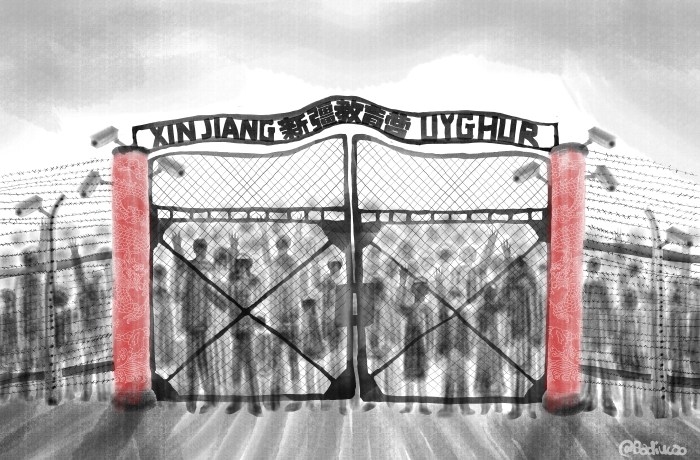
“No one is immune from the roundups”: Life for Uyghurs in China’s Xinjiang region

China’s Xinjiang Uyghur Autonomous Region is currently witnessing an unprecedented human rights crisis in which between one and three million predominantly Muslim Uyghurs, Kazakhs and members of other ethnic minorities have been detained without charge or trial in so-called ‘re-education camps.’ The following blog post is written by an expert on Uyghur culture and sheds light on what life is like for those inside the region.

“Imagine a world where your every movement is watched. Where who you meet, who you visit, and even what you talk about is monitored. Where you can be hauled off a bus mid-journey or dragged out of your car at a checkpoint, where your belongings, your identity, your face, your fingerprints and your irises are scanned several times a day, and where the contents of your phone could send you to prison for the rest of your life.

This is the new reality for more than 10 million Uyghurs (pronounced Weega) in China’s north-west Xinjiang province, since the former governor of Tibet, Chen Quanguo was summoned to take over the helm of, in the eyes of Xi Jinping and the Chinese Communist Party, China’s second most problematic province in 2017.

Continue reading ““No one is immune from the roundups”: Life for Uyghurs in China’s Xinjiang region”

VIDEO: Religious Freedom in Cuba: The lived reality

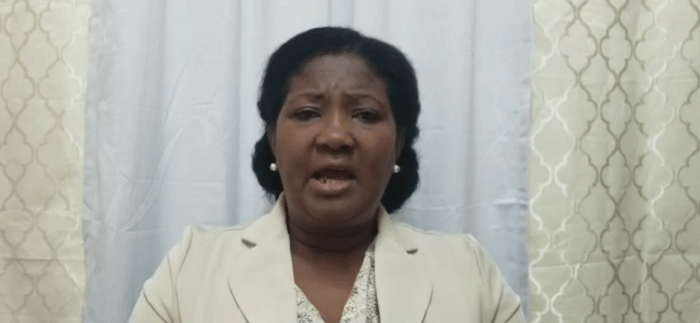
Marilín Alayo Correa is a Cuban pastor and a leader within the Apostolic Movement. Marilín is also married to Apostle Alain Toledano Valiente, who is one of the key leaders in the Apostolic Movement. As a result of their work, both Marilín and her husband have been extensively targeted by the Cuban authorities for over two decades.

Most recently, Marilín shared a video testimony with CSW reflecting on her family’s story and the situation for religious groups in Cuba nearly 15 years after CSW began documenting the family’s case. In the past year, her husband Alain has also been placed on a travel restriction list and is regularly summoned to appear at their local police station.

Continue reading “VIDEO: Religious Freedom in Cuba: The lived reality”