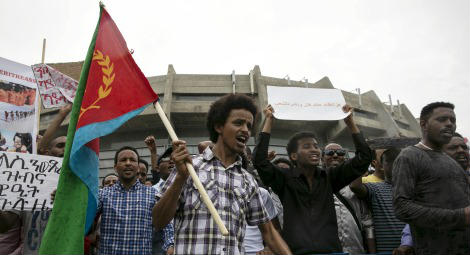
Long read: Eritreans wonder why their president is “making peace with everyone but the Eritrean people”

On the morning of 17 September, Eritrean security operatives arrested former Minister of Finance Berhane Abrehe in Asmara.  According to local reports, 73 year old Mr Abrehe was out having breakfast with his son when he was approached by security agents and instructed to accompany them.

The arrest followed the publication and launch of a two-volume book authored by Mr Abrehe entitled ‘Eritra Hageray’ (Eritrea My Country) in Washington DC. The book is described on the cover as presenting an Eritrean plan on how to end dictatorship and prevent it from happening again. The book received endorsements from several former Eritrean officials in exile, and were accompanied by an audio clip in which Mr Abrehe called, among other things, for the convening of the National Assembly and challenged President Afwerki to a public debate.

Mr Abrehe is currently in an unknown location.  He has been unwell for some time, and there are legitimate concerns for his wellbeing.  Mr Abrehe’s wife, Almaz Habtemariam, has been detained since early 2018, in reprisal for one of their four children fleeing the country.  Both he and his wife are veterans of the liberation struggle.

Continue reading “Long read: Eritreans wonder why their president is “making peace with everyone but the Eritrean people””
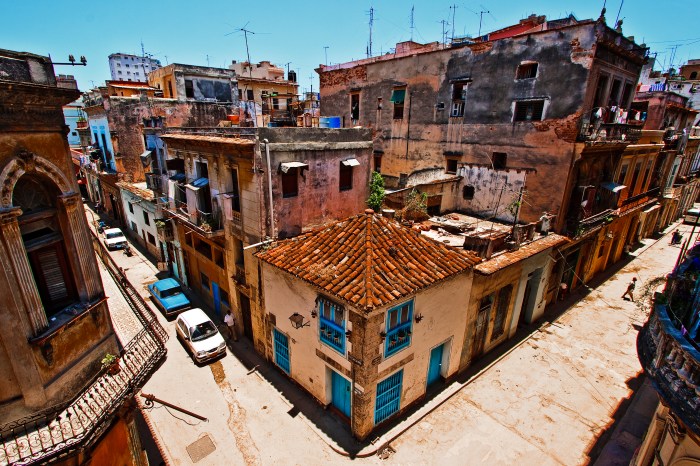
The time capsule: Reflections from Cuba

CSW’s Latin America Advocacy Officer reflects on the island where things are supposed to changing politically, but in many ways stay the same.

Visitor numbers are soaring, with over 2 million tourists arriving in Cuba each year.  And why wouldn’t they be? Historic Havana, churches, cigar factories, vintage cars, live music, art galleries and museums, UNESCO heritage sites, beautiful beaches and the warm climate all make for the perfect holiday destination.

Cuba, a land where you can experience the past, in the present. When people think of Cuba, isn’t this what comes to mind?

But much of the world remains unaware that travelling off the  beaten path leaves a bittersweet taste in the mouth. In a country with some of the most hospitable and generous people you will ever meet, you will also find that many live on less than $2 a day – and for a number of reasons, the exact figure of those living in poverty is hard to ascertain.

Outside the capital most people cannot afford the comfortable luxury of a Chevrolet and many get around by horse and carriage or ‘cogiendo botella’; in other words, they hitch a ride with whoever is passing by. And whilst a horse and carriage may make for a true Cuban experience and a good photo opportunity, it is also symbolic of a time warp that isn’t so positive for its citizens.

Continue reading “The time capsule: Reflections from Cuba”

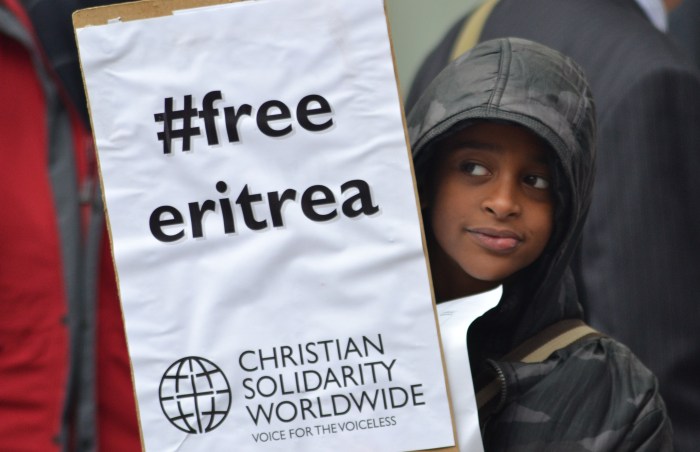
Thousands of Eritreans of all faiths and none are detained without charge or trial in Eritrea. Join us as we protest for change.

Germano Nati Gojo, an Eritrean politician, was arrested at his home by security agents as he listened to the radio on his veranda. One agent stood outside the gate. The other entered and said: “Sir, we need you on a work-related issue”. Saying nothing, Germano Nati Gojo stood up, went to change his clothes and left with them. His two younger children, then aged 16 and 12, witnessed this. The family has not seen or heard from him in 17 years, despite inquiring.

His eldest son, Yona Germano Nati, addressed the UN Human Rights Council in Geneva in March 2018.  He spoke of how his father had joined the struggle for independence of Eritrea in 1976, shared the story of his father’s enforced disappearance in September 2001, and described their poignant last meeting prior to the arrest, during which his father expressed his readiness to be jailed alongside his pro-reform colleagues who are now known collectively as the G 15.

Continue reading “Thousands of Eritreans of all faiths and none are detained without charge or trial in Eritrea. Join us as we protest for change.”

Guilty by Association: Increased Targeting of Family Members in Cuba

The Cuban government has a long-standing policy of targeting the children and other family members of church leaders and activists who it deems to be a problem; one of many tactics designed to ratchet up the pressure on them.

Religious leaders are increasingly standing up to government pressure and becoming bold in their efforts to defend religious freedom in the country, as the Cuban government’s Office for Religious Affairs (ORA) cracks down on unregistered religious groups and other groups that it perceives to be unsupportive of the government.

CSW’s latest report on freedom of religion or belief (FoRB) in Cuba reveals that the death of Fidel Castro in November 2016 failed to mark any significant improvements to FoRB in Cuba; instead, the arbitrary detention, harassment, restriction and surveillance of religious leaders and adherents has continued throughout the first half of 2017, as has the confiscation of church properties. In addition, several cases of family members of church leaders and activists singled out for harassment and discrimination have been brought to CSW’s attention in recent months.

Continue reading “Guilty by Association: Increased Targeting of Family Members in Cuba”

From Pledges to Action: Human Rights Defenders play a vital role in advancing justice

Moving from official commitments to tangible changes people’s lives remains a key challenge in the realisation of human rights. I am reminded of the wonderful quote from African-American civil rights campaigner, Philip Randolph, who said, “Freedom is never granted; it is won. Justice is never given; it is exacted.”

“Freedom is never granted; it is won. Justice is never given; it is exacted.” – Philip Randolph

This quote draws attention to the importance of promoting human rights while reminding us that very rarely do human rights “just happen”; they are regularly contested, challenged and often only progressed through the active work of individual human rights defenders (HRDs) and NGOs who promote and defend human rights through activities such as advocacy, campaigning, demonstrations, and human rights journalism – whether paid or unpaid and regardless of geographical location.

The right and responsibility to promote human rights – either individually or in association with others – is the cornerstone of all human rights work.

Continue reading “From Pledges to Action: Human Rights Defenders play a vital role in advancing justice”