Remembering Kandhamal: a legacy of institutional failure

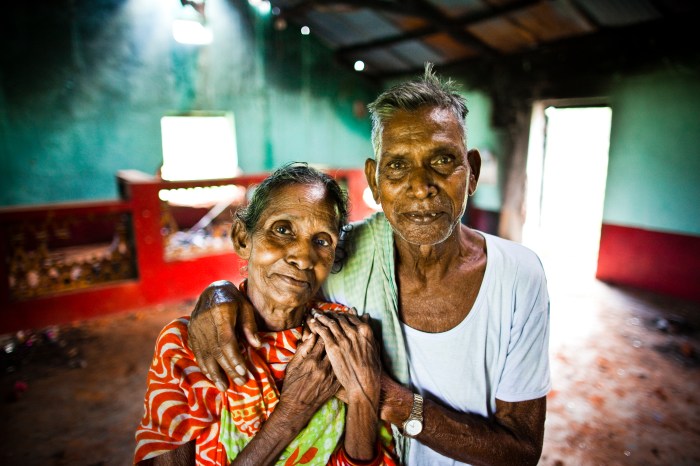
Featured image: Minasi (75) and his wife Sartabati (68) have seen their church in Mukundipur village attacked on five occasions, in 1966, 1975, 1998, 2007 and 2008. They said they did not think they could cope with another attack. Gajapati District, Orissa. Marcus Perkins/CSW 2009.

25 August 2016 is the eighth anniversary of India’s worst instance of communal violence against Christians. Many of the victim-survivors in Kandhamal, Odisha State, continue to wait for justice.

It is estimated that over 90 people were killed, 600 villages ransacked and 5,600 houses looted and burned in the 2008 attack. Approximately 54,000 people were left homeless, while 295 churches and places of worship were destroyed. Furthermore, an estimated 13 schools, colleges and philanthropic institutions for the sick were looted and burned. Approximately 2,000 Christians were forced to renounce their faith during the violence and 10,000 children were robbed of their education.

At every stage, the response of government, law enforcement and the criminal justice system to this tragedy has been woefully inadequate, undermining justice for the victim-survivors.

Continue reading “Remembering Kandhamal: a legacy of institutional failure”

The Plight of the Rohingya – His Eminence Cardinal Charles Maung Bo Addresses the Houses of Parliament, London, 25 May 2016

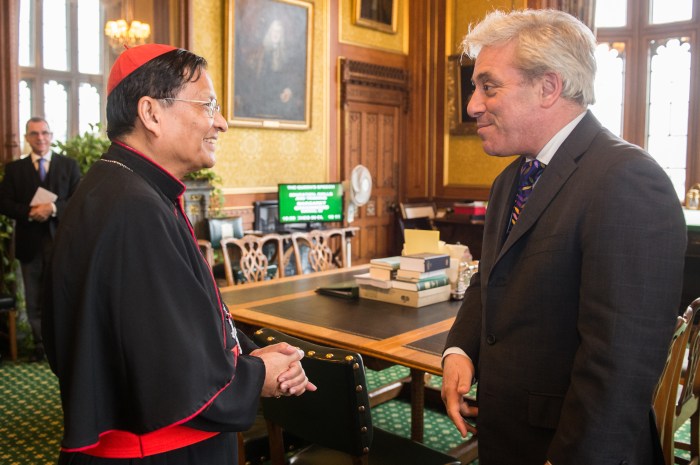
On May 25th Cardinal Charles Maung Bo of Burma, spoke before a meeting chaired by Lord Alton and hosted by the All Party Parliamentary Group on Burma, the All Party Parliamentary Group on International Freedom of Religion or Belief, and the Catholic Legislators Network. Below are sections from that speech, on freedom of religion or belief (FoRB) in Burma and the plight of Rohingya Muslims in Burma. Please contact CSW‘s office for a copy of the full speech and further recommendations. 


My country, Myanmar, now stands on the threshold of hope. We were once a Good Friday people, enduring our crucifixion as a nation on the cross of inhumanity and injustice, with five nails: dictatorship, war, displacement, poverty and oppression. Easter seemed a distant dream. My country was buried in the tomb of oppression and exploitation for six decades.

But today, we can perhaps begin to say that we are an Easter people. A new dawn has arisen. But it brings with it fresh challenges: reconciliation and peace-making, religious intolerance, land grabbing, constitutional limitations, and the fragile nature of a nascent democratic transition. And the old dangers have not gone away: the military remains powerful, corruption is widespread, and ethnic conflict continues in some parts of Myanmar.

“We were once a Good Friday people, enduring our crucifixion as a nation on the cross of inhumanity and injustice (…) But today, we can perhaps begin to say that we are an Easter people. A new dawn has arisen.”

Despite winning an enormous mandate from the people, Aung San Suu Kyi is barred by the Constitution from becoming President. The military, under the Constitution, retain control of three key ministries – Home Affairs, Border Affairs and Defence – and 25% of the seats in Parliament reserved for them. One of the two Vice-Presidents is a military appointee. So the new government is constrained, the military is still very powerful, and the country continues to face enormous challenges. Our journey has not ended; we are simply entering into a new chapter in our continuing struggle for freedom, democracy, human rights, human dignity and peace.

Continue reading “The Plight of the Rohingya – His Eminence Cardinal Charles Maung Bo Addresses the Houses of Parliament, London, 25 May 2016”

Youhanabad: This Is Our Land, This Is Our Spirit

For 65 years we have tolerated aggression against us so something must have drastically gone wrong that day for that to happen.’

Walking into Youhanabad on the outskirts of Lahore you notice the busyness of life; children playing, street vendors selling fruit and delicious fried snacks and motorbikes and scooters whizzing pass. Two years ago that the scene was transformed – chaos, carnage and confusion ensued on the morning of Sunday 15th March in 2015 when two suicide bombers approached Christ Church and St John’s Catholic Church and blew themselves up killing 15 and injuring around 70 people. After the bombing a mob was instigated, protest turned into violence and violence resulted in two people being lynched.

‘Within a few minutes victims became aggressors’

Continue reading “Youhanabad: This Is Our Land, This Is Our Spirit”

The Importance of China’s Rights Lawyers to the Chinese Church

In October 2014, the Chinese Communist Party announced that rule of law would be a top priority for the country. However, just one year later, over 150 lawyers and 150 more colleagues, family members and other activists had been questioned, detained, or disappeared in a crackdown which began on 9 July 2015.

Journalists and legal experts have speculated about what ‘strengthening rule of law’ might mean for China’s ruling Party: whatever it means, it doesn’t seem to include rights lawyers.

Continue reading “The Importance of China’s Rights Lawyers to the Chinese Church”

Church Demolitions Highlight Increase in FoRB Violations in Sudan

Both during and after the plebiscite for South Sudan’s independence in 2011, President al Bashir stated repeatedly that Sudan’s new constitution will be based 100% on Shari’a and that the ethnically and religiously diverse nation will be Arabic and Islamic.

For Sudan’s Christian community, an outworking of this explicit promise to erode religious and ethnic diversity has been the demolition churches, at the same time as permission to apply for new church building licences is withheld. The targeting of places of worship is just one example of ongoing repression of Christians and other religious minorities in the country.

A case in point: on 21 October 2015, a church building in Omdurman that was used by the Lutheran and Lutheran Evangelical Church was demolished. In the same week, an Evangelical Lutheran Church in Gadaref, East Sudan was burned down by unknown arsonists.

Legal and Political Context

The government of Sudan has repeatedly used the independence of South Sudan as an excuse to pursue an accelerated agenda of Islamization and Arabization. In 2013, the Ministry for Guidance and Endowments, which oversees religious affairs in the country, announced that no new church licences would be issued due to a lack of worshipers and an increase in abandoned churches after South Sudan seceded. This policy was reiterated in July 2014, just weeks after Sudan was the target of a successful international campaign to free Meriam Ibrahim, a young, pregnant mother who was sentenced to death for apostasy. The government’s defiant statement appeared to be in response to international pressure for Sudan to protect the rights of its religious minorities. Once again the government justified its policy as being a response to the changes in religious demography since South Sudanese Christians left Sudan in 2010.

Confiscation and demolition of places of worship

While the Ministry of Guidance and Endowments stopped issuing church licences, local government (particularly in Khartoum and Omdurman) continued confiscating and demolishing church properties, ostensibly to make way for development projects.

This was the case for the Lutheran and Lutheran Evangelical Church in Omdurman; local officials informed church leaders the building was listed for demolition on 20 October due to development work in the area. After appealing to the State Governor, church leaders were assured the building would not be affected.

However, it was demolished the next day, while a mosque less than 100 meters away on the same plot of land was left standing. This is not the first time a Christian place of worship and a Muslim place of worship have been treated differently.

Continue reading “Church Demolitions Highlight Increase in FoRB Violations in Sudan”