The Rohingya Crisis One Year On: Burma’s Work of Healing Cannot be Postponed Any Longer

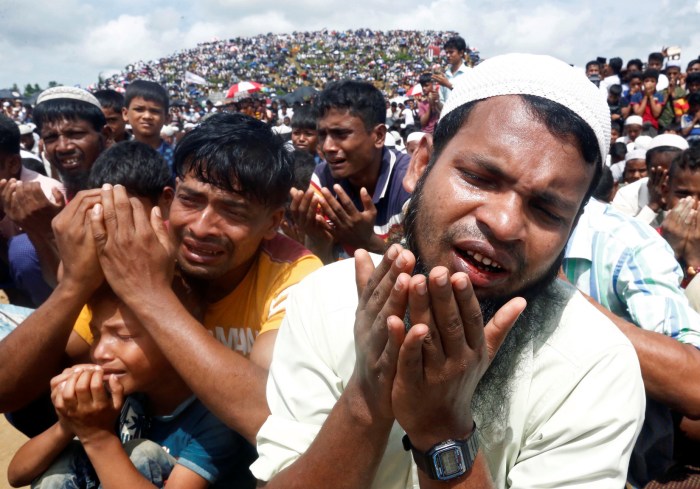
On 25 August last year, the Burma army unleashed its attack on the Rohingya people of northern Rakhine state, precipitating the country’s most severe human rights and humanitarian crisis since independence in 1949. The United Nations’ outgoing High Commissioner for Human Rights, Zeid Ra’ad al-Hussein, described this crisis as “a textbook example of ethnic cleansing”, and the UN Special Rapporteur on human rights in Burma, Yanghee Lee, warned of “the hallmarks of genocide”. After the genocides in Rwanda and Srebrenica the world lamented with the words: “Never again”. But a year ago in Burma, “never again” happened all over again.

“They made it impossible for us to stay – how could we survive?”

In March this year, I travelled to the refugee camps on the Bangladesh-Burma border, to meet survivors. Almost everyone I talked to had seen loved ones killed and villages burned. Accounts of mass rape were widespread. I met Rohingyas whose eyes had been shot out and limbs blown off, and heard of others whose eyes had been gouged out, throats slit and limbs hacked off.

Continue reading “The Rohingya Crisis One Year On: Burma’s Work of Healing Cannot be Postponed Any Longer”

Human Rights Must be Included in Talks to Ensure True Peace in North Korea


Just over a week ago, US President Donald Trump met with Kim Jong-Un, leader of the world’s most repressive regime which has been accused by the United Nations Commission of Inquiry of “crimes against humanity”. It was historic – the first time a sitting American President and a North Korean dictator had met face-to-face.

On the surface, in words attributed to Winston Churchill, “jaw jaw” has to be better than “war war”. It is good that the two men have moved from talk of “fire and fury” and whose nuclear button is bigger to discussion of denuclearisation, peace and prosperity. Perhaps a new era may be dawning.

However, one very fundamental issue seemed to be missing from the agenda: the human rights of the people of North Korea.

Continue reading “Human Rights Must be Included in Talks to Ensure True Peace in North Korea”

North Korea A Decade On: The Regime has not changed, but the people have.

A decade ago, Christian Solidarity Worldwide (CSW) published one of the first comprehensive reports on North Korea’s human rights disaster, with the conclusion that it amounts to crimes against humanity.

North Korea: A Case to Answer, A Call to Act was also one of the first reports to call on the United Nations to establish a Commission of Inquiry to investigate. Initially, we were almost alone in making this call – a voice crying in the wilderness, dismissed by some for pursuing an action that, it was predicted, would never happen. We were banging our heads against a brick wall, some said. We took the view that if enough of us bang our heads for long enough, we might dislodge some bricks.

Four years later, other human rights organisations were making the same call, and we founded the International Coalition to Stop Crimes Against Humanity in North Korea, together with over forty other organisations from around the world, to campaign for a UN inquiry. In early 2013 the UN High Commissioner for Human Rights added her support to this call, and a few months later the UN Human Rights Council established an inquiry. What some said could never be done was happening.

Continue reading “North Korea A Decade On: The Regime has not changed, but the people have.”

North Korea and Human Rights: A State of Denial

“There is almost complete denial of the right to freedom of thought conscience and religion as well as the right to freedom of opinion, expression, information and association.” That was the conclusion reached by the United Nations commission of inquiry into human rights in North Korea over two years ago. Indeed, the UN inquiry went further, noting that the regime in North Korea “considers the spread of Christianity a particularly severe threat” and as a result, “Christians are prohibited from practising their religion and are persecuted”. Severe punishments are inflicted on “people caught practising Christianity”.

Loyalty to the Regime is expected

Our new report – Total Denial: Violations of Freedom of Religion or Belief in North Koreaprovides further evidence that freedom of religion or belief is a human right that is “largely non-existent” in the country. The ruling Kim dynasty is deified. Pictures of the three generations of dictators – Kim Il Sung, Kim Jong-Il and now Kim Jong-Un – are displayed in private homes and public spaces, cleaned daily and inspected regularly by the authorities to ensure they are in the best condition. Allowing one of these photographs to decay or gather dust is akin to a blasphemy. Anything less than total loyalty to the ruling family is severely punished.

Continue reading “North Korea and Human Rights: A State of Denial”

From the Darkness into the Light: the Hope for Justice in North Korea

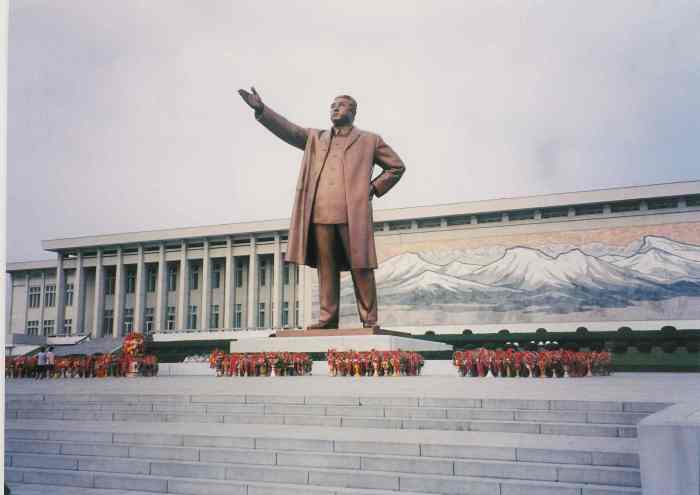
Today, marching, singing and dancing will flood the capital of one the most notoriously secretive and closed nations in the world. 15 April is the “Day of the Sun” in North Korea, one of the most important national holidays in the country because it venerates the late founder and perpetual leader, Kim Il-Sung.

Despite the awesome displays of colourful dance events and firework displays to celebrate Kim Il-Sung’s perceived achievements in creating the ‘revered’ nation, the reality is far from being a day in the sun, but more a descent into darkness.

The ‘Great’ Leader Who Founded a Despotic Regime

Kim Il-Sung, the ‘Father’ of North Korea, was highly instrumental in establishing one of the most authoritarian regimes in the world. Between the late 1940s and early 1990s he oversaw the creation of a country ruled by fear. The Workers’ Party he founded crushed dissent, abducted foreign nationals, created an extremely discriminatory and hierarchical ‘songbun’ caste system, and forcibly detained hundreds of thousands into a hidden prison system, which still subjects North Koreans to forced labour, torture and even execution. Both his son, Kim Jong-Il, and his grandson, Kim Jong-Un have continued the brutal legacy.

Continue reading “From the Darkness into the Light: the Hope for Justice in North Korea”