Every Sunday…

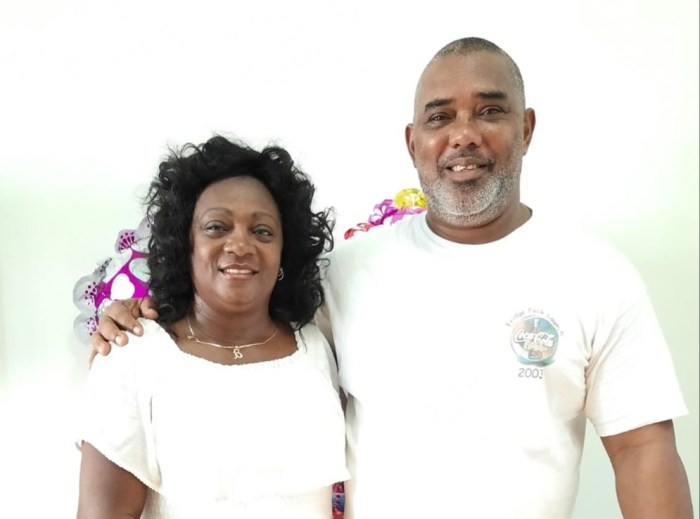
Every Sunday, between 12:30pm and 1pm, Berta Soler Fernández prepares herself.  She and her husband, Ángel Moya Acosta step outside their home, a square, two story building painted red, with a light green porch. They have every intention of making their way to a Roman Catholic Church in the Miramar section of Havana, Cuba. The church is named for Saint Rita of Cascia, the patron saint of abuse, loss, peace, desperate cases and lost causes. They will attend Mass and offer up prayers.  

Berta is dressed all in white. 

Every Sunday, between 12:30pm and 1pm, Berta and Ángel open the door of their home and are met by National Revolutionary Police (NRP) officers and Department of State Security (DSS) agents. Mobs of paramilitary members, some holding signs with offensive and insulting messages, hold up mobile phones as they record the couple’s movements. The two are forced into DSS cars with private license plates and, instead of going to Mass, they are taken to an NRP station. They are ordered to undergo an intrusive medical examination. They refuse because they have not asked for an examination and know that they will not be provided with the results anyway. Those will go to the DSS. Berta and Ángel are then sent to semi-dark prison cells where they will be held until the following morning. They will be taken by car and dropped off near their home, which also serves as the national headquarters for the Ladies in White, a dissident group that has been holding peaceful protests in support of political prisoners since 2003. 

Continue reading “Every Sunday…”

Cada Domingo…

Cada domingo, entre las 12:30pm y las 13:00pm, Berta Soler Fernández se alista. Ella y su marido, Ángel Moya Acosta, salen de su casa, un edificio cuadrado de dos pisos pintado de rojo, con un porche verde claro. Tienen la intención de dirigirse a una iglesia católica romana en la sección Miramar de La Habana, Cuba. La iglesia lleva el nombre de Santa Rita de Casia, la santa patrona de los casos desesperados, del abuso, de la pérdida, de la paz, y de las causas perdidas. Asistirán a misa y ofrecerán sus oraciones. 

Berta está vestida toda de blanco. 

Cada domingo, entre las 12:30pm y las 13:00pm, Berta y Ángel abren la puerta de su casa y son recibidos por oficiales de la Policía Nacional Revolucionaria (PNR) y agentes del Departamento de Seguridad del Estado (DSE). Multitudes de paramilitares, algunos con carteles con mensajes ofensivos e insultantes, sostienen teléfonos móviles mientras graban los movimientos de la pareja. Los dos son obligados a subir a coches del DSE con matrícula privada y, en lugar de ir a misa, los llevan a una comisaría de la PNR. Les ordenan que se sometan a un examen médico invasivo. Se niegan porque no han pedido el examen y saben que, de todos modos, no les proporcionarán los resultados. Éstos irán al DSE. Berta y Ángel son enviados a celdas penitenciarias semioscuras donde permanecerán retenidos hasta la mañana siguiente. Los llevarán en coche y los dejarán cerca de su casa, que también sirve como sede nacional de las Damas de Blanco, un grupo disidente que lleva realizando protestas pacíficas en apoyo de los presos políticos desde 2003. 

Continue reading “Cada Domingo…”

‘A new front’ in the pursuit of justice in Cuba

On the night of 28 February, Cuban police and State Security agents carried out a raid, capturing a man who they had been searching for 44 days. He was taken to an interrogation center and given an ultimatum: leave the country within the week or spend the next 30 years in a maximum-security prison. In early March, the man said good-bye to his wife and baby daughter and boarded a plane to Europe. Eighteen hours later, he submitted a formal request for asylum in Switzerland.

The man had committed no act of violence, nor had he stolen anything. He is a pastor. His only crime was to have extended his pastoral work to reach out to and pray with the families of political prisoners.

The Cuban government has long been fearful of any link between religious groups and political dissidents and has, for decades, gone to great effort to keep both as separate as possible. This is in part a general strategy to socially isolate all those it considers to be dissidents, including political activists, human rights defenders and independent journalists, in order to weaken and ultimately neutralise them. However, it is also, whether any of the Cuban Communist Party leadership would admit it or not, a recognition of the power in the combination of spirituality with the fight for justice and freedom.

Continue reading “‘A new front’ in the pursuit of justice in Cuba”

“Un nuevo frente” en búsqueda de la justicia en Cuba

En la noche del 28 de febrero, la policía cubana y agentes de la Seguridad del Estado realizaron un allanamiento, apresando a un hombre al que buscaban desde hacía 44 días. Lo llevaron a un centro de interrogatorios y le dieron un ultimátum: Abandonar el país en una semana o pasar los próximos 30 años en una prisión de máxima seguridad. A principios de marzo, el hombre se despidió de su esposa y de su pequeña hija y abordó un avión rumbo a Europa. Dieciocho horas después, presentó una solicitud formal de asilo en Suiza.

El hombre no había cometido ningún acto de violencia, ni había robado nada. Él es un pastor. Su único delito fue haber extendido su labor pastoral para alcanzar y orar con las familias de los presos políticos.

El gobierno cubano ha temido durante mucho tiempo cualquier vínculo entre grupos religiosos y disidentes políticos y, durante décadas, ha hecho un gran esfuerzo para mantener a ambos lo más separados posible. Esta es en parte, una estrategia general para aislar socialmente a todos aquellos que considera disidentes, incluidos activistas políticos, defensores de los derechos humanos y periodistas independientes, con el fin de debilitarlos y, en última instancia, neutralizarlos. Sin embargo, es también, lo admita o no alguna dirigencia del Partido Comunista de Cuba, un reconocimiento del poder que se produce por la combinación de la espiritualidad con la lucha por la justicia y la libertad.

Continue reading ““Un nuevo frente” en búsqueda de la justicia en Cuba”

FoRB on the Frontlines: Fighting for freedom as long as it’s necessary

The Ladies in White are a Cuban peaceful protest movement comprising the wives and other female relatives of jailed dissidents. Last year CSW interviewed their leader, Berta Soler, about her experiences, and the challenges facing Cuba:

“My activism really got started in 2003 when the government took [imprisoned] 75 men and one woman just because they defended the Declaration of Human Rights.

I and the other Ladies in White are women who are prepared, very well prepared, and aware that we are in a struggle for the freedom of political prisoners and for respect for human rights in my country. And we, the Ladies in White and I, are very conscious that in my country we need freedom and rights, especially for the men and women who are in prison just for demanding this and promoting and defending the Universal Declaration of Human Rights.

Continue reading “FoRB on the Frontlines: Fighting for freedom as long as it’s necessary”