Will Lifting Sanctions improve Human Rights in Sudan?

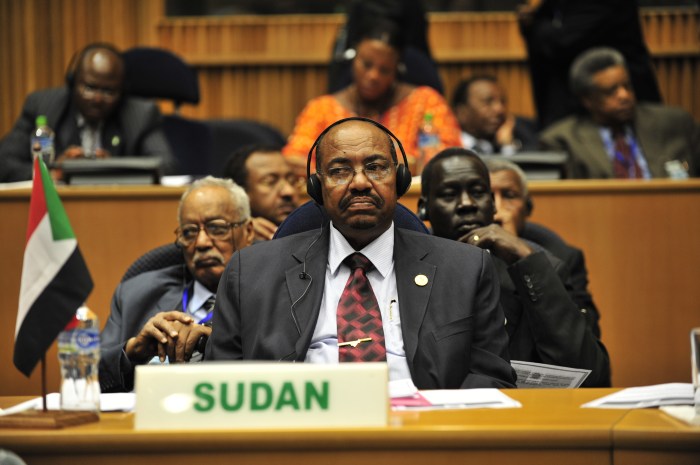
The recent decision by the United States (US) to lift two decades of sanctions on Sudan has been welcomed by some international actors, but received criticism from human rights organisations, campaigners and Sudanese opposition politicians.

The significance of this achievement for the government of Sudan cannot be understated.

Sudan has invested heavily in efforts towards the lifting of sanctions, including bringing the African Union on board and supporting the appointment of the UN Special Rapporteur on the negative impact of the unilateral coercive measures on the enjoyment of human rights. The mandate holder is tasked with investigating the human rights impact of economic measures applied by one State to change policy of another State. After the creation of the role, the Special Rapporteur’s first visit was Sudan, where he advocated for the lifting of US sanctions.

Continue reading “Will Lifting Sanctions improve Human Rights in Sudan?”

Latent Justice: The Unfinished Gujarat Story

“The Gujarat Carnage 2002, is certainly one of the bloodiest chapters of post-independent India. The painful reality is, that those responsible for it, are now at the helm of power in India” – Father Cedric Prakash (Human Rights Activist)

Confronting past crimes is unsettling, particularly when the perpetrators continue to enjoy political immunity. Fifteen years ago on 28 February 2002, violence in Gujarat, India covered the news headlines as an estimated 2,000 Muslims were massacred over several months across 16 districts in the country.

Continue reading “Latent Justice: The Unfinished Gujarat Story”

Bangladesh: How long will impunity rule?

“The culture of impunity can’t go on or violence will increase.” – Ajoy Roy

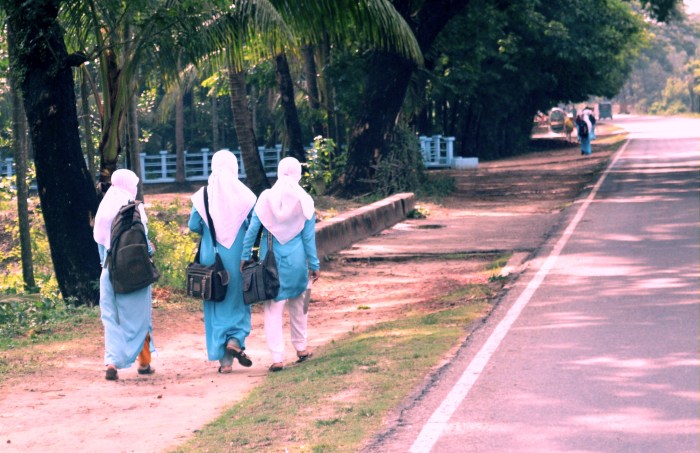
The words of Ajoy Roy, the frail father of the late Avijit Roy hit us hard. We listened in silence as he shared his despair and disappointment at the lack of judicial process following the murder of his son in 2015. The murder of Avijit Roy, a blogger, made international news and became a case representative of the situation facing not just bloggers but journalists, lawyers, religious leaders and religious minorities in Bangladesh; these members of Bangladesh’s civil society are vulnerable to threats, harassment and attacks.

Continue reading “Bangladesh: How long will impunity rule?”

Remembering Egypt’s Revolution

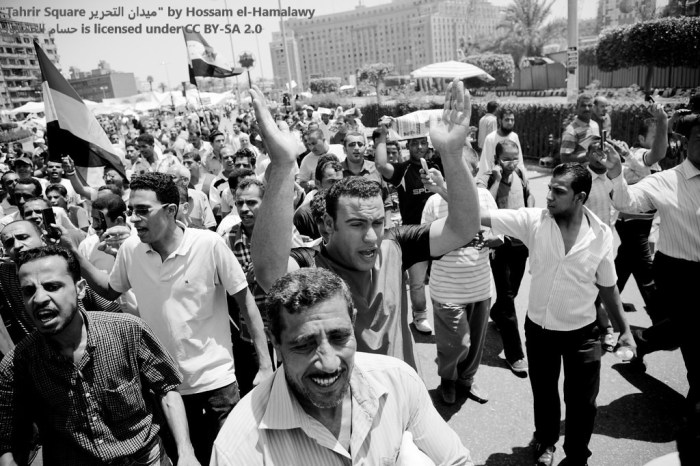
In Egypt 25 January has historically been National ‘Police Day’, commemorating the day in 1952 when 50 policemen were killed and others were injured by the British for refusing  to hand over their weapons to and evacuate Ismaïlia Police Station. However, owing to the events of 25 January 2011, the day is now known to many as the “Day of Rage”, when unprecedented anti-government protests broke out across the country. Three days later, on the “Friday of Anger” a huge demonstration convened in Tahrir Square in Cairo, with protesters demanding the removal of President Hosni Mubarak. On 11 February, 18 days after the demonstrations began, the President stepped down 2011.

Continue reading “Remembering Egypt’s Revolution”

For Some, Yellow Butterflies Symbolise Hope in the Midst of Colombia’s Uncertainty

Yellow butterflies covered every wall in the office of one of our partner organisations in Colombia.

The first butterfly was cut out and hung on a wall immediately following the signing of the peace agreement between the government of Colombia and the Revolutionary Armed Forces of Colombia (FARC) on 26 September 2016 in Cartagena on the northern coast of the country.

In their speeches on this momentous occasion, both President Juan Manuel Santos and Timochenco, the commander and Chief of the FARC, referred to the yellow butterflies from celebrated Colombian author Gabriel Garcia Marquez’ famous novel ‘One Hundred Years of Solitude’: Gabriel Garcia Marquez is remembered for his love of yellow butterflies and flowers, which signify that nothing bad will happen.

“The war is over, we are starting to build peace” – Timochenko, Commander and Chief of the FARC

During his speech, Timochenko, stated, “war is over, we are starting to build peace’’ followed by a reference to a character in the novel, Mauricio Babilonia, who is constantly followed by yellow butterflies wherever he goes, as a symbol of infinite love and hope. Ivan Marquez, the FARC’s lead negotiator stated at a national FARC conference, “Tell Mauricio Babilonia he can release the yellow butterflies,” as a direct quote from the novel.

An Unexpected Outcome

These butterflies were a clear example of the hopeful expectancy that surrounded me in Bogota. Everyone was discussing what the peace agreement would mean for the country, especially for the regions most affected by the 52 year long conflict, especially the more rural areas of Colombia.

During the 53 years of internal conflict, hundreds of thousands of lives have been lost. All actors during the conflict have been responsible for major human rights violations; armed actors have also been responsible for a wide range of violations of religious freedom as hundreds of religious leaders have been the victims of targeted assassinations since 2000 and many have received threats, including death threats, by neo-paramilitary groups and guerrillas. Many churches have faced extortion from armed groups or have been forcibly closed.

However, at this point in time, the national plebiscite which was due to be held on 2 October 2016 had not yet taken place and was the final step required to bring the peace agreement into force.

Continue reading “For Some, Yellow Butterflies Symbolise Hope in the Midst of Colombia’s Uncertainty”