Dare I speak? Defending freedoms in Bangladesh

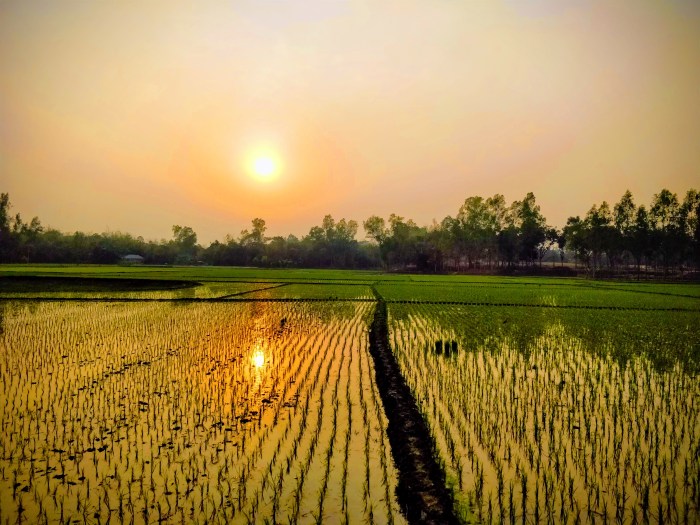
The voices of extremism and violence infiltrating Bangladesh’s society have delivered a clear and frightening message: independent expressions on religious issues will not be tolerated.

A pattern of appalling attacks that began in 2013 and took the lives of four secular bloggers in 2015 shocked the nation and caught the attention of international media. The stream of violence reflects a forceful assault on freedom of religion or belief and freedom of expression, theoretically enshrined in Bangladesh’s secular constitution and ratified international conventions.

The need for a clear counter-narrative to fundamentalism

If the values of a secular democracy are to be protected, fundamentalism must be met with a positive counter narrative from governing authorities. Unfortunately, in Bangladesh, neither political leaders nor members of the police force have succeeded in articulating a message of tolerance safeguarding the human rights and freedoms of its citizens.

On 8 August 2015, Niloy Chatterjee was the fourth blogger to be brutally murdered that year following the killings of Avijit Roy on 27 February 2015, Washiqur Rahman Babu on 30 March 2015 and Ananta Bijoy Das on 12 May 2015.

Continue reading “Dare I speak? Defending freedoms in Bangladesh”

Youhanabad: This Is Our Land, This Is Our Spirit

For 65 years we have tolerated aggression against us so something must have drastically gone wrong that day for that to happen.’

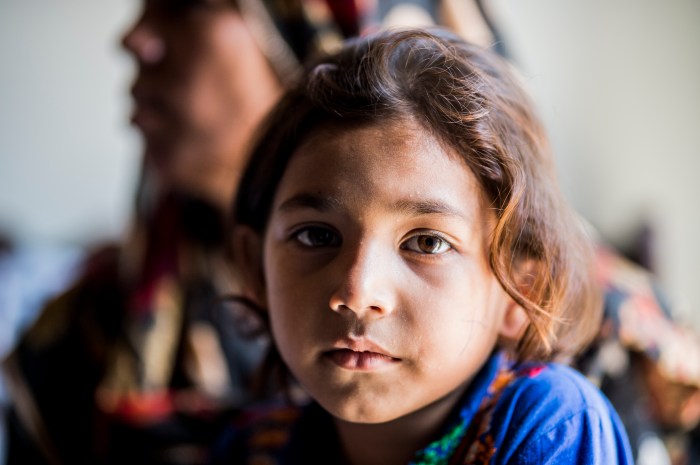
Walking into Youhanabad on the outskirts of Lahore you notice the busyness of life; children playing, street vendors selling fruit and delicious fried snacks and motorbikes and scooters whizzing pass. Two years ago that the scene was transformed – chaos, carnage and confusion ensued on the morning of Sunday 15th March in 2015 when two suicide bombers approached Christ Church and St John’s Catholic Church and blew themselves up killing 15 and injuring around 70 people. After the bombing a mob was instigated, protest turned into violence and violence resulted in two people being lynched.

‘Within a few minutes victims became aggressors’

Continue reading “Youhanabad: This Is Our Land, This Is Our Spirit”

We Must Use Every Creative Tool To Prise Open North Korea

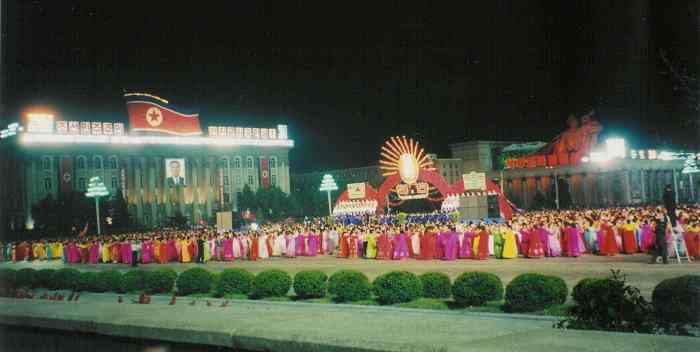
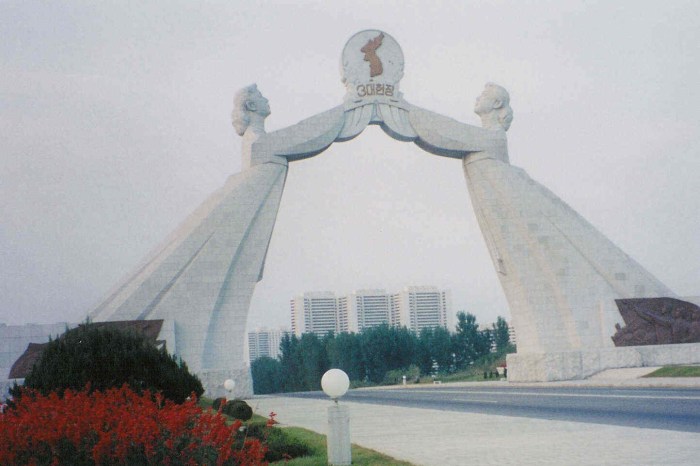
Exactly two years ago, on 22 February 2014, the United Nations (UN) finally shone a light on the darkest corner of the world, North Korea. Its year-long Commission of Inquiry, chaired by Australian judge Michael Kirby, published a damning report concluding that “the gravity, scale and nature” of the horrific human rights violations in North Korea “reveal a State that does not have any parallel in the contemporary world” and that the catalogue of abuses amounting to crimes against humanity should lead to a referral to the International Criminal Court (ICC).

International community calls for justice and concrete action

In January 2016, the UN Special Rapporteur on human rights in North Korea, Marzuki Darusman, said it is “now imperative to pursue criminal responsibility” of the North Korean leadership. “Not much has changed in the country almost two years after the report of the Commission of Inquiry,” he added.

The European Parliament also passed a resolution calling for an end to impunity and for those responsible for crimes against humanity to be brought before the ICC and be subject to targeted sanctions.

Continue reading “We Must Use Every Creative Tool To Prise Open North Korea”

The Importance of China’s Rights Lawyers to the Chinese Church

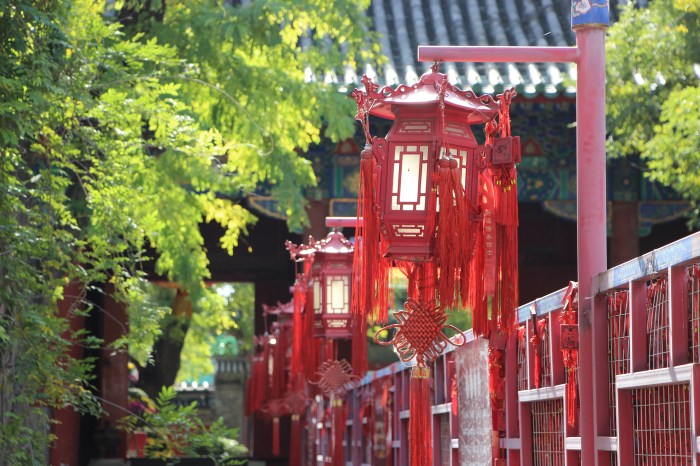
In October 2014, the Chinese Communist Party announced that rule of law would be a top priority for the country. However, just one year later, over 150 lawyers and 150 more colleagues, family members and other activists had been questioned, detained, or disappeared in a crackdown which began on 9 July 2015.

Journalists and legal experts have speculated about what ‘strengthening rule of law’ might mean for China’s ruling Party: whatever it means, it doesn’t seem to include rights lawyers.

Continue reading “The Importance of China’s Rights Lawyers to the Chinese Church”

A ‘New’ India? From a Secular to a Hindu Nation.

Featured Image: These women and their families are among several who share a single tent in a displacement camp housing 45 Catholic families. These families had been accommodated in five separate places since being displaced by the communal violence in August 2008. Kandhamal District, Orissa. Marcus Perkins/CSW 2009.

Rising religious intolerance is increasingly visible; be it from ghar wapis (Hindu home coming ceremonies) of religious minorities to the open incitement of hate against Muslims and Christians by senior government officials; from mob lynchings over beef consumption to attacks on places of worship; and from the distortion of historical facts in text books to the murder of renowned rationalists such as Narendra Dabholkar, Govind Pansare and M. M. Kalburgi, who questioned certain Hindu practices in their writings.

The debate about the religious intolerance sweeping India is mainstream and has drawn international news coverage as India’s distinguished scientists, rationalists, actors, academics, and historians have voiced their concerns. Some have even returned their national awards in protest, including scientists, who unlike artists are not routinely engaged in public cultural critique and protest.

A Historically Secular State

One year after the Universal Declaration on Human Rights was adopted by the United Nations General Assembly, declaring in its preamble the universality of the innate nature of human dignity, the Constitution of India was written in 1949.

The founding fathers envisioned an India where freedom of conscience would be respected by all citizens and that every Indian would live freely and without fear according to their conscience, exercising the choice to adhere to a religion or not.

The Constitution in its 42nd amendment established India as a secular state. In India, religion was intended to be kept separate from the body politic, although today the reality on the ground is starkly different as communal and religious politics are being used to polarise society.

The influence of Hindutva nationalist ideology

At the centre of this polarisation is the Hindutva ideology, which was coined by V.D Savarkar, a Hindu nationalist leader who propagated an exclusionary political ideology and promoted religious nationalism of “majoritarianism”. The aim: to make India a Hindu ‘rasthra’ (nation).

Continue reading “A ‘New’ India? From a Secular to a Hindu Nation.”