Does a thaw in relations between Eritrea and Ethiopia offer hope for Christians?

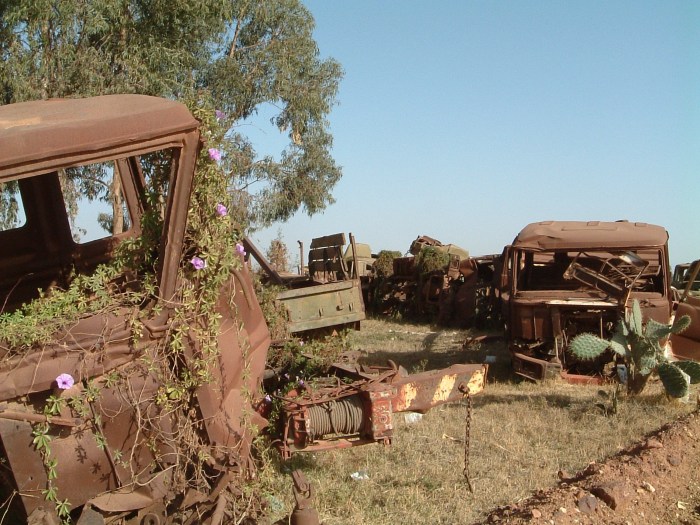
A thick layer of dust coats everything inside the Eritrean embassy in the Ethiopian capital, which was unlocked this week for the first time since 1998. Photos of this ‘time capsule’ were published by the BBC, which, along with the world’s media, is charting the remarkable thaw in relations between Eritrea and Ethiopia. The two nations went to war in 1998 but maintained a war footing due to Ethiopia’s refusal to allow demarcation of their common border, in accordance with a 2003 ruling.

Continue reading “Does a thaw in relations between Eritrea and Ethiopia offer hope for Christians?”

Justice Delayed is Justice Denied

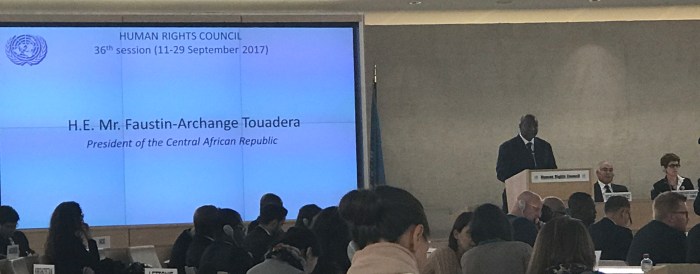
Next week the United Nations’ (UN) Human Rights Council (HRC) is holding a high level dialogue to assess the situation in the Central African Republic (CAR). The last time the HRC considered the situation of CAR was in September 2017, when President Faustin-Archange Touadéra made an unexpected appearance, and addressed member states, nongovernmental organisations (NGOs) and human rights mandate holders.

Christian Solidarity Worldwide (CSW) was present during this address and noted the positive engagement CAR maintains with the UN’s human rights mechanisms, including by granting access to the Independent Expert on CAR, Ms. Marie-Therese Keita Bocoum.

End of transition was not the end of the security crisis

During his speech, President Touadéra noted that the end of the transitional government and the return to democracy did not bring an end to the security crisis in CAR. Since November 2016, armed groups that were once part of the Seleka Alliance have clashed in the north and eastern regions. This violence has been characterised by the targeting of civilians and destruction of civilian infrastructure leading to mass displacement.

Continue reading “Justice Delayed is Justice Denied”

“Between a Rock and a Hard Place”: the Future of Abyei

It has now been six and a half years since the people of Abyei should have decided their future.

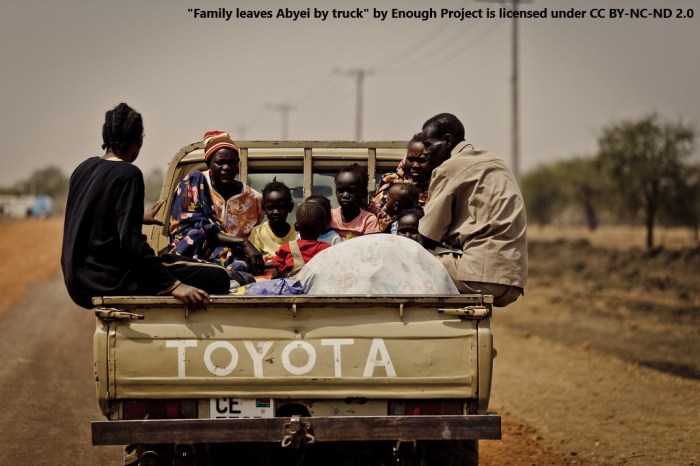
Abyei, an oil-rich region situated between Sudan and South Sudan, was due to have a self-determination referendum on the 9 January 2011; the day South Sudan decided to become an independent nation. However, disagreements between Sudan and South Sudan regarding voter eligibility has meant that the people of Abyei are still waiting to hold an official vote.

These disagreements centre on whether the nomadic Arab Misseriya tribe who spend a portion of the year in Abyei are eligible to vote. Despite a ruling by the Permanent Court of Arbitration (PCA) stating that only the Ngok Dinka tribe, and those permanently residing in Abyei for a period of 3 years, may vote, the government of Sudan failed to accept these terms.

As the delay continued, the Ngok Dinka General Conference conducted what was termed a “People’s Referendum”: it was an unofficial vote but 98% of registered Ngok Dinka voters participated, of which 99.9% voted to join South Sudan. Sudan and South Sudan, as well as the African Union and international community, rejected the outcome of the referendum but both Khartoum and Juba have laid claim to Abyei.

Since the Peoples Referendum, South Sudan has descended into chaos, while Bashir’s grip on Sudan appears to be strengthening. With chaos to the South and oppression to the North, the decision may not be as simple as it was a few years ago – Abyei and its people are clearly trapped between a rock and a hard place.

Continue reading ““Between a Rock and a Hard Place”: the Future of Abyei”

The Impact of Sudan’s Identity War on Freedom of Religion or Belief

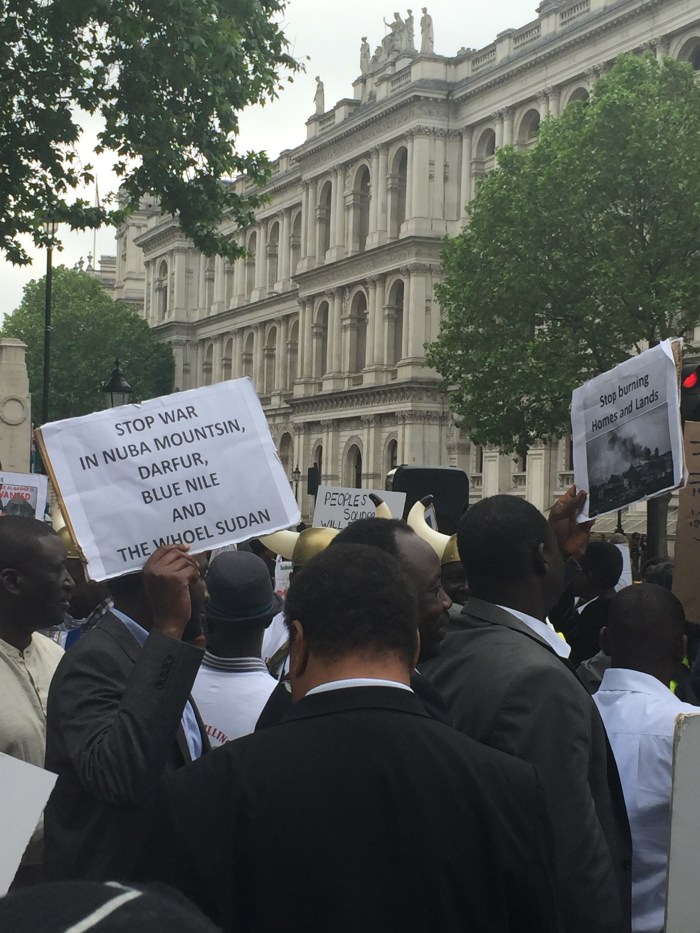
In June 2016, CSW joined a number of African and international civil society organisations in signing and delivering a letter marking the fifth anniversary of the conflicts in South Kordofan and Blue Nile regions, to 10 Downing Street. The letter urged the Prime Minister to use the UK’s considerable influence to ensure that international human rights and humanitarian law are respected.

Protesters walked from the Sudanese Embassy in London to Downing Street to deliver the letter. Among those taking part, it was striking to see veiled and unveiled Sudanese women from the Nuba Mountains, people from other parts of South Kordofan and Darfur, young children, and men in traditional Nuba dress united in calling for an end to all conflicts in Sudan.

This demonstration of unity in diversity was compelling, as was the cry for peace and freedom for all Sudanese citizens. The repression of religious and ethnic diversity in Sudan has been used repeatedly by President al Bashir’s government to sustain his 27-year rule, and what was clearly expressed on that overcast Saturday afternoon in London was the longing for an end to conflicts that serve to perpetuate a divisive government and for a lasting peace in which people can live side by side without fear, regardless of their cultural, linguistic, ethnic or religious differences.

Continue reading “The Impact of Sudan’s Identity War on Freedom of Religion or Belief”

Interview with a Sri Lankan Human Rights Advocate – Part 2

Part 2: Circular 2008

CSW spoke to a human rights advocate in Sri Lanka whose identity for security reasons has been withheld. This post has been edited for clarity.

Q: Would you be able to share with us what groups like yours – and other civil society organisations based in Sri Lanka – are doing at the moment to address freedom of religion or belief (FoRB) violations?

A: There are various strategies. One of the core things that we do is to document incidents. We do a lot of advocacy at a local level by meeting government officials and ministers. We also lobby with some of our international partners as well. We file cases on behalf of victims who are religious minorities, and we take up different legal interventions. For example, when there is an attack, we will not file a case immediately but we try first to send out legal letters; working with the national police commission, working with the relevant ministries, and so on. If that does not work out, then of course we will file a case against the authorities in the Supreme Court.

In most instances, we support cases that have been filed against Christians. We also do a lot of other projects where we work on broader human rights issues and we form local networks with community leaders, with pastors. We have consultation processes with them, we train them, we have advocacy seminars – making them aware of their legal rights and teaching them good practices. We also work with the media and journalists, bringing together journalists and the media on good reporting for religious violence.

Q: What can international organisations do to echo the concerns you’ve identified?

Continue reading “Interview with a Sri Lankan Human Rights Advocate – Part 2”