Massacres, famine et destruction gratuite : La communauté internationale doit agir rapidement pour sauver la région du Tigré en Éthiopie

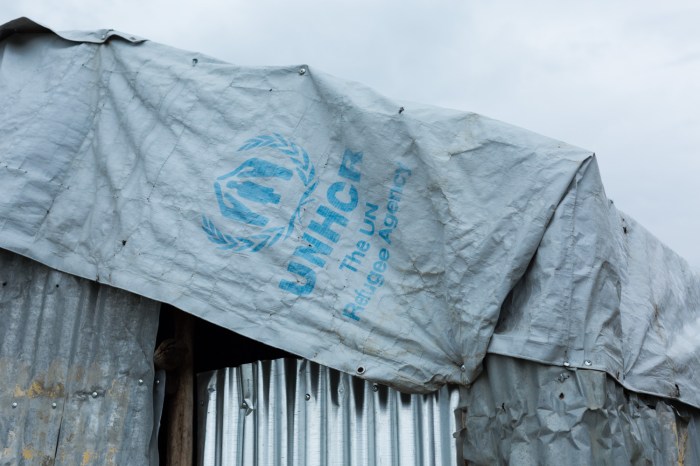
Il y a des signes inquiétants qui indiquent que des atrocités sont commises au Tigré, où les civils sont les principales victimes du conflit opposant les armées d’Ethiopie, d’Erythrée, de Somalie et d’une milice alliée de l’ethnie Amhara aux forces de l’ancienne administration régionale. 

Par une tragique ironie, le gouvernement d’Ethiopie, l’une des premières nations à avoir signé la Convention sur le génocide de 1948, est actuellement accusé d’avoir permis et participé à des violences qui pourraient être assimilées à un génocide et à des crimes contre l’humanité.

Tout aussi ironique est le fait que l’avenir d’un prix Nobel qui professe le christianisme évangélique, est désormais inextricablement lié à celui du dirigeant dont le régime est réputé avoir commis des crimes contre l’humanité, y compris le crime de persécution religieuse qui vise en grande partie les chrétiens évangéliques érythréens.

Pour le dirigeant érythréen, Isais Afewerki, la guerre contre le Tigré est l’accomplissement d’une vendetta de longue date contre le Front de libération du peuple du Tigré (TPLF). Il a efficacement rallié à sa cause les dirigeants de l’Éthiopie et de la Somalie, aidé dans cette entreprise par l’antipathie que nourrit le Premier ministre éthiopien Abiy Ahmed à l’égard des dirigeants du Tigré et par ses ambitions de centralisation du pouvoir.

Continue reading “Massacres, famine et destruction gratuite : La communauté internationale doit agir rapidement pour sauver la région du Tigré en Éthiopie”

Massacres, starvation and wanton destruction: The international community must act swiftly to save Ethiopia’s Tigray region

There are worrying indications that atrocity crimes may be underway in Tigray, where civilians are bearing the brunt of a conflict pitting the armies of Ethiopia, Eritrea, Somalia and an allied ethnic Amhara militia against the forces of the former regional administration.  

In a tragic irony, the government of Ethiopia, one of the first nations to sign the 1948 Genocide Convention, currently stands accused of permitting and participating in violence that could amount to genocide and crimes against humanity.

Equally ironic is the fact that the future of a Nobel Laureate who professes Evangelical Christianity, is now inextricably linked with that of the leader whose regime is deemed to have committed crimes against humanity, including the crime of religious persecution that largely targets Eritrean Evangelical Christians.

For Eritrea’s leader, Isaias Afewerki, the war on Tigray is the fulfilment of a long-held vendetta against the Tigray People’s Liberation Front (TPLF). He has effectively groomed the leaders of Ethiopia and Somalia, aided in this endeavour by Ethiopian Prime Minister Abiy Ahmed’s own antipathy towards the Tigrayan leadership and ambitions of centralising power.

Continue reading “Massacres, starvation and wanton destruction: The international community must act swiftly to save Ethiopia’s Tigray region”

Instead of gossiping about the Kim dynasty, the world should focus on North Korea’s human rights atrocities

By Benedict Rogers

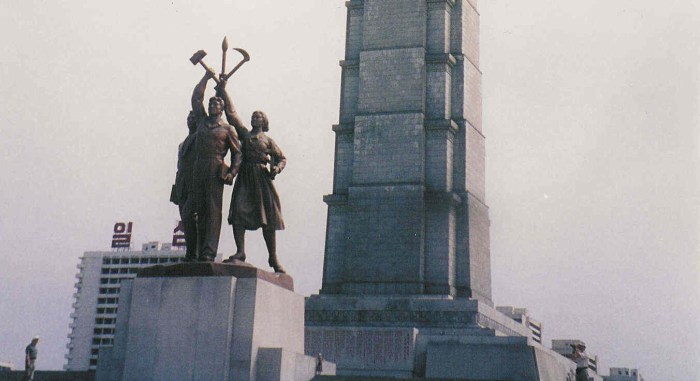
One of the very few non-COVID-19 stories that hit the headlines last month was the rumoured near-death of North Korea’s dictator Kim Jong-Un. For almost three weeks the speculation grew that he was dying or had died, and the discussion around who would succeed him reached near-fever pitch. Would it be his sister Kim Yo-jong? But would conservative North Korea be ready for a female leader? Would it be a senior military leader? But then what would that do to the regime’s credibility in the eyes of the North Korean people, if the Kim dynastic succession was broken?

But then, almost as mysteriously as he disappeared, the man known as “the Dear Leader” re-emerged, opening a fertilizer plant outside Pyongyang. Precisely what had happened remains known only to the core leadership of the world’s most secretive state. There was no shortage of rumours. It was suggested that he may have had surgery, that he may have had coronavirus, that he may simply have escaped Pyongyang to avoid infection and even that he had been injured in a missile test. But will we ever know?

Continue reading “Instead of gossiping about the Kim dynasty, the world should focus on North Korea’s human rights atrocities”

Burma’s much needed ceasefire presents a valuable opportunity, provided the military keeps its promises

By Benedict Rogers

Burma’s Cardinal Bo has repeatedly called for peace for a long time. In a statement last month in support of Pope Francis’ plea for a global ceasefire, he warned that during the COVID-19 pandemic continued armed conflict in Burma (officially known as Myanmar) would have “catastrophic consequences for our nation.”

He urged the military – known as the Tatmadaw – and ethnic armed resistance groups to “lay down all weapons and acts of aggression. Be armed instead with sincerity and truth. Let us take the more difficult path of overcoming differences face to face with courage and intelligence. Don’t hide humanity behind guns. In the end that is sheer weakness.”

The Cardinal, who is also President of the Federation of Asian Bishops Conferences, argued that: “Soldiers are unnecessarily endangered by exposure to the unseen viral assassin. Civilians are endangered, even by bombardments purportedly aimed at military targets. Peace negotiations are endangered by continued aggressive threats. An economy under severe strain is put at risk by military adventures. Any spike in contagion in IDP camps, among detained persons, or in crowded spaces, gravely threatens the surrounding populations as well.”

Continue reading “Burma’s much needed ceasefire presents a valuable opportunity, provided the military keeps its promises”

“No one is immune from the roundups”: Life for Uyghurs in China’s Xinjiang region

China’s Xinjiang Uyghur Autonomous Region is currently witnessing an unprecedented human rights crisis in which between one and three million predominantly Muslim Uyghurs, Kazakhs and members of other ethnic minorities have been detained without charge or trial in so-called ‘re-education camps.’ The following blog post is written by an expert on Uyghur culture and sheds light on what life is like for those inside the region.

“Imagine a world where your every movement is watched. Where who you meet, who you visit, and even what you talk about is monitored. Where you can be hauled off a bus mid-journey or dragged out of your car at a checkpoint, where your belongings, your identity, your face, your fingerprints and your irises are scanned several times a day, and where the contents of your phone could send you to prison for the rest of your life.

This is the new reality for more than 10 million Uyghurs (pronounced Weega) in China’s north-west Xinjiang province, since the former governor of Tibet, Chen Quanguo was summoned to take over the helm of, in the eyes of Xi Jinping and the Chinese Communist Party, China’s second most problematic province in 2017.

Continue reading ““No one is immune from the roundups”: Life for Uyghurs in China’s Xinjiang region”