Justice Delayed is Justice Denied

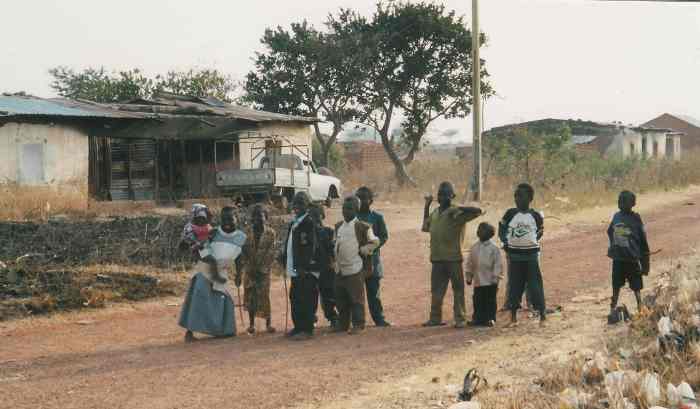
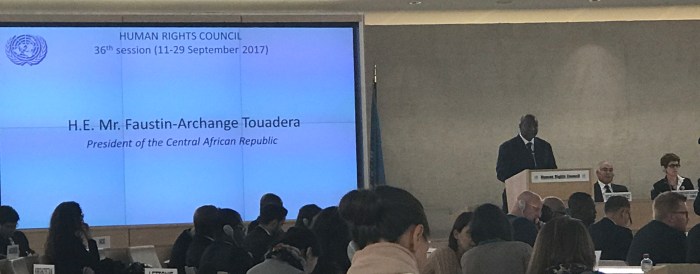
Next week the United Nations’ (UN) Human Rights Council (HRC) is holding a high level dialogue to assess the situation in the Central African Republic (CAR). The last time the HRC considered the situation of CAR was in September 2017, when President Faustin-Archange Touadéra made an unexpected appearance, and addressed member states, nongovernmental organisations (NGOs) and human rights mandate holders.

Christian Solidarity Worldwide (CSW) was present during this address and noted the positive engagement CAR maintains with the UN’s human rights mechanisms, including by granting access to the Independent Expert on CAR, Ms. Marie-Therese Keita Bocoum.

End of transition was not the end of the security crisis

During his speech, President Touadéra noted that the end of the transitional government and the return to democracy did not bring an end to the security crisis in CAR. Since November 2016, armed groups that were once part of the Seleka Alliance have clashed in the north and eastern regions. This violence has been characterised by the targeting of civilians and destruction of civilian infrastructure leading to mass displacement.

Continue reading “Justice Delayed is Justice Denied”
Bangladesh: How long will impunity rule?

“The culture of impunity can’t go on or violence will increase.” – Ajoy Roy

The words of Ajoy Roy, the frail father of the late Avijit Roy hit us hard. We listened in silence as he shared his despair and disappointment at the lack of judicial process following the murder of his son in 2015. The murder of Avijit Roy, a blogger, made international news and became a case representative of the situation facing not just bloggers but journalists, lawyers, religious leaders and religious minorities in Bangladesh; these members of Bangladesh’s civil society are vulnerable to threats, harassment and attacks.

Continue reading “Bangladesh: How long will impunity rule?”

India: Striving for Hindu rashtra at the expense of democracy

Recognise that restrictions on public freedoms, extreme inequalities and the mainstreaming of hate around the world are “shearing off the protections that maintain respect”, the High Commissioner for Human Rights, Zeid Ra’ad Al Hussein pleaded with Member States at the 32nd session of the Human Rights Council (HRC).

This sentiment is usually associated with states experiencing severe human rights violations, but the remark is equally relevant to states where human rights violations take place but appear less visible and fail to make news headlines.

The world’s largest democracy

The words ‘largest democracy’ are synonymous with India as a nation state with an electorate of 1.25 billion people and growing. The choice of the Bharatiya Janata Party (BJP) to lead the country may have come as a result of Modi’s election promises of a market orthodoxy for economic revival and open trade.

As such, any proposition that religious freedom in India is deteriorating is deflected by the ‘democracy’ rhetoric despite research showing that understanding freedom of religion or belief is good for business; it comes as no surprise that this defence is readily used by those who have trade and business interests in India, thus casting a cloak of invisibility about the violence against minorities based on religious grounds.

Continue reading “India: Striving for Hindu rashtra at the expense of democracy”

Beyond Boko Haram: Child Abductions in Nigeria

In March 2016, two female minors who had been kidnapped and subject to forced conversion and marriage in Northern Nigeria were returned to their families after unprecedented public pressure. Their plight has put the spotlight on an issue that goes largely unremarked outside of northern Nigeria.

#FreeEse: The Abduction and Return of Ese Rita Oruru

Fourteen year-old Ese Rita Oruru from Bayelsa State in the south of the country, was allegedly abducted on 12 August 2015 by a man called Yunusa Dahiru, also known as “Yellow”. A regular customer at her mother’s food store, he transported Ese, then aged 13, over 800km away to Kano State in the predominantly Muslim north of the country, where she was obliged to change her religion and name, and was “married”.

Continue reading “Beyond Boko Haram: Child Abductions in Nigeria”

From the Darkness into the Light: the Hope for Justice in North Korea

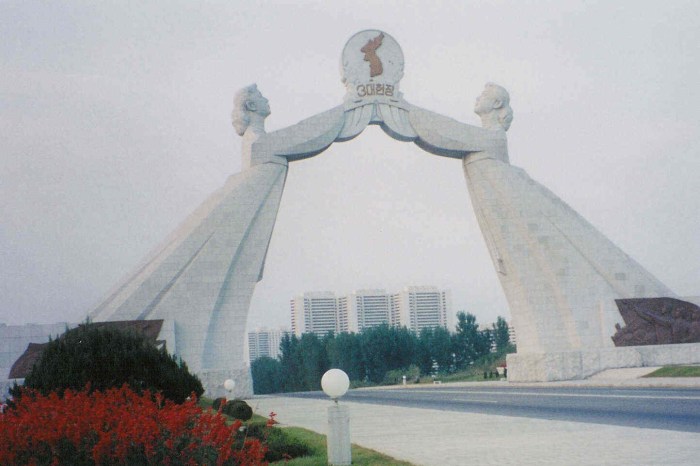
Today, marching, singing and dancing will flood the capital of one the most notoriously secretive and closed nations in the world. 15 April is the “Day of the Sun” in North Korea, one of the most important national holidays in the country because it venerates the late founder and perpetual leader, Kim Il-Sung.

Despite the awesome displays of colourful dance events and firework displays to celebrate Kim Il-Sung’s perceived achievements in creating the ‘revered’ nation, the reality is far from being a day in the sun, but more a descent into darkness.

The ‘Great’ Leader Who Founded a Despotic Regime

Kim Il-Sung, the ‘Father’ of North Korea, was highly instrumental in establishing one of the most authoritarian regimes in the world. Between the late 1940s and early 1990s he oversaw the creation of a country ruled by fear. The Workers’ Party he founded crushed dissent, abducted foreign nationals, created an extremely discriminatory and hierarchical ‘songbun’ caste system, and forcibly detained hundreds of thousands into a hidden prison system, which still subjects North Koreans to forced labour, torture and even execution. Both his son, Kim Jong-Il, and his grandson, Kim Jong-Un have continued the brutal legacy.

Continue reading “From the Darkness into the Light: the Hope for Justice in North Korea”