All posts

Warning Signs Unheeded: The Kandhamal Tragedy

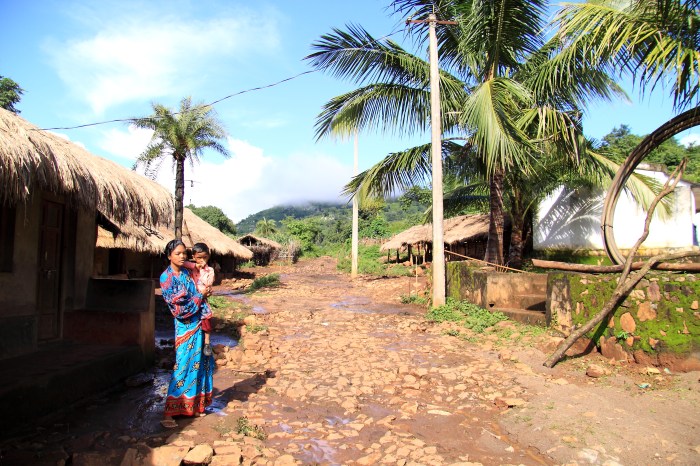
Kandhamal district is among the poorest and most marginalised in Odisha (formerly Orissa) state, India. On 25 August 2008, it was the epi-centre of communal attacks against the Christian community in India. Local monitoring groups have estimated that over 90 people were killed with at least 54,000 displaced and over 300 churches destroyed by groups belonging to the Rashtriya Swayamsevak Sangh (RSS) that espouses the Hindutva ideology.

Ten years on, attacks on religious minorities and on freedom of expression by groups belonging to the RSS continue. The lack of official condemnation towards acts of intimidation and violence has further empowered these groups. As with recent attacks against religious minorities in India, the carnage that unfolded in Kandhamal was not a one-off isolated incident devoid of a historical narrative.

Continue reading “Warning Signs Unheeded: The Kandhamal Tragedy”
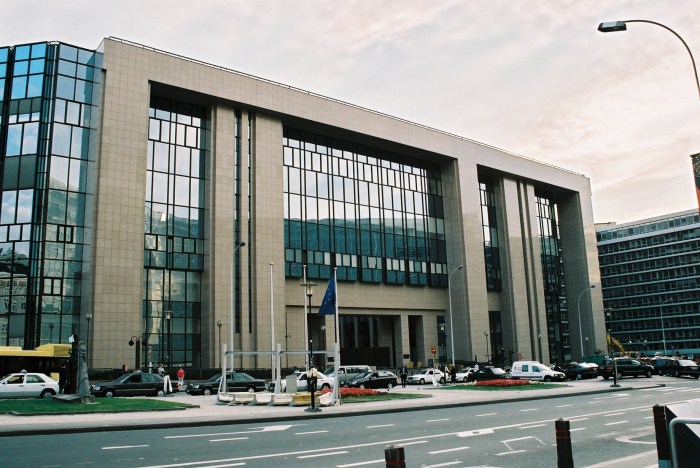
As a newly elected member of the Human Rights Council, Nepal must practice what it pledges

All elected Member States of the United Nations Human Rights Council (HRC) have a special obligation to protect and promote human rights. While every State has a responsibility to uphold human rights, in theory and in practice, Member States on the Council are in a unique position; and to that end, it is important that they practice what they’re supposed to preach.

During the HRC elections, candidates submit voluntary pledges, committing to the promotion and protection of human rights, and once elected, to maintaining high standards towards the protection and promotion of human rights.

Often, a State’s campaign for election is not free from criticism. Indeed, current HRC Council Members include Saudi Arabia, Pakistan, and China; countries which are frequently pulled up for serious human rights violations.

“While every state has a responsibility to uphold human rights, in theory and in practice, Member States on the Council are in a unique position; and to that end, it is important that they practice what they’re supposed to preach.”

In 2017, Nepal was elected as a Member of the HRC. The country will serve for a period of three years, and could serve up to two consecutive terms. It is important that Nepal embraces its position on the Council, calls out human rights abuses, makes recommendations, and promotes peace and reconciliation and supports the work of Special Procedures among other human rights mechanisms.

Continue reading “As a newly elected member of the Human Rights Council, Nepal must practice what it pledges”

Diplomacy and Determination: Five Years of the EU Guidelines on Freedom of Religion or Belief

June 2018 marks five years since the European Union (EU) Foreign Affairs Council adopted Guidelines on the promotion and protection of the right to freedom of religion or belief (FoRB). This anniversary provides an opportune moment to reflect on how the Guidelines are being used and whether they are fulfilling their intended function.

It is encouraging that FoRB has risen so significantly on the EU’s foreign policy agenda since 2013, but there remains substantial room for improvement. In particular, to ensure better implementation of the guidelines emphasis needs to be placed on increasing EU efforts to train officials on FoRB and on monitoring violations in countries worldwide.

Diplomacy works well until it doesn’t

The EU FoRB Guidelines were the result of a complex drafting process involving broad consultation with civil society specialising in this field of human rights including CSW and negotiated compromises between EU member states. They commit the EU to mainstreaming FoRB in its external human rights policy and identify practical steps EU institutions and member states should take to prevent and address FoRB violations in a “timely, consistent and coherent manner.” The text strongly affirms that the EU is “determined” to promote FoRB as a core part of the indivisible human rights landscape and free from alignment with any particular religious or non-religious agenda.

Continue reading “Diplomacy and Determination: Five Years of the EU Guidelines on Freedom of Religion or Belief”

The UN Belongs to All of Us: Chinese Prisoners of Conscience Speak Out

Welcome to the United Nations. It’s your world.

Until recently, when you accessed the United Nations (UN) website, these words would appear. They’re still used on some webpages, and the sentiment behind them still stands.

The UN is often the subject of criticism, and its flaws are well-documented, yet it remains one of the most important arenas for raising human rights concerns, including the right to freedom of religion or belief.

Three times a year, in Geneva, Switzerland, the UN Human Rights Council comes together and UN staff, member state delegations and non-governmental Organisations (NGOs) all rub shoulders in meetings, formal sessions and – frequently – impromptu chats over coffee and in canteen queues.

On the agenda are some of the most serious human rights situations in the world.

This is also an opportunity for NGOs like Christian Solidarity Worldwide (CSW) to organise side events running parallel to discussions at the Council, where victims of human rights violations, as well as experts and activists, can present their cases in an open forum. In March 2018, CSW hosted one of its first side events at the UN Human Rights Council since obtaining ECOSOC Consultative Status: an opportunity to discuss some of the most severe and complex challenges to religious communities in China.

Continue reading “The UN Belongs to All of Us: Chinese Prisoners of Conscience Speak Out”

Justice Delayed is Justice Denied

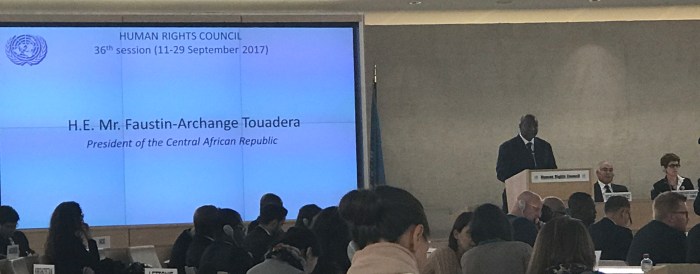
Next week the United Nations’ (UN) Human Rights Council (HRC) is holding a high level dialogue to assess the situation in the Central African Republic (CAR). The last time the HRC considered the situation of CAR was in September 2017, when President Faustin-Archange Touadéra made an unexpected appearance, and addressed member states, nongovernmental organisations (NGOs) and human rights mandate holders.

Christian Solidarity Worldwide (CSW) was present during this address and noted the positive engagement CAR maintains with the UN’s human rights mechanisms, including by granting access to the Independent Expert on CAR, Ms. Marie-Therese Keita Bocoum.

End of transition was not the end of the security crisis

During his speech, President Touadéra noted that the end of the transitional government and the return to democracy did not bring an end to the security crisis in CAR. Since November 2016, armed groups that were once part of the Seleka Alliance have clashed in the north and eastern regions. This violence has been characterised by the targeting of civilians and destruction of civilian infrastructure leading to mass displacement.

Continue reading “Justice Delayed is Justice Denied”