Never Again: Reflections on ten years since the Kandhamal Tragedy in India

In 2008, the Christians of Kandhamal District in Odisha state in India experienced the most severe outbreak of anti-Christian violence in the country’s history. The attacks claimed over 100 lives, forced 56,000 people to flee their homes and saw the destruction of 5,600 homes and 300 churches. Father Ajaya Kumar Singh, a survivor of the tragedy in Kandhamal, sought to equip himself with the ability to advocate for fellow survivors following the attacks, and has campaigned tirelessly for compensation and justice.

On the 10th anniversary since the outbreak of the attacks, Father Ajaya spoke to CSW about the current situation in Kandhamal, and about what can be done by both the government of India and the international community to help bring justice, and to ensure that an event like the one which took place in Kandhamal never happens again.

Continue reading “Never Again: Reflections on ten years since the Kandhamal Tragedy in India”

Religious Identity and Conflict in the Middle East

The Arab Spring reignited a debate within the Middle East and in academic circles about the universality of human rights and their compatibility, or incompatibility, with culture and religion. Although the Arab Spring was marked by the rise of Political Islam movements, it also opened the door  to discussions on topics that had long been taboo, such as sectarianism, racism and gender equality in the Arab world.

Religion has dominated politics in the Middle East for centuries, and plays a significant role in the lives of individuals: their rights, opportunities and social status are all impacted by it.

Constitutions, laws, education systems and even art and sport are viewed through the lens of religion, and every effort is made to ensure that these elements of society comply with religious norms and symbolism.

Sectarianism remains a powerful political, social and cultural force, and the source of most conflicts in the Middle East. Many of the current conflicts in the region have deep historical roots – most notably the ongoing Arab-Israeli conflict and the Sunni-Shi’a division.

Continue reading “Religious Identity and Conflict in the Middle East”

Does a thaw in relations between Eritrea and Ethiopia offer hope for Christians?

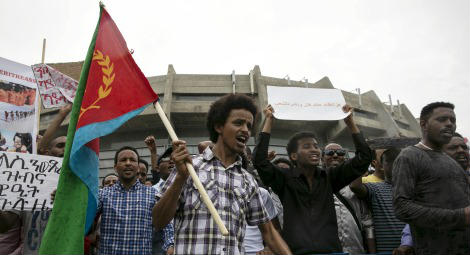
A thick layer of dust coats everything inside the Eritrean embassy in the Ethiopian capital, which was unlocked this week for the first time since 1998. Photos of this ‘time capsule’ were published by the BBC, which, along with the world’s media, is charting the remarkable thaw in relations between Eritrea and Ethiopia. The two nations went to war in 1998 but maintained a war footing due to Ethiopia’s refusal to allow demarcation of their common border, in accordance with a 2003 ruling.

Continue reading “Does a thaw in relations between Eritrea and Ethiopia offer hope for Christians?”

The time capsule: Reflections from Cuba

CSW’s Latin America Advocacy Officer reflects on the island where things are supposed to changing politically, but in many ways stay the same.

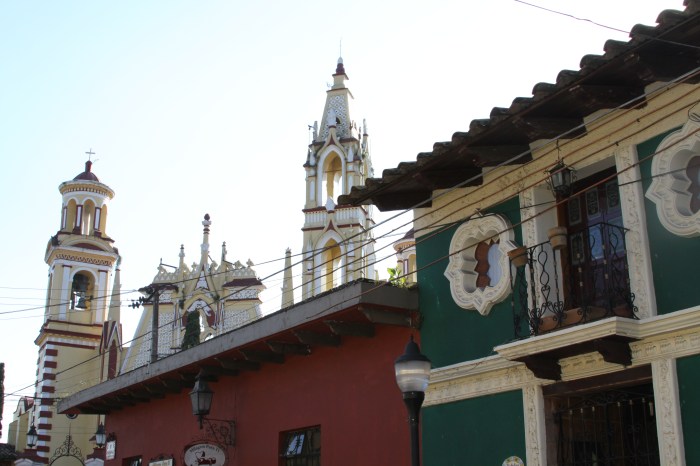
Visitor numbers are soaring, with over 2 million tourists arriving in Cuba each year.  And why wouldn’t they be? Historic Havana, churches, cigar factories, vintage cars, live music, art galleries and museums, UNESCO heritage sites, beautiful beaches and the warm climate all make for the perfect holiday destination.

Cuba, a land where you can experience the past, in the present. When people think of Cuba, isn’t this what comes to mind?

But much of the world remains unaware that travelling off the  beaten path leaves a bittersweet taste in the mouth. In a country with some of the most hospitable and generous people you will ever meet, you will also find that many live on less than $2 a day – and for a number of reasons, the exact figure of those living in poverty is hard to ascertain.

Outside the capital most people cannot afford the comfortable luxury of a Chevrolet and many get around by horse and carriage or ‘cogiendo botella’; in other words, they hitch a ride with whoever is passing by. And whilst a horse and carriage may make for a true Cuban experience and a good photo opportunity, it is also symbolic of a time warp that isn’t so positive for its citizens.

Continue reading “The time capsule: Reflections from Cuba”

Extremists Emboldened As Religious Intolerance Rises in India’s Tamil Nadu state.

It has been two months since Persia Jacob was repeatedly kicked in the face when she resisted a mob of Hindu extremists who tried to snatch her Bible away from her. She wakes up with a heavy head every morning, having to take medication to relieve her of the trauma, even if temporarily, so that she can get on with her day.

The 38 year-old Christian remained persistent that she would die and couldn’t be without the Bible as they pushed and slapped her, stripping off her saree as they tried to grab it [the copy of Bible] from her. The Bible was then set ablaze along with several other copies of Christian literature.

As well as attempting to force her to convert to Hinduism, the mob of men raided four other prayer halls in Madurai District of Tamil Nadu state, as Christians gathered for Sunday worship.

Continue reading “Extremists Emboldened As Religious Intolerance Rises in India’s Tamil Nadu state.”