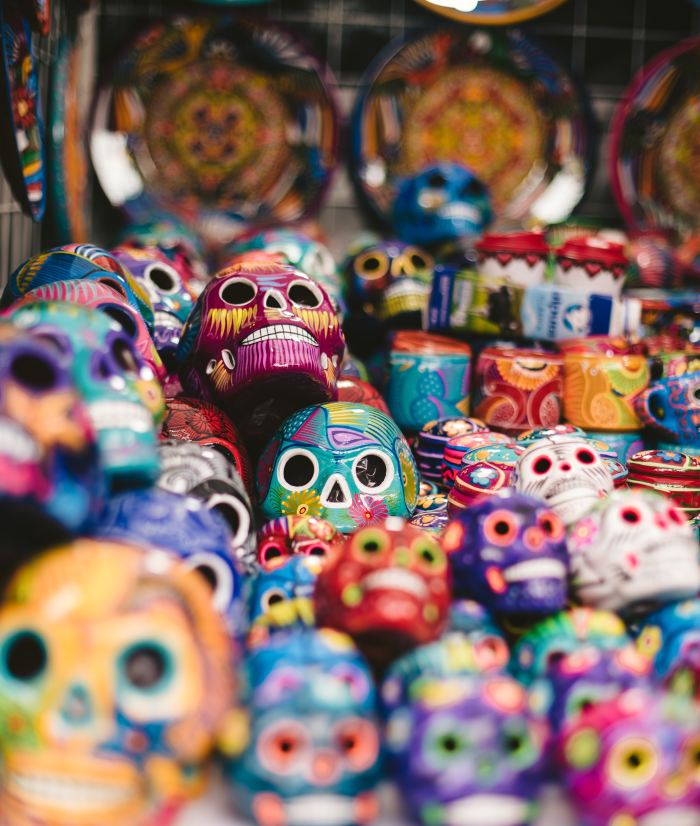
A Bridge Between Two Worlds: Challenges for Mexico’s Religious Minorities on the Day of the Dead

Growing up in a family, in a culture even, where death is taboo, where people are afraid to talk about it, it seemed strange to me that on the other side of the world, death is deeply ingrained in Mexican culture and in the Mexican people.

In Mexican literature and art there is a fixation with death. The celebrated Mexican poet and diplomat, Octavio Paz, wrote “To the inhabitant of New York, Paris or London, death is a word that is never uttered because it burns the lips. The Mexican, on the other hand, frequents it, mocks it, caresses it, sleeps with it, celebrates it; it is one of his favourite toys and his most enduring love […] he looks at it face to face with impatience, disdain or irony.”

Continue reading “A Bridge Between Two Worlds: Challenges for Mexico’s Religious Minorities on the Day of the Dead”

‘Renounce your faith or leave’: The Ultimatum facing a number of Protestant families in Mexico

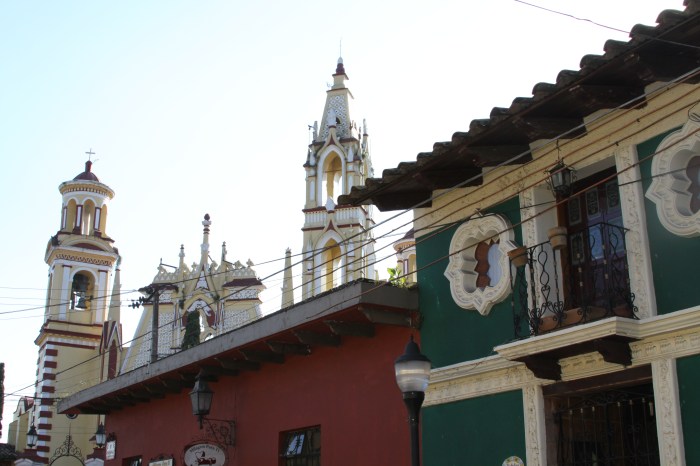
While the Mexican constitution provides strong protections for freedom of religion or belief (FoRB), moderate to severe violations of this right are regular occurrences in many parts of the country, particularly the states of Chiapas, Hidalgo and Oaxaca. Often these violations take the form of local authorities attempting to enforce conformity on religious minorities, for example, by denying access to basic services to Protestant families in majority Catholic villages.

CSW’s latest fact-finding visit to Mexico revealed a number of cases where Protestant families have been presented with an ultimatum to either renounce their faith or leave their village before a specific deadline.

To take one example, last year in Colonia Los Llanos in the San Cristóbal de las Casas Municipality, Chiapas, several Protestant families were forced to leave their village after they defied orders to renounce their religious beliefs. CSW also found evidence of similar experiences in two more communities in Chiapas and another in Oaxaca during the visit.

These ultimatums do not come out of nowhere and tend to follow years of religious tension.

Tensions include but are not limited to threats, cutting off basic services and attempts to force minority groups to pay fines or participate in religious activities. In another example, just last month community leaders in another part of Chiapas refused to allow the burial of a Protestant woman in the village cemetery and her family were forced to bury her in a nearby city.   The Mexican government regularly fails to act to reduce such tensions or to stop the deliverance of ultimatums. A culture of impunity surrounds the local authorities responsible for these violations of FoRB.

Continue reading “‘Renounce your faith or leave’: The Ultimatum facing a number of Protestant families in Mexico”

The time capsule: Reflections from Cuba

CSW’s Latin America Advocacy Officer reflects on the island where things are supposed to changing politically, but in many ways stay the same.

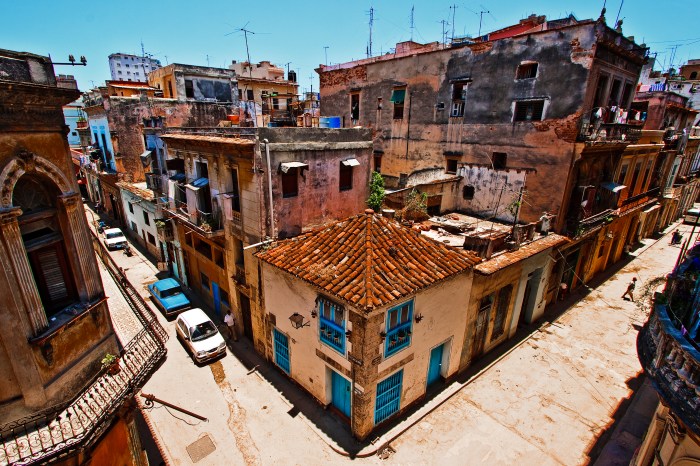
Visitor numbers are soaring, with over 2 million tourists arriving in Cuba each year.  And why wouldn’t they be? Historic Havana, churches, cigar factories, vintage cars, live music, art galleries and museums, UNESCO heritage sites, beautiful beaches and the warm climate all make for the perfect holiday destination.

Cuba, a land where you can experience the past, in the present. When people think of Cuba, isn’t this what comes to mind?

But much of the world remains unaware that travelling off the  beaten path leaves a bittersweet taste in the mouth. In a country with some of the most hospitable and generous people you will ever meet, you will also find that many live on less than $2 a day – and for a number of reasons, the exact figure of those living in poverty is hard to ascertain.

Outside the capital most people cannot afford the comfortable luxury of a Chevrolet and many get around by horse and carriage or ‘cogiendo botella’; in other words, they hitch a ride with whoever is passing by. And whilst a horse and carriage may make for a true Cuban experience and a good photo opportunity, it is also symbolic of a time warp that isn’t so positive for its citizens.

Continue reading “The time capsule: Reflections from Cuba”

Impunity Breeds Distrust – Religious Leaders as Human Rights Defenders in Mexico

Who do you trust to look after your community? According to the 2018 Edelman Trust Barometer survey, 71% of Mexican citizens would rather put their trust in non-governmental organisations (NGOs) than the government, which has the confidence of a mere 24% of the population.

These stark statistics beg the question: what could be driving such levels of distrust in the Mexican government?

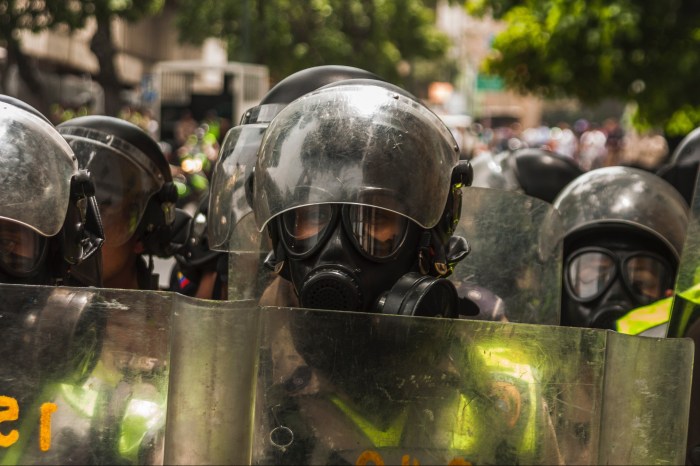
Currently, Mexico is the second most dangerous country in the world to be a Catholic priest. Other religious leaders are also increasingly targeted; between November 2013 and April 2018, 30 religious leaders were killed. In April 2018 alone, three religious leaders were killed. Moreover, Mexico is the second most dangerous country in the world to be a journalist.

Religious leaders often take on the role of human rights defenders (HRDs), engaging with various human rights initiatives in order to bring the issues of their respective communities to the attention of those who can provide legal, practical or advocacy assistance. As such, these religious leaders often fulfil the role of community leaders as well as HRDs. It’s dangerous work. In 2017, 32 HRDs were killed according to a report by Front Line Defenders.

Continue reading “Impunity Breeds Distrust – Religious Leaders as Human Rights Defenders in Mexico”

Shared experiences in the context of extreme violence: what is the Church’s role?

Over the past decades, both Peru and Colombia have experienced internal conflicts which involved extreme levels of violence in many regions and high loss of life. While the conflicts were political (pitting far left groups against the government and/or far right paramilitary groups) they directly impacted ordinary civilians and civil society, including churches.

In many cases, Christians, especially church leaders, were targeted for different reasons by the various armed actors. This directly affected freedom of religion or belief (FoRB) in those areas.

In both countries, the larger Church (composed of many different denominations) found itself looking for ways to respond to the conflict and especially how to support the churches, Christians and others living in conflict zones.

Continue reading “Shared experiences in the context of extreme violence: what is the Church’s role?”