FoRB on the Frontlines: Fighting for freedom as long as it’s necessary

The Ladies in White are a Cuban peaceful protest movement comprising the wives and other female relatives of jailed dissidents. Last year CSW interviewed their leader, Berta Soler, about her experiences, and the challenges facing Cuba:

“My activism really got started in 2003 when the government took [imprisoned] 75 men and one woman just because they defended the Declaration of Human Rights.

I and the other Ladies in White are women who are prepared, very well prepared, and aware that we are in a struggle for the freedom of political prisoners and for respect for human rights in my country. And we, the Ladies in White and I, are very conscious that in my country we need freedom and rights, especially for the men and women who are in prison just for demanding this and promoting and defending the Universal Declaration of Human Rights.

Continue reading “FoRB on the Frontlines: Fighting for freedom as long as it’s necessary”

FoRB on the Frontlines: Under threat of violence

Nehemiah Thumbnail USE

In the run-up to Human Rights Day on 10 December and the 20th anniversary of the UN Declaration on Human Rights Defenders on 9 December, CSW has been speaking with HRDs across South Asia to find out what it means to be a FoRB defender in the region.

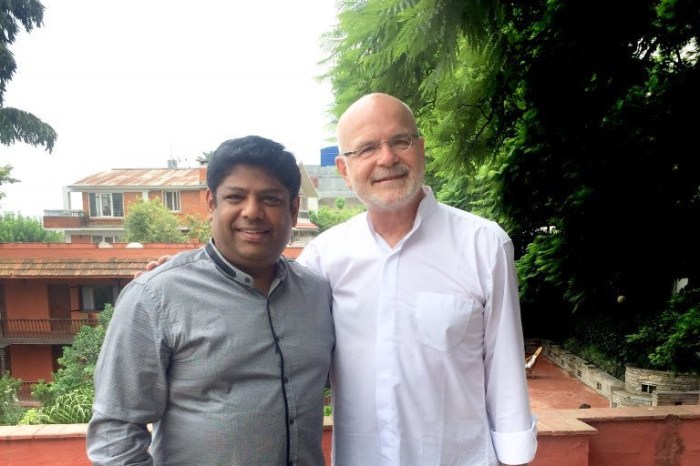
Nehemiah Christie is a human rights defender working in India:

“My experience as a human rights and FoRB defender in South India has worsened ever since the Modi government came to power. With the BJP relying on the backing of Hindu fundamentalist groups, the threat to minorities has increased, especially with regard to Christians in India. In Tamil Nadu, where I and many others work on the front line defending people’s right to freedom of religion and belief (FoRB), we have faced extreme hostility.

HRDs here have been shot, raped, and threatened by both state and non-state actors. Threats are often perpetuated by police and other authorities trying to silence our voices by labelling us as anti-national elements working against the interests of India. Continue reading “FoRB on the Frontlines: Under threat of violence”

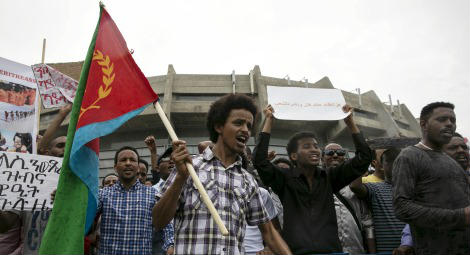
Long read: Eritreans wonder why their president is “making peace with everyone but the Eritrean people”

On the morning of 17 September, Eritrean security operatives arrested former Minister of Finance Berhane Abrehe in Asmara.  According to local reports, 73 year old Mr Abrehe was out having breakfast with his son when he was approached by security agents and instructed to accompany them.

The arrest followed the publication and launch of a two-volume book authored by Mr Abrehe entitled ‘Eritra Hageray’ (Eritrea My Country) in Washington DC. The book is described on the cover as presenting an Eritrean plan on how to end dictatorship and prevent it from happening again. The book received endorsements from several former Eritrean officials in exile, and were accompanied by an audio clip in which Mr Abrehe called, among other things, for the convening of the National Assembly and challenged President Afwerki to a public debate.

Mr Abrehe is currently in an unknown location.  He has been unwell for some time, and there are legitimate concerns for his wellbeing.  Mr Abrehe’s wife, Almaz Habtemariam, has been detained since early 2018, in reprisal for one of their four children fleeing the country.  Both he and his wife are veterans of the liberation struggle.

Continue reading “Long read: Eritreans wonder why their president is “making peace with everyone but the Eritrean people””

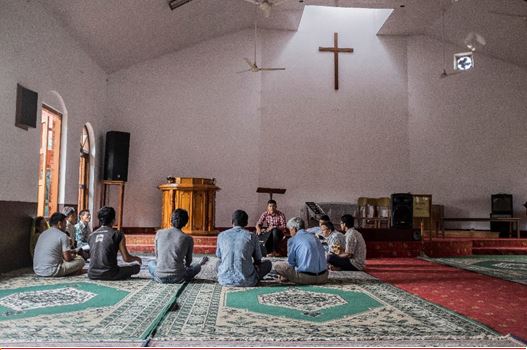
Nepal’s criminalisation of conversion seems to protect Hinduism at the expense of other religions.

Three years on from the date that Nepal adopted its new constitution, there are concerns about its ‘anti-conversion’ clause, which seemed designed to specifically protect Hinduism at the expense of other religions.

The clause, in Article 26 (3) of the constitution, states:

“No person shall, in the exercise of the right conferred by this Article, do, or cause to be done, any act which may be contrary to public health, decency and morality or breach public peace, or convert another person from one religion to another or any act or conduct that may jeopardize other’s religion and such act shall be punishable by law.”

These provisions were strengthened in the Penal Code 2017 which came into force in August 2018. Section 158 states that “No person shall convert any one from one religion to another or make attempt to or abet such conversion”  and carries a punishment of up to five years imprisonment and a fine of up to fifty thousand rupees.

The criminalisation of conversion is a direct infringement on freedom of religion or belief as it robs individuals of the right to change their religion. These provisions also threaten the right to freedom of expression as they could be used to prohibit a range of legitimate expressions of religion or belief such as charitable activities or speaking about one’s faith.

Continue reading “Nepal’s criminalisation of conversion seems to protect Hinduism at the expense of other religions.”

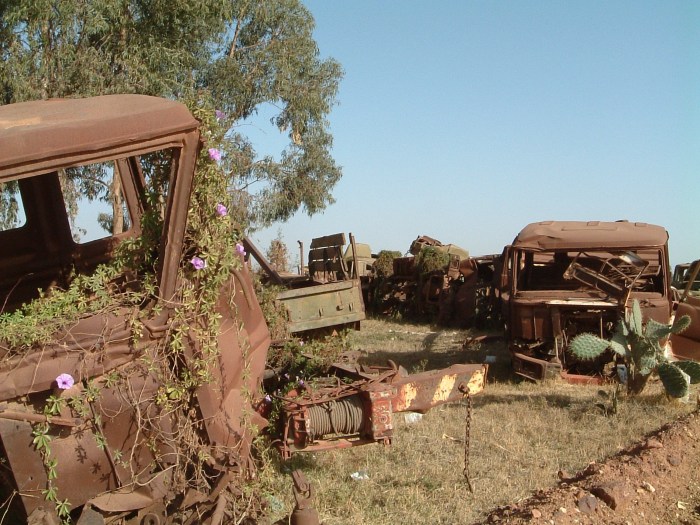
Does a thaw in relations between Eritrea and Ethiopia offer hope for Christians?

A thick layer of dust coats everything inside the Eritrean embassy in the Ethiopian capital, which was unlocked this week for the first time since 1998. Photos of this ‘time capsule’ were published by the BBC, which, along with the world’s media, is charting the remarkable thaw in relations between Eritrea and Ethiopia. The two nations went to war in 1998 but maintained a war footing due to Ethiopia’s refusal to allow demarcation of their common border, in accordance with a 2003 ruling.

Continue reading “Does a thaw in relations between Eritrea and Ethiopia offer hope for Christians?”