Indonesia’s elections reveal a nation at the crossroads between pluralism and intolerance

When the official results confirming the re-election of Joko Widodo as President of Indonesia were announced on 21 May, supporters of his rival, former General Prabowo Subianto, took to the streets. Riots led to carnage in the capital, Jakarta, with at least six people dead. The divisions unleashed by the election campaign were exposed in their ugliest form.

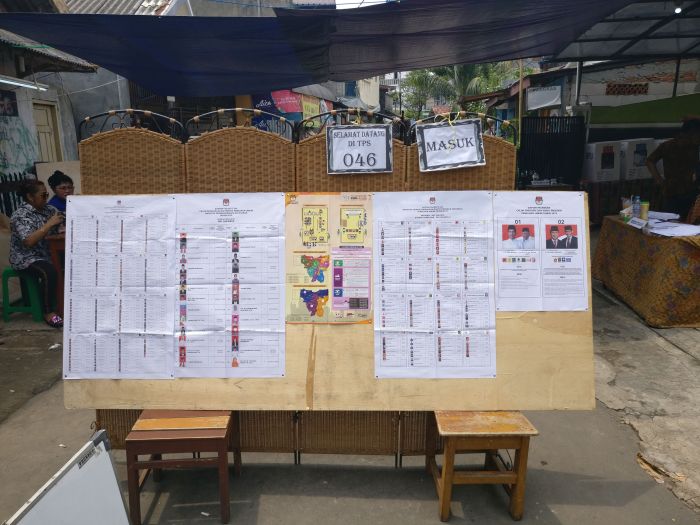
Until that point, Indonesia’s elections had been peaceful and orderly, despite what almost all observers describe as the most divisive campaign in the country’s recent history. On 17 April, over 190 million people cast their votes for the presidency and the national, regional and local legislatures, in one of the world’s biggest and most complex democratic exercises in recent times. To conduct such a poll, in the world’s third largest democracy and fourth most populous nation, across the world’s largest archipelago of 17,508 islands stretching from the Indian to the Pacific Oceans, is a significant feat.

I spent three weeks in Indonesia during the election period. I witnessed the final week of the campaign, election day itself, and the first twelve days after the elections. I travelled to four cities – Jakarta, Medan in North Sumatra, Surabaya in East Java, and Pontianak in West Kalimantan – where I met civil society activists, religious communities and government advisers. I left Indonesia with profoundly mixed feelings.

Continue reading “Indonesia’s elections reveal a nation at the crossroads between pluralism and intolerance”
Central African Republic: is justice being sacrificed for the illusion of peace?

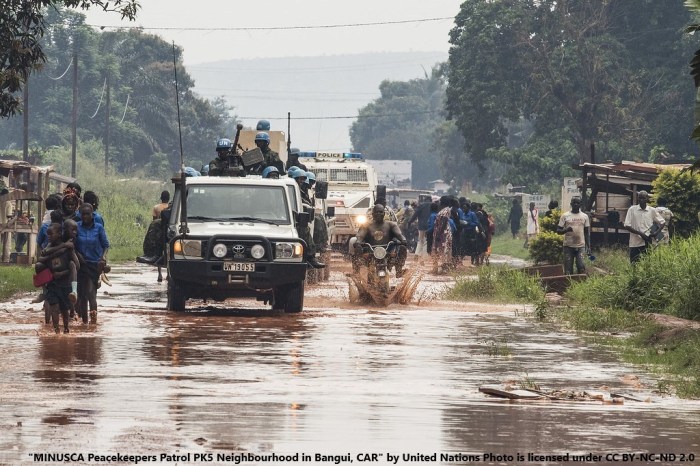
On 21 May, over 26 people were killed and dozens injured when an armed group attacked two villages in the north west of the Central African Republic (CAR). The attacks were reported by the UN peacekeeping mission in CAR, MINUSCA, which confirmed that twelve people were killed in Koundjili village and 14 in Djoumjoum village. 

Whilst reports of violent and devastating attacks on civilians in CAR are not new, these attacks represent a new challenge for the recently re-constituted government following the latest peace agreement between the government and armed groups.

The alleged perpetrator of the attacks on the two villages is the rebel group known as 3R (Return, Reclamation and Reconciliation). The group was formerly part of the Seleka alliance that took over the country following a coup in March 2013.  The alliance was subsequently disbanded, but armed groups fragmented and seized territories outside of the capital, Bangui.

Continue reading “Central African Republic: is justice being sacrificed for the illusion of peace?”

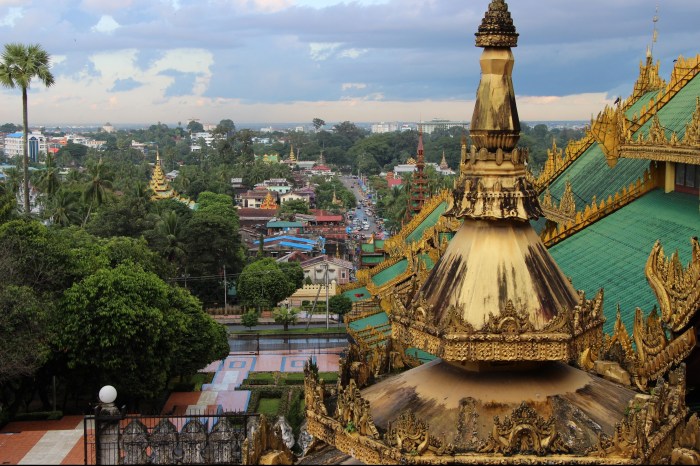
Burma’s identity crisis

The forced closure last week of three temporary Muslim prayer sites in Yangon is just the latest in a litany of abuses inflicted on Burma’s religious minorities by ultra-nationalist Buddhists. Add this to the decades-long persecution by the Burma Army of non-Burman ethnic minorities, many of whom are also non-Buddhists, and you get a nationwide cocktail of religious intolerance and conflict.

Muslims, Christians, and indeed Buddhists, who oppose the extremists are increasingly living in fear, in a country where ethno-religious nationalism has led to hate speech, intolerance, discrimination, persecution, crimes against humanity and, in one particularly egregious case, genocide.

That is the picture presented by CSW’s new report, Burma’s Identity Crisis: How ethno-religious nationalism has led to religious intolerance, crimes against humanity and genocide, published today. The report is the result of over three years’ work, involving first-hand front-line research, supplemented by information provided by CSW’s contacts in Burma and by other organisations working on these issues. It tells the human stories, it analyses the legislative framework, it assesses the international community’s response and it provides a call for action.

Continue reading “Burma’s identity crisis”

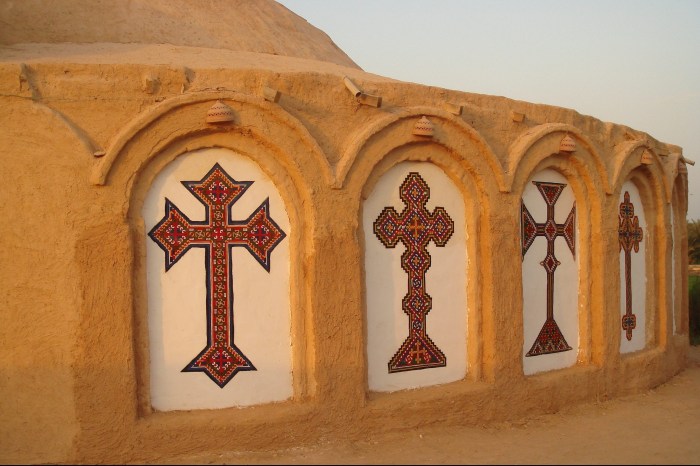
Long read: The history of religious persecution in Egypt

In November 2018, seven Coptic Christians were killed and 18 injured when terrorists attacked the bus they were travelling in to visit the Monastery of Anba Samuel the Confessor in Minya, Upper Egypt. The attack took place in the same location where 28 Coptic Christians were killed and 23 injured less than 18 months previously by masked gunmen who opened fire on the vehicles they were travelling in.

These violent attacks are part of a wider, longer term pattern of religious discrimination and persecution faced by Egypt’s Coptic community. The term ‘persecution’ is not used lightly; according to the Rome Statute of the International Criminal Court, persecution is ‘the intentional and severe deprivation of fundamental rights contrary to international law by reason of the identity of the group or collectivity.’

In order to understand the root causes of religious persecution in contemporary Egypt, it is important to examine the ideological, socio-political and cultural factors that have historically underpinned the persecution of religious minorities in the country.

Continue reading “Long read: The history of religious persecution in Egypt”

Attacks on places of worship: Armed groups raise the stakes in the Central African Republic

Attacks on places of worship in the Central African Republic (CAR) are not a new phenomenon.

In March 2013, the predominantly Muslim rebel alliance, Seleka, seized power, and in the crisis that followed, there were reports of looting and attacks on worshipers in churches initially, spreading to mosques and other places of worship as the conflict assumed an increasingly religious dimension.

Even after the election of President Faustin-Archange Touadéra three years later, attacks on places of worship continue at a disturbing rate.

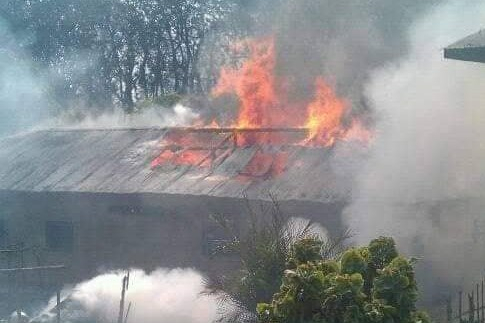
In the capital city Bangui, tensions flare periodically near the KM5 district. In May 2018, at least 15 people, including a clergyman, were killed and 100 injured in an attack on the Our Lady Fatima Catholic Church. On 7 February 2017, three churches were burned and a pastor killed in the same district.

Attacks such as these have taken a new and alarming turn since November 2018.

Continue reading “Attacks on places of worship: Armed groups raise the stakes in the Central African Republic”