Attacks on places of worship: Armed groups raise the stakes in the Central African Republic

Attacks on places of worship in the Central African Republic (CAR) are not a new phenomenon.

In March 2013, the predominantly Muslim rebel alliance, Seleka, seized power, and in the crisis that followed, there were reports of looting and attacks on worshipers in churches initially, spreading to mosques and other places of worship as the conflict assumed an increasingly religious dimension.

Even after the election of President Faustin-Archange Touadéra three years later, attacks on places of worship continue at a disturbing rate.

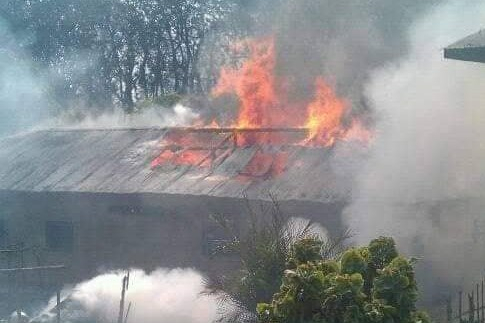
In the capital city Bangui, tensions flare periodically near the KM5 district. In May 2018, at least 15 people, including a clergyman, were killed and 100 injured in an attack on the Our Lady Fatima Catholic Church. On 7 February 2017, three churches were burned and a pastor killed in the same district.

Attacks such as these have taken a new and alarming turn since November 2018.
Continue reading “Attacks on places of worship: Armed groups raise the stakes in the Central African Republic”

FoRB on the Frontlines: Fighting for freedom as long as it’s necessary

The Ladies in White are a Cuban peaceful protest movement comprising the wives and other female relatives of jailed dissidents. Last year CSW interviewed their leader, Berta Soler, about her experiences, and the challenges facing Cuba:

“My activism really got started in 2003 when the government took [imprisoned] 75 men and one woman just because they defended the Declaration of Human Rights.

I and the other Ladies in White are women who are prepared, very well prepared, and aware that we are in a struggle for the freedom of political prisoners and for respect for human rights in my country. And we, the Ladies in White and I, are very conscious that in my country we need freedom and rights, especially for the men and women who are in prison just for demanding this and promoting and defending the Universal Declaration of Human Rights.

Continue reading “FoRB on the Frontlines: Fighting for freedom as long as it’s necessary”

Will the Surabaya church bombings serve as a wake-up call for Indonesia ahead of next year’s presidential elections?

Father Aloysius Widyawan opened the door of an upstairs room in the Santa Maria Tak Bercela Catholic Church. “Three months ago, this room was completely filled with blood, body parts, teeth, even the faces of the bombers, strewn by the force of the blast,” he told me.

He pointed out windows that had been blown out, and the icons of St Luke and St John, damaged but not destroyed. He told me about the two young Catholic boys, Evan and Nathan, aged 12 and eight, who died as a result of their injuries. They had been baptized only two years before and had just received their first Communion. He described the Muslim security guard who lost both eyes and legs in the explosion, and later told the priest: “Please forgive me because I was not able to protect the church and the people, and am unable to work again.” Six people were killed and more than 30 injured in that one church alone.

Continue reading “Will the Surabaya church bombings serve as a wake-up call for Indonesia ahead of next year’s presidential elections?”

The time capsule: Reflections from Cuba

CSW’s Latin America Advocacy Officer reflects on the island where things are supposed to changing politically, but in many ways stay the same.

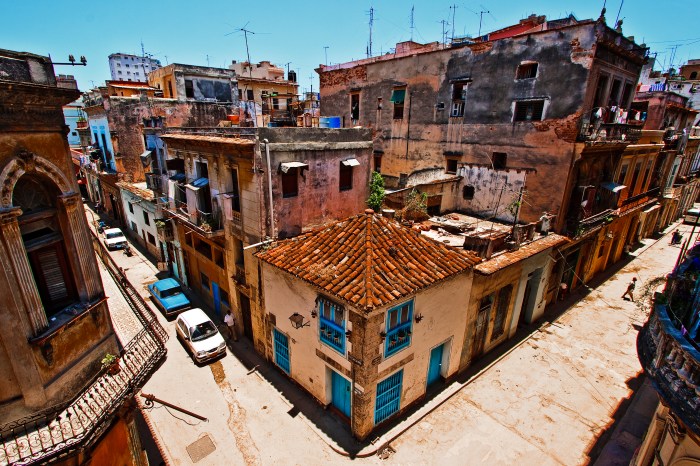
Visitor numbers are soaring, with over 2 million tourists arriving in Cuba each year.  And why wouldn’t they be? Historic Havana, churches, cigar factories, vintage cars, live music, art galleries and museums, UNESCO heritage sites, beautiful beaches and the warm climate all make for the perfect holiday destination.

Cuba, a land where you can experience the past, in the present. When people think of Cuba, isn’t this what comes to mind?

But much of the world remains unaware that travelling off the  beaten path leaves a bittersweet taste in the mouth. In a country with some of the most hospitable and generous people you will ever meet, you will also find that many live on less than $2 a day – and for a number of reasons, the exact figure of those living in poverty is hard to ascertain.

Outside the capital most people cannot afford the comfortable luxury of a Chevrolet and many get around by horse and carriage or ‘cogiendo botella’; in other words, they hitch a ride with whoever is passing by. And whilst a horse and carriage may make for a true Cuban experience and a good photo opportunity, it is also symbolic of a time warp that isn’t so positive for its citizens.

Continue reading “The time capsule: Reflections from Cuba”

Shared experiences in the context of extreme violence: what is the Church’s role?

Over the past decades, both Peru and Colombia have experienced internal conflicts which involved extreme levels of violence in many regions and high loss of life. While the conflicts were political (pitting far left groups against the government and/or far right paramilitary groups) they directly impacted ordinary civilians and civil society, including churches.

In many cases, Christians, especially church leaders, were targeted for different reasons by the various armed actors. This directly affected freedom of religion or belief (FoRB) in those areas.

In both countries, the larger Church (composed of many different denominations) found itself looking for ways to respond to the conflict and especially how to support the churches, Christians and others living in conflict zones.

Continue reading “Shared experiences in the context of extreme violence: what is the Church’s role?”