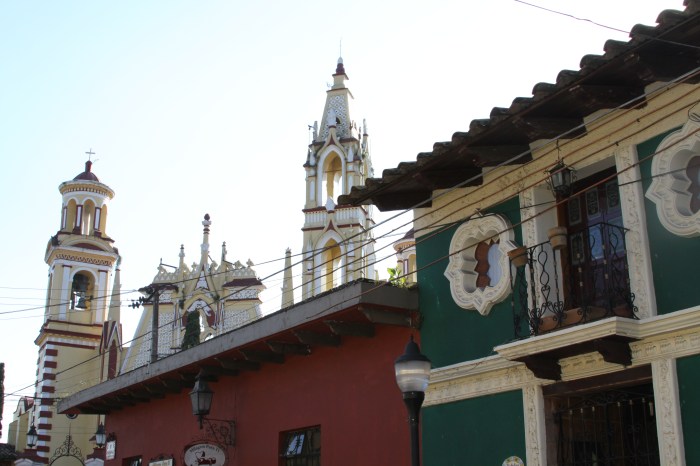
‘Renounce your faith or leave’: The Ultimatum facing a number of Protestant families in Mexico

While the Mexican constitution provides strong protections for freedom of religion or belief (FoRB), moderate to severe violations of this right are regular occurrences in many parts of the country, particularly the states of Chiapas, Hidalgo and Oaxaca. Often these violations take the form of local authorities attempting to enforce conformity on religious minorities, for example, by denying access to basic services to Protestant families in majority Catholic villages.

CSW’s latest fact-finding visit to Mexico revealed a number of cases where Protestant families have been presented with an ultimatum to either renounce their faith or leave their village before a specific deadline.

To take one example, last year in Colonia Los Llanos in the San Cristóbal de las Casas Municipality, Chiapas, several Protestant families were forced to leave their village after they defied orders to renounce their religious beliefs. CSW also found evidence of similar experiences in two more communities in Chiapas and another in Oaxaca during the visit.

These ultimatums do not come out of nowhere and tend to follow years of religious tension.

Tensions include but are not limited to threats, cutting off basic services and attempts to force minority groups to pay fines or participate in religious activities. In another example, just last month community leaders in another part of Chiapas refused to allow the burial of a Protestant woman in the village cemetery and her family were forced to bury her in a nearby city.   The Mexican government regularly fails to act to reduce such tensions or to stop the deliverance of ultimatums. A culture of impunity surrounds the local authorities responsible for these violations of FoRB.

Continue reading “‘Renounce your faith or leave’: The Ultimatum facing a number of Protestant families in Mexico”
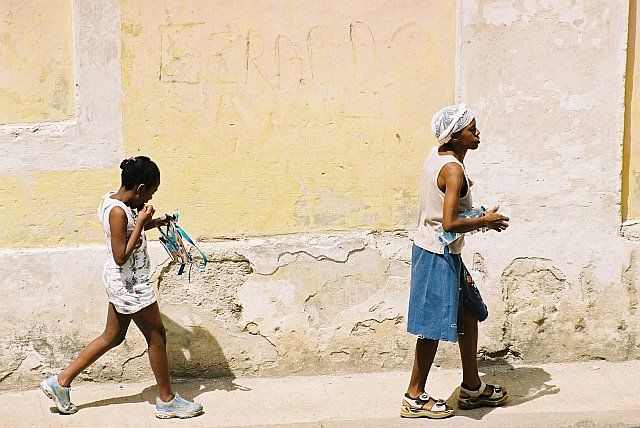
The time capsule: Reflections from Cuba

CSW’s Latin America Advocacy Officer reflects on the island where things are supposed to changing politically, but in many ways stay the same.

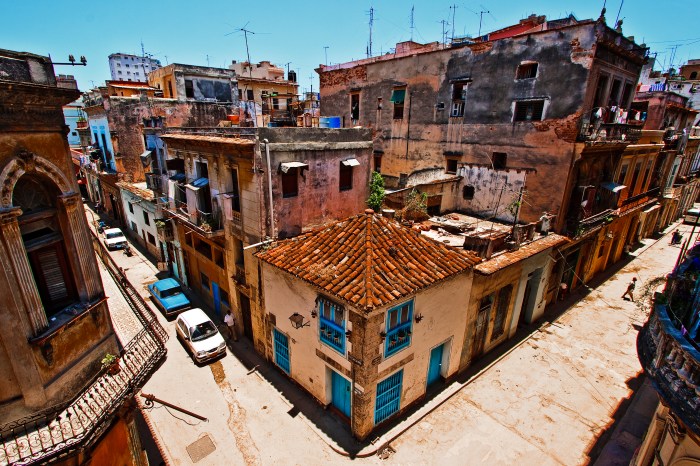
Visitor numbers are soaring, with over 2 million tourists arriving in Cuba each year.  And why wouldn’t they be? Historic Havana, churches, cigar factories, vintage cars, live music, art galleries and museums, UNESCO heritage sites, beautiful beaches and the warm climate all make for the perfect holiday destination.

Cuba, a land where you can experience the past, in the present. When people think of Cuba, isn’t this what comes to mind?

But much of the world remains unaware that travelling off the  beaten path leaves a bittersweet taste in the mouth. In a country with some of the most hospitable and generous people you will ever meet, you will also find that many live on less than $2 a day – and for a number of reasons, the exact figure of those living in poverty is hard to ascertain.

Outside the capital most people cannot afford the comfortable luxury of a Chevrolet and many get around by horse and carriage or ‘cogiendo botella’; in other words, they hitch a ride with whoever is passing by. And whilst a horse and carriage may make for a true Cuban experience and a good photo opportunity, it is also symbolic of a time warp that isn’t so positive for its citizens.

Continue reading “The time capsule: Reflections from Cuba”

Guilty by Association: Increased Targeting of Family Members in Cuba

The Cuban government has a long-standing policy of targeting the children and other family members of church leaders and activists who it deems to be a problem; one of many tactics designed to ratchet up the pressure on them.

Religious leaders are increasingly standing up to government pressure and becoming bold in their efforts to defend religious freedom in the country, as the Cuban government’s Office for Religious Affairs (ORA) cracks down on unregistered religious groups and other groups that it perceives to be unsupportive of the government.

CSW’s latest report on freedom of religion or belief (FoRB) in Cuba reveals that the death of Fidel Castro in November 2016 failed to mark any significant improvements to FoRB in Cuba; instead, the arbitrary detention, harassment, restriction and surveillance of religious leaders and adherents has continued throughout the first half of 2017, as has the confiscation of church properties. In addition, several cases of family members of church leaders and activists singled out for harassment and discrimination have been brought to CSW’s attention in recent months.

Continue reading “Guilty by Association: Increased Targeting of Family Members in Cuba”

From Pledges to Action: Human Rights Defenders play a vital role in advancing justice

Moving from official commitments to tangible changes people’s lives remains a key challenge in the realisation of human rights. I am reminded of the wonderful quote from African-American civil rights campaigner, Philip Randolph, who said, “Freedom is never granted; it is won. Justice is never given; it is exacted.”

“Freedom is never granted; it is won. Justice is never given; it is exacted.” – Philip Randolph

This quote draws attention to the importance of promoting human rights while reminding us that very rarely do human rights “just happen”; they are regularly contested, challenged and often only progressed through the active work of individual human rights defenders (HRDs) and NGOs who promote and defend human rights through activities such as advocacy, campaigning, demonstrations, and human rights journalism – whether paid or unpaid and regardless of geographical location.

The right and responsibility to promote human rights – either individually or in association with others – is the cornerstone of all human rights work.

Continue reading “From Pledges to Action: Human Rights Defenders play a vital role in advancing justice”

Iran: How the Judicial System is used to Target Religious and Ethnic Minorities

Five Iranian Christians were arrested by Iranian Intelligence (VEVAK) Officers on 26 August while picnicking with their wives in a private garden in Firouzkooh, an area 90 miles east of Tehran. They were not holding a religious service. They were simply enjoying a picnic. Now they are detained in Evin Prison in Tehran.

Since President Rouhani came to office in August 2013 there has been an increase in the number of religious minorities imprisoned on account of their faith. The rise in harassment, arrests and restrictions on freedom of religion or belief (FoRB) are a major concern for non-Muslims, converts to Christianity, members of the Baha’i faith and minority Muslim groups.

Continue reading “Iran: How the Judicial System is used to Target Religious and Ethnic Minorities”