FoRB on the Frontlines: An atmosphere of self-censorship

In the run-up to Human Rights Day on 10 December and the 20th anniversary of the UN Declaration on Human Rights Defenders on 9 December, CSW has been speaking with HRDs across South Asia to find out what it means to be a FoRB defender in the region.

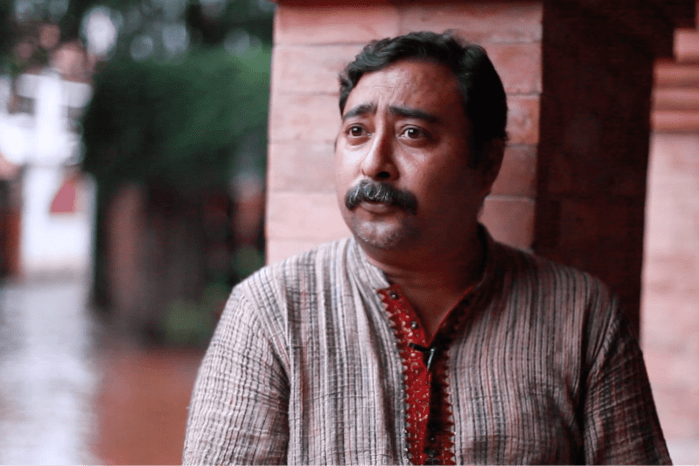
Julfikar is a human rights defender working in Bangladesh:

“When friends, well-wishers and colleagues frequently advise me to restrict my movement and leave my country for safety elsewhere, it becomes an indescribable mental pressure. I have been facing this reality for many years now, but it has intensified over the last one year as Bangladesh heads to the national election on December 30.

I have spent 28 years as a professional journalist. During this period, I have witnessed horrific political, religious violence, and brutal terror attacks in the name of Islam. I have investigated and covered many of those traumatic events and closely observed others. There are many more to investigate, but the situation is gradually becoming more difficult for people like me. 

In my career, I have exposed violations of human rights, religious persecution, atrocities, intimidation, war crimes of 1971 and criminal activities, abuse of law, corruption, hate campaign, propaganda and fake news on the social media with ill motives.

Continue reading “FoRB on the Frontlines: An atmosphere of self-censorship”

FoRB on the Frontlines: Under threat of violence

Nehemiah Thumbnail USE

In the run-up to Human Rights Day on 10 December and the 20th anniversary of the UN Declaration on Human Rights Defenders on 9 December, CSW has been speaking with HRDs across South Asia to find out what it means to be a FoRB defender in the region.

Nehemiah Christie is a human rights defender working in India:

“My experience as a human rights and FoRB defender in South India has worsened ever since the Modi government came to power. With the BJP relying on the backing of Hindu fundamentalist groups, the threat to minorities has increased, especially with regard to Christians in India. In Tamil Nadu, where I and many others work on the front line defending people’s right to freedom of religion and belief (FoRB), we have faced extreme hostility.

HRDs here have been shot, raped, and threatened by both state and non-state actors. Threats are often perpetuated by police and other authorities trying to silence our voices by labelling us as anti-national elements working against the interests of India. Continue reading “FoRB on the Frontlines: Under threat of violence”

Will the Surabaya church bombings serve as a wake-up call for Indonesia ahead of next year’s presidential elections?

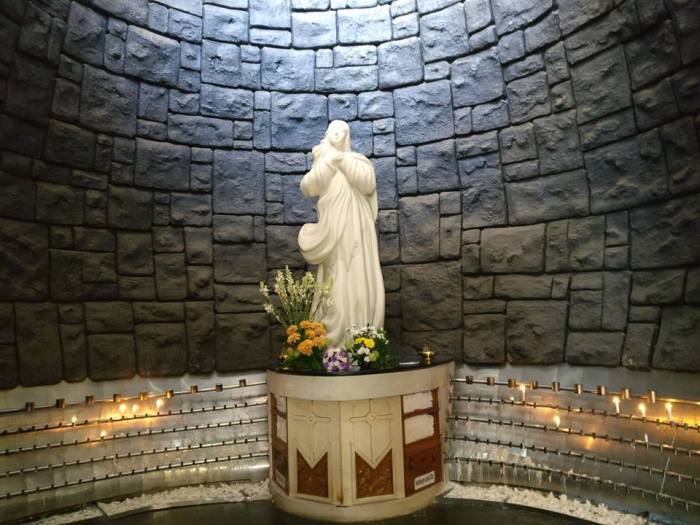
Father Aloysius Widyawan opened the door of an upstairs room in the Santa Maria Tak Bercela Catholic Church. “Three months ago, this room was completely filled with blood, body parts, teeth, even the faces of the bombers, strewn by the force of the blast,” he told me.

He pointed out windows that had been blown out, and the icons of St Luke and St John, damaged but not destroyed. He told me about the two young Catholic boys, Evan and Nathan, aged 12 and eight, who died as a result of their injuries. They had been baptized only two years before and had just received their first Communion. He described the Muslim security guard who lost both eyes and legs in the explosion, and later told the priest: “Please forgive me because I was not able to protect the church and the people, and am unable to work again.” Six people were killed and more than 30 injured in that one church alone.

Continue reading “Will the Surabaya church bombings serve as a wake-up call for Indonesia ahead of next year’s presidential elections?”

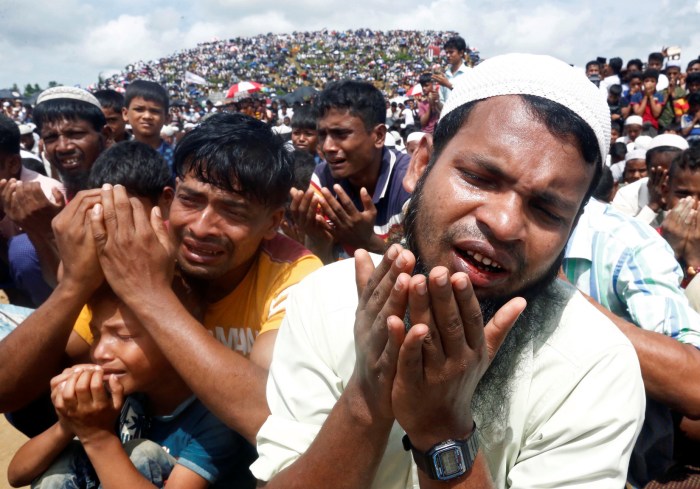
The Rohingya Crisis One Year On: Burma’s Work of Healing Cannot be Postponed Any Longer

On 25 August last year, the Burma army unleashed its attack on the Rohingya people of northern Rakhine state, precipitating the country’s most severe human rights and humanitarian crisis since independence in 1949. The United Nations’ outgoing High Commissioner for Human Rights, Zeid Ra’ad al-Hussein, described this crisis as “a textbook example of ethnic cleansing”, and the UN Special Rapporteur on human rights in Burma, Yanghee Lee, warned of “the hallmarks of genocide”. After the genocides in Rwanda and Srebrenica the world lamented with the words: “Never again”. But a year ago in Burma, “never again” happened all over again.

“They made it impossible for us to stay – how could we survive?”

In March this year, I travelled to the refugee camps on the Bangladesh-Burma border, to meet survivors. Almost everyone I talked to had seen loved ones killed and villages burned. Accounts of mass rape were widespread. I met Rohingyas whose eyes had been shot out and limbs blown off, and heard of others whose eyes had been gouged out, throats slit and limbs hacked off.

Continue reading “The Rohingya Crisis One Year On: Burma’s Work of Healing Cannot be Postponed Any Longer”

Never Again: Reflections on ten years since the Kandhamal Tragedy in India

In 2008, the Christians of Kandhamal District in Odisha state in India experienced the most severe outbreak of anti-Christian violence in the country’s history. The attacks claimed over 100 lives, forced 56,000 people to flee their homes and saw the destruction of 5,600 homes and 300 churches. Father Ajaya Kumar Singh, a survivor of the tragedy in Kandhamal, sought to equip himself with the ability to advocate for fellow survivors following the attacks, and has campaigned tirelessly for compensation and justice.

On the 10th anniversary since the outbreak of the attacks, Father Ajaya spoke to CSW about the current situation in Kandhamal, and about what can be done by both the government of India and the international community to help bring justice, and to ensure that an event like the one which took place in Kandhamal never happens again.

Continue reading “Never Again: Reflections on ten years since the Kandhamal Tragedy in India”