VIDEO: Religious Freedom in Cuba: The lived reality

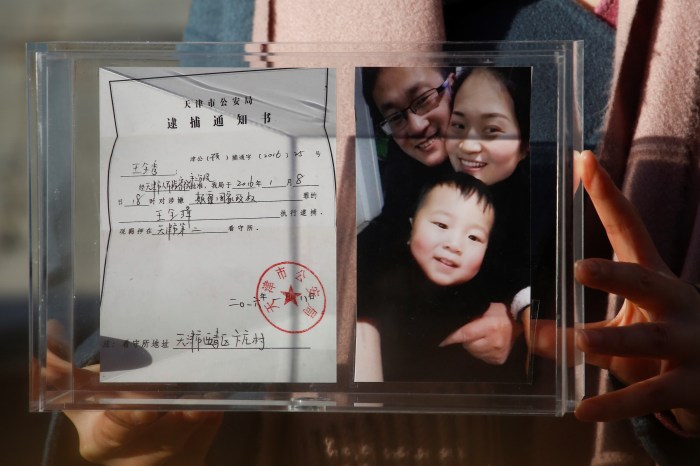
Marilín Alayo Correa is a Cuban pastor and a leader within the Apostolic Movement. Marilín is also married to Apostle Alain Toledano Valiente, who is one of the key leaders in the Apostolic Movement. As a result of their work, both Marilín and her husband have been extensively targeted by the Cuban authorities for over two decades.

Most recently, Marilín shared a video testimony with CSW reflecting on her family’s story and the situation for religious groups in Cuba nearly 15 years after CSW began documenting the family’s case. In the past year, her husband Alain has also been placed on a travel restriction list and is regularly summoned to appear at their local police station.

Continue reading “VIDEO: Religious Freedom in Cuba: The lived reality”

FoRB on the Frontlines: “We were ready for one of the family to be killed”

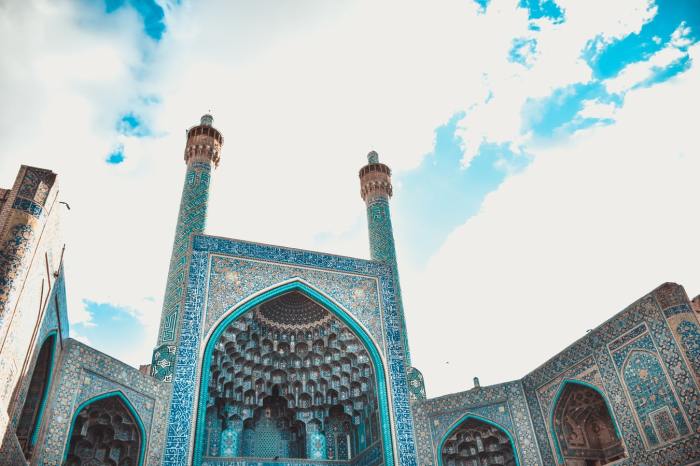
Dabrina Bet-Tamraz is an Iranian Christian human rights defender who currently resides in exile in Europe. In her home country, her entire family faces intense pressure from the Iranian government; her father, mother and brother have been charged with national security-related crimes for participating in everyday religious activities.

Dabrina has dedicated her life to advocating for her family and others like them facing persecution in Iran. She has raised their cases at the UN Human Rights Council in Geneva, as well as with President Donald Trump when she attended the second annual Ministerial to Advance Religious Freedom in the USA. In this interview she sheds light on her experiences as a young Christian in Iran, and on the current situation for her family and other Christians in the country.

“Growing up as a Christian in Iran, it was always obvious we were treated differently. Until I was about ten, the church experienced a decade of severe persecution. Pastors were being killed, churches were under massive pressure, and my parents were regularly taken in for interrogation.

When I was a teenager we were constantly under surveillance; we were bugged and there were spies in the church. It began to make us question everything everyone says. We didn’t know who we could trust.

Continue reading “FoRB on the Frontlines: “We were ready for one of the family to be killed””

The United Nations Human Rights Committee Unpacked

What is the Human Rights Committee?

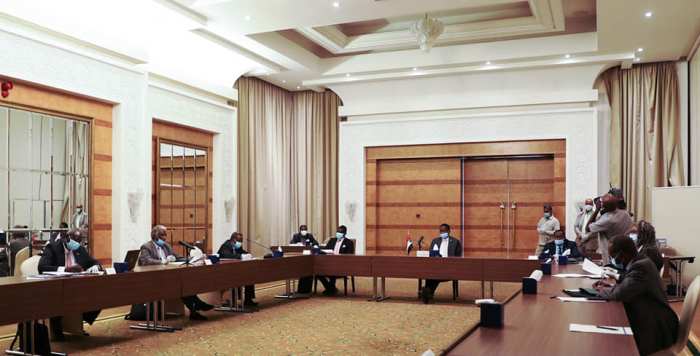
The United Nations Human Rights Committee (HRCttee) reviews the commitments of States to, and implementation of, the International Covenant on Civil and Political Rights (ICCPR). All States party to the ICCPR are required to report to this treaty body comprised of independent experts after the first year of acceding to the ICCPR, and then at regular intervals thereafter.

The State under review is supposed to report on how well it feels it has been implementing the Articles of the ICCPR. This report is examined by the HRCttee members alongside submissions from civil society actors before each review, after which the State is questioned on its human rights record and commitment to the ICCPR. Violations, cases of concern, and constitutional inconsistencies are among some of the issues highlighted by the Committee during its review.

Once the concerns have been addressed, a document outlining the Committee’s concluding observations, i.e. its concerns and recommendations to the State Party, is published.

Continue reading “The United Nations Human Rights Committee Unpacked”

Brexit is not a time for the UK to step back from the promotion and protection of freedom of religion or belief

As of 31 January, the UK has officially left the European Union, and while the exact nature of what a post-Brexit Britain will look like remains hotly debated, one thing is imperative: the UK must not relinquish its role as a leading voice in the promotion and protection of human rights around the world, including the right to freedom of religion or belief (FoRB).

According to a report published by the Pew Research Center in 2019, both government restrictions on religion and social hostilities motivated by religion saw a marked increase between 2007 and 2017. It is estimated that 52 governments impose “high” or “very high” restrictions on the right to FoRB, and that people experience high levels of social hostilities involving religion in 56 countries of the198 countries that were monitored.

Against this backdrop, it is vital that the UK demonstrates a firm commitment to protecting this right. The government must speak boldly when challenging FoRB violations, raise FoRB in multilateral fora and sufficiently resource the Foreign and Commonwealth Office to raise FoRB in bilateral and multilateral meetings.

Continue reading “Brexit is not a time for the UK to step back from the promotion and protection of freedom of religion or belief”

Abandoning human rights for identity politics in Sri Lanka

During an address to senior Buddhists leaders at the Vibhajjavadi Dhamma Symposium and Maha Tripitaka Pooja on 4 January, Prime Minister Mahinda Rajapaksa stated that the defence of the Buddhist order is central to ensuring unity and the protection of religious freedom of Sri Lankans who profess other faiths. Just one day prior, his brother, President Gotabaya Rajapaksa pledged his commitment before parliament to protect and nurture the Buddha Sasana as part of his government’s policy. In the Sri Lankan context this is often understood as the ‘physical bounds of the land consecrated by the Buddha.’ 

Buddhism is enshrined in the Constitution of Sri Lanka. Article 9 states: “The Republic of Sri Lanka shall give to Buddhism the foremost place and accordingly it shall be the duty of the State to protect and foster the Buddha Sasana,” while assuring the freedom of thought, conscience and religion to everyone. Furthermore, with a 2003 Supreme Court ruling which affirms that only Buddhism should be protected by the state, Sri Lanka established in law that there is no constitutional guarantee that other religions will receive similar protection.

Continue reading “Abandoning human rights for identity politics in Sri Lanka”