‘Faithful disobedience’ in the face of a relentless crackdown: one year since China’s Revised Regulations on Religious Affairs.

Over the past year, the Chinese government has intensified its crackdown on Christians and other religious groups across China.

The mass incarceration of over one million predominantly Muslim Uyghurs, Kazakhs and members of other ethnic groups in ‘re-education camps’ in Xinjiang since 2017 has alarmed the international community, with the detentions receiving UN condemnation. At the same time, Christians across China are also being relentlessly targeted by the Chinese state apparatus, with countless violations ranging from the arrest and torture of religious practitioners to the forced closure of places of worship remaining a daily reality for those peacefully exercising their universal right to freedom of religion or belief (FoRB).

Since the revised regulations on religious affairs came into effect on 1 February 2018, reports have emerged of the removal of over 7,000 crosses in Henan province alone. Christians in Henan have also reported that unregistered churches across the province have been forcibly shuttered by authorities. Outside of Henan, in the wake of the revised regulations authorities across China continue to harass worshippers and restrict religious observance at state-approved churches by removing religious symbols from buildings, banning under-18s from religious activities, and forcing churches to install cameras and sing pro-Communist songs.

Continue reading “‘Faithful disobedience’ in the face of a relentless crackdown: one year since China’s Revised Regulations on Religious Affairs.”
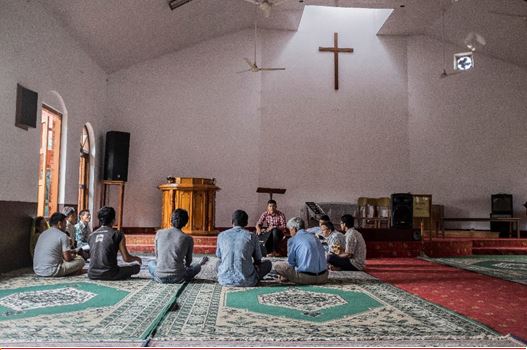
China’s Crackdown on Religion

“My family, relatives, friends and dozens of innocent people [I know] have been arrested since April 2017. I have no knowledge of how many more of our relatives have been arrested as we lost contact with them at the beginning of the year. They have not committed any crime… They are ordinary people… since then I have not heard from them and I am unsure about their safety.”

– Chinese Uyghur living overseas.

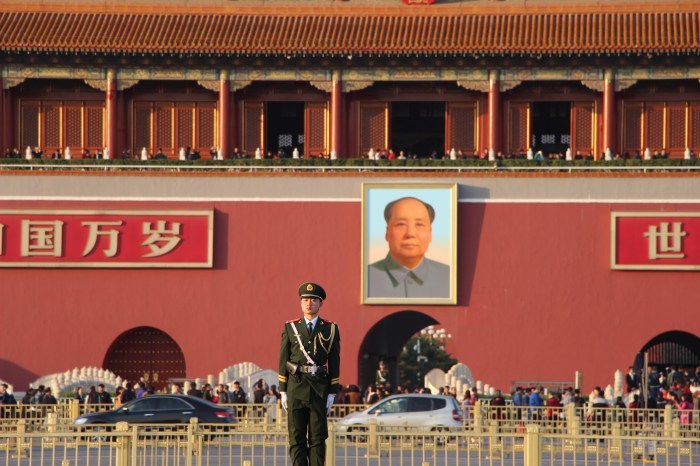
Faith groups in China are currently experiencing the most severe crackdown on religious freedom and human rights in decades. One of the worst sites of this crackdown is the Xinjiang Uyghur Autonomous Region (XUAR), where recent reports estimate that as many as three million Uyghurs, Kazakhs and members of other ethnic groups have been detained in political re-education camps without charge.

Ethnicity appears to be the principle driver of these detentions, however there is also a significant religious element. The majority of detainees are Muslim, and reasons for detention – when a reason is given – have often been connected to the practice of peaceful religious activities such as participating in communal religious services or accessing religious materials online.

The religious element is further demonstrated by the treatment of Muslims inside the camps. Witnesses report that detainees have been forced to renounce Islam and promise not to follow religion. Prisoners have also been forced to eat pork or drink alcohol, which goes against their religious beliefs.

Continue reading “China’s Crackdown on Religion”

Nepal’s criminalisation of conversion seems to protect Hinduism at the expense of other religions.

Three years on from the date that Nepal adopted its new constitution, there are concerns about its ‘anti-conversion’ clause, which seemed designed to specifically protect Hinduism at the expense of other religions.

The clause, in Article 26 (3) of the constitution, states:

“No person shall, in the exercise of the right conferred by this Article, do, or cause to be done, any act which may be contrary to public health, decency and morality or breach public peace, or convert another person from one religion to another or any act or conduct that may jeopardize other’s religion and such act shall be punishable by law.”

These provisions were strengthened in the Penal Code 2017 which came into force in August 2018. Section 158 states that “No person shall convert any one from one religion to another or make attempt to or abet such conversion”  and carries a punishment of up to five years imprisonment and a fine of up to fifty thousand rupees.

The criminalisation of conversion is a direct infringement on freedom of religion or belief as it robs individuals of the right to change their religion. These provisions also threaten the right to freedom of expression as they could be used to prohibit a range of legitimate expressions of religion or belief such as charitable activities or speaking about one’s faith.

Continue reading “Nepal’s criminalisation of conversion seems to protect Hinduism at the expense of other religions.”

Will the Surabaya church bombings serve as a wake-up call for Indonesia ahead of next year’s presidential elections?

Father Aloysius Widyawan opened the door of an upstairs room in the Santa Maria Tak Bercela Catholic Church. “Three months ago, this room was completely filled with blood, body parts, teeth, even the faces of the bombers, strewn by the force of the blast,” he told me.

He pointed out windows that had been blown out, and the icons of St Luke and St John, damaged but not destroyed. He told me about the two young Catholic boys, Evan and Nathan, aged 12 and eight, who died as a result of their injuries. They had been baptized only two years before and had just received their first Communion. He described the Muslim security guard who lost both eyes and legs in the explosion, and later told the priest: “Please forgive me because I was not able to protect the church and the people, and am unable to work again.” Six people were killed and more than 30 injured in that one church alone.

Continue reading “Will the Surabaya church bombings serve as a wake-up call for Indonesia ahead of next year’s presidential elections?”

Never Again: Reflections on ten years since the Kandhamal Tragedy in India

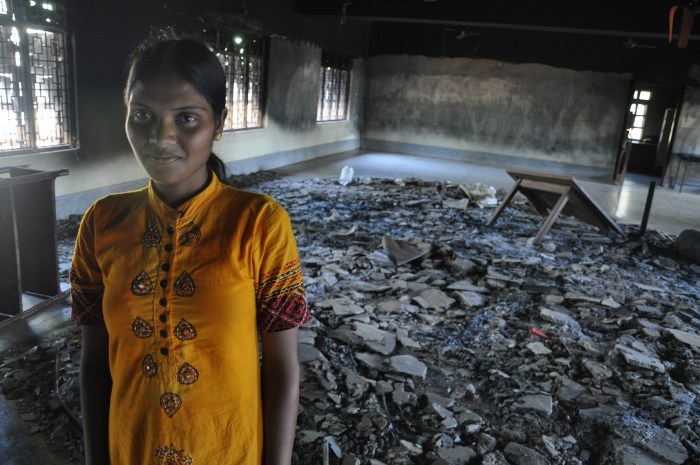
In 2008, the Christians of Kandhamal District in Odisha state in India experienced the most severe outbreak of anti-Christian violence in the country’s history. The attacks claimed over 100 lives, forced 56,000 people to flee their homes and saw the destruction of 5,600 homes and 300 churches. Father Ajaya Kumar Singh, a survivor of the tragedy in Kandhamal, sought to equip himself with the ability to advocate for fellow survivors following the attacks, and has campaigned tirelessly for compensation and justice.

On the 10th anniversary since the outbreak of the attacks, Father Ajaya spoke to CSW about the current situation in Kandhamal, and about what can be done by both the government of India and the international community to help bring justice, and to ensure that an event like the one which took place in Kandhamal never happens again.

Continue reading “Never Again: Reflections on ten years since the Kandhamal Tragedy in India”