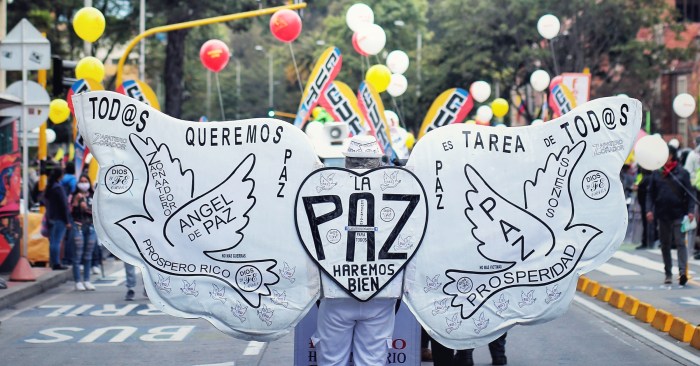
A pesar de las promesas del Gobierno, la «Paz Total» sigue siendo una utopía en Colombia

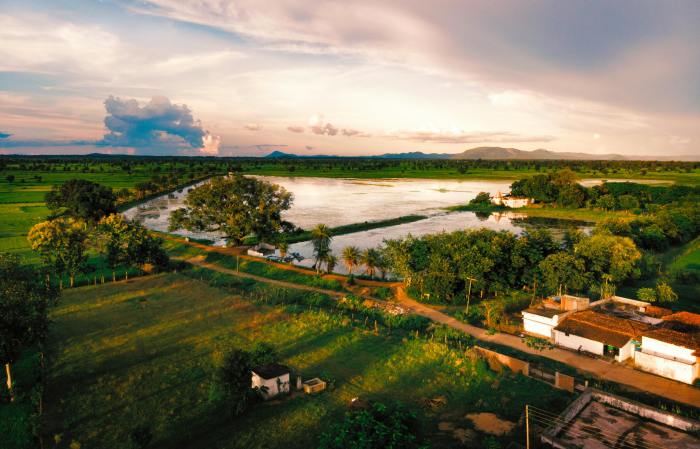
El 4 de abril, Maribel Silva, Isaíd Gómez y el tío de este, Carlos Valero, se dirigieron a acudir a una reunioón solicitada por un grupo armado ilegal que opera en el Municipio de Calamar, Departamento de Guaviare, Colombia. Al día siguiente, James Caicedo, Jesús Valero, Maryuri Hernández, Nixon Peñalosa y Óscar García hicieron lo mismo. 

Tras no regresar a sus hogares en el paraje de Agua Bonita, en Pueblo Seco, sus familiares contactaron a representantes del grupo armado ilegal que había emitido las citaciones, pero ellos negaron haberlas emitido. Posteriormente, se advirtió indirectamente a los familiares que debían dejar de buscar a sus seres queridos y «considerar el caso cerrado». 

Así, sus familias quedaron en el limbo, sumidas en la terrible incertidumbre de lo que les habría ocurrido, preguntándose si debían permanecer allí, aferrándose a la esperanza de que sus familiares regresaran a casa, o huir de la región por temor a represalias y por la seguridad y protección de la vida de los hijos y padres de las personas desaparecidas. Esas mismas ocho personas y sus familias se habían reubicado y establecido en Guaviare tras ser desplazadas del Departamento de Arauca debido a la violencia y las graves violaciones a la libertad de religión o de creencias, incluyendo el cierre de iglesias y los ataques contra pastores protestantes, por parte de grupos armados y criminales ilegales durante la última década. 

Continue reading “A pesar de las promesas del Gobierno, la «Paz Total» sigue siendo una utopía en Colombia”
How the education system perpetuates religious intolerance in Pakistan, and how it could be a route to change 

‘No one is born hating another person because of the colour of his skin, or his background, or his religion. People must learn to hate.’ 

These oft-quoted words of Nelson Mandela have proven all too true in far too many contexts throughout human history, as indeed they do in a very literal sense in Pakistan today. 

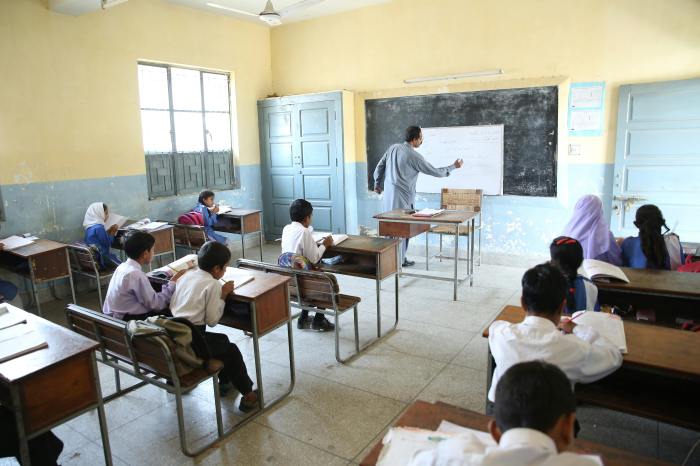
While hatred can be ‘learned’ in many ways – from one’s family, or cultural background, or even from negative experiences with the object of said hatred – in Pakistan the teaching of hatred, specifically religious intolerance, is embedded in various forms into the very fibre of the country’s education system. 

Continue reading “How the education system perpetuates religious intolerance in Pakistan, and how it could be a route to change “

Pastor Rudy Palacios Vargas dared to speak out against injustice in Nicaragua. For that he has been labelled a murderer and a terrorist. 

On the evening of Thursday 17 July, armed police officers – some in uniform and others dressed in black or blue and with their faces covered – arrived in a coordinated operation at the homes of Pastor Rudy Palacios Vargas and several of his friends and family in Jinotepe Municipality, Carazo Department, Nicaragua. 

The police, who did not show any arrest warrants, broke down the doors of each house using their rifle butts and a tool called a ‘pig’s foot’ before proceeding to arrest Pastor Palacios Vargas, his sister Jéssica Palacios Vargas and brothers-in-law Pedro José López and Armando José Bermudez. Mauricio Alonso Petri, a political activist and friend of the pastor, and his adult son of the same name, who is a part of the worship team at Pastor Palacios Vargas’ church were detained as well. Family friend Olga María Lara Rojas, a former political councillor, who is a Protestant Christian but not a member of Pastor Palacios Vargas’ church, was also arrested at her home. 

The officers confiscated the detainees’ cell phones and other electrical devices and were reported to have taken them to the 3rd Police District, though the authorities initially refused to provide their family members with any information as to their whereabouts. 

Continue reading “Pastor Rudy Palacios Vargas dared to speak out against injustice in Nicaragua. For that he has been labelled a murderer and a terrorist. “

El Pastor Rudy Palacios Vargas se atrevió a denunciar las injusticias en Nicaragua. Por ello, ha sido acusado de asesinato y terrorismo. 

En un operativo coordinado la noche del jueves 17 de julio, policías armados —algunos uniformados, otros vestidos de negro o azul y con el rostro cubierto— llegaron simultáneamente a la casa del Pastor Rudy Palacios Vargas y las casas de sus amigos y familiares en el municipio de Jinotepe, departamento de Carazo, Nicaragua.   

La policía, que no mostró ninguna orden de arresto, derribó las puertas de cada casa con las culatas de sus rifles y con una herramienta llamada “pata de cerdo”.  De inmediato arrestaron al Pastor Palacios Vargas, a su hermana Jéssica Palacios Vargas y sus cuñados Pedro José López y Armando José Bermúdez Mojica. También fueron arrestados Mauricio Alonso Petri, activista político y amigo del pastor, y su hijo adulto del mismo nombre, quien forma parte del grupo de alabanza de la iglesia del Pastor Palacios Vargas. Olga María Lara Rojas, cristiana protestante, no miembro de la iglesia del pastor Palacios Vargas, pero amiga de la familia y exconsejera política, también fue detenida en su domicilio. 

 Los agentes confiscaron los teléfonos celulares y otros dispositivos eléctricos de los detenidos y, según se informó, los llevaron al Tercer Distrito Policial, aunque inicialmente las autoridades se negaron a proporcionar a sus familiares información sobre su paradero. 

Continue reading “El Pastor Rudy Palacios Vargas se atrevió a denunciar las injusticias en Nicaragua. Por ello, ha sido acusado de asesinato y terrorismo. “

Where justice fails: How cultures of impunity lead to forced displacement in India and Mexico

On 11 June the families and loved ones of Neelkant and Pushpa Verma gathered for what should have been a day of celebration. The young Christian couple were due to marry in Raipur in India’s Chhattisgarh State, no doubt filled with excitement at what should have been one of the happiest days of their lives, and all the joy to follow in the years to come. 

But this excitement was cut short when three villagers in in their early twenties stormed the wedding venue, cutting off the electricity supply and declaring that Christians were not allowed to hold celebrations in the village. When Neelkant’s family attempted to contact the electricity board, over 30 villagers gathered outside of the venue, vandalising guests’ vehicles and setting the building on fire.  

The mob proceeded to hurl abuse at the women and tear some of their sarees. When the women’s children tried to defend their mothers, they were pelted with stones and forced to seek refuge in a nearby house. Once the victims were inside, they called the police who arrived quickly and escorted them to safety, managing to disperse the attackers.  

Continue reading “Where justice fails: How cultures of impunity lead to forced displacement in India and Mexico”