India’s general election: The church in Jharkhand under direct attack by the state government

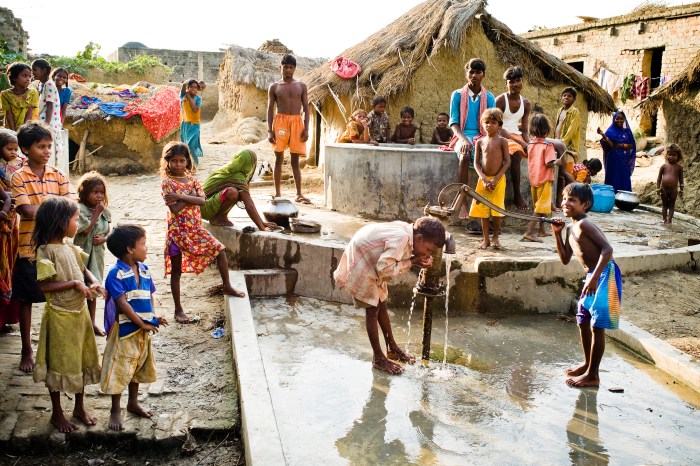
In the lead up to India’s elections from 11th April-19th May, CSW is focusing on some of the issues faced by religious minorities in the country.

Last month, CSW’s South Asia Team Leader detailed the anti-conversion narratives that are often used to fuel religious intolerance. In this post, a guest contributor from Jharkhand state, whose name has been kept anonymous for security purposes, outlines the spread of hate speech by government officials in the state:

“On 11 August 2017 the front page of all newspapers in Jharkhand published an advertisement sponsored by the state government with a photograph of Jharkhand Chief Minister Shri Raghuvar Das and Mahatma Gandhi which misused the statement of Shri Mahatma Gandhi claiming that “If Christian missionaries feel that only conversion to Christianity is the path to salvation, why don’t you start with me or Mahadev Desai? Why do you stress on conversion of the simple, illiterate, poor and forest-dwellers? These people can’t differentiate between Jesus and Mohammad and are not likely to understand your preachings. They are mute and simple, like cows. These simple, poor, Dalit and forest-dwellers, whom you make Christians, do so not for Jesus but for rice and their stomach.”

“There is enough place in state prison for all the pastors and preachers if they continue to carry out missionary activity in the state.”

Continue reading “India’s general election: The church in Jharkhand under direct attack by the state government”

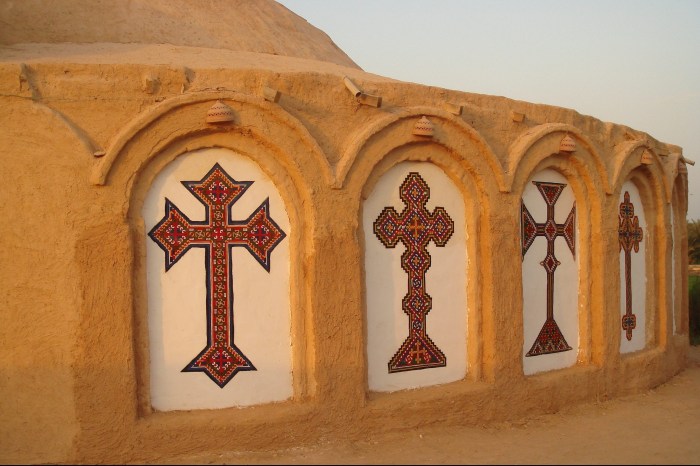
Long read: The history of religious persecution in Egypt

In November 2018, seven Coptic Christians were killed and 18 injured when terrorists attacked the bus they were travelling in to visit the Monastery of Anba Samuel the Confessor in Minya, Upper Egypt. The attack took place in the same location where 28 Coptic Christians were killed and 23 injured less than 18 months previously by masked gunmen who opened fire on the vehicles they were travelling in.

These violent attacks are part of a wider, longer term pattern of religious discrimination and persecution faced by Egypt’s Coptic community. The term ‘persecution’ is not used lightly; according to the Rome Statute of the International Criminal Court, persecution is ‘the intentional and severe deprivation of fundamental rights contrary to international law by reason of the identity of the group or collectivity.’

In order to understand the root causes of religious persecution in contemporary Egypt, it is important to examine the ideological, socio-political and cultural factors that have historically underpinned the persecution of religious minorities in the country.

Continue reading “Long read: The history of religious persecution in Egypt”

India’s general election: the politics of religious conversion in pursuit of a Hindu Rashtra

As India approaches the Lok Shaba (parliamentary) election this year, the right-wing Hindu organisation, Rashtriya Swayamsevek Sangh (RSS) and its affiliates (collectively known as the Sangh Parivar) are likely to take stock of their progress in realising their dreams of making India a Hindu Rashtra (Nation).

Constructed on M.S Golwakar’s ideology that since time immemorial, ‘mother India’ was formed of ‘one culture, one religion,’ the RSS pursues a narrative that the Hindu has fallen ‘victim’ to foreign religions, namely Islam and Christianity, and that the protection of the ‘faithful’ is imperative.

Continue reading “India’s general election: the politics of religious conversion in pursuit of a Hindu Rashtra”

Venezuela: “If we, as Christians who yearn to live in justice, look at the reality of our nation, we cannot remain silent.”

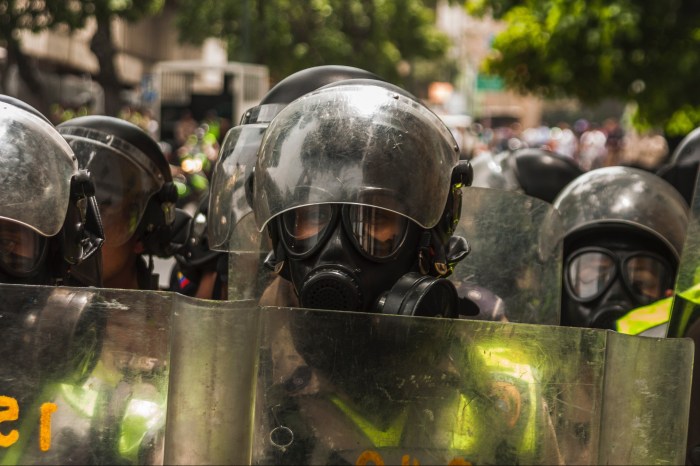
A young church leader is unwittingly caught up in a security dragnet, arrested, falsely accused and imprisoned. Another church youth leader is shot and killed when security forces open fire on peaceful protestors. In the same country, the military surrounds a cathedral where over a thousand peaceful protestors have sought refuge after fleeing tear gas and violence at the hands of security forces.

What is happening in Venezuela today shows how religious groups can become caught up in larger political movements, sometimes despite their best efforts to remain neutral and disengaged from politics.

Once religious groups find themselves in situations like these they can be forced out of their neutrality, putting them in opposition to powerful forces; this in turn can lead to violations of freedom of religion or belief (FoRB) as the authorities crack down on what they perceive to be rebellious religious groups.

Continue reading “Venezuela: “If we, as Christians who yearn to live in justice, look at the reality of our nation, we cannot remain silent.””

FoRB on the Frontlines: Fighting for freedom as long as it’s necessary

The Ladies in White are a Cuban peaceful protest movement comprising the wives and other female relatives of jailed dissidents. Last year CSW interviewed their leader, Berta Soler, about her experiences, and the challenges facing Cuba:

“My activism really got started in 2003 when the government took [imprisoned] 75 men and one woman just because they defended the Declaration of Human Rights.

I and the other Ladies in White are women who are prepared, very well prepared, and aware that we are in a struggle for the freedom of political prisoners and for respect for human rights in my country. And we, the Ladies in White and I, are very conscious that in my country we need freedom and rights, especially for the men and women who are in prison just for demanding this and promoting and defending the Universal Declaration of Human Rights.

Continue reading “FoRB on the Frontlines: Fighting for freedom as long as it’s necessary”