All posts

Following Biblical mandates carries a high price for religious leaders in Mexico

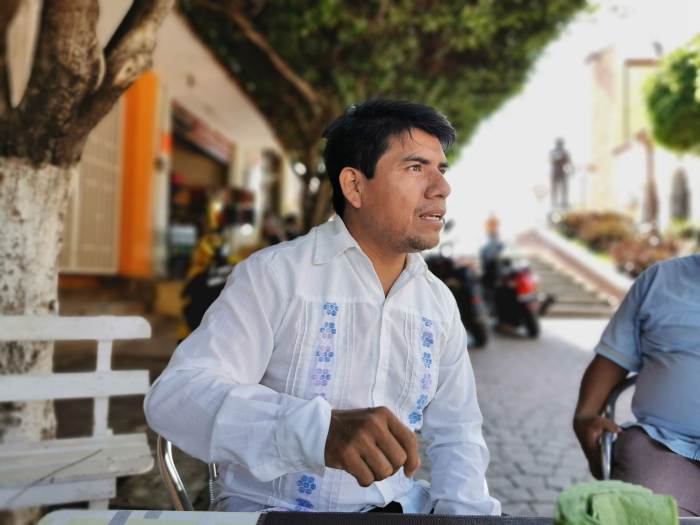
A religious leader and his colleague are kidnapped from a migrant shelter; they have not been seen or heard from since. Another is assaulted, extorted and threatened at gunpoint. Both provided protection to migrants and asylum seekers trapped on the border. In the same country, religious leaders warn that threats and attacks against them constitute one of the most serious problems facing churches today. Ironically, all this is taking place in what is considered to be one of the most religious countries in the world, Mexico.

The worsening situation for migrants and asylum seekers passing through Mexico has been exacerbated by the implementation of the US’ Migrant Protection Program (MPP) also known as ‘Remain in Mexico’ at the start of 2019.[1] The policy has made it increasingly difficult for migrants to win asylum cases in the US, only 0.1% of cases have been successful, and many have sought refuge in church-run migrant shelters across Mexico while they wait, especially at the northern border. On 28 February 2020, a US federal appeals court ruled that that the Remain in Mexico policy was illegal.

While many Protestant and Catholic leaders have responded to the rising levels of need in an outworking of their faith by following commands to help the poor,[2] shelter the homeless,[3] and love the foreigner,[4] their work makes them increasingly exposed to threats and attacks from organised criminal groups who prey on the vulnerable migrant population.
Continue reading “Following Biblical mandates carries a high price for religious leaders in Mexico”

“No one is immune from the roundups”: Life for Uyghurs in China’s Xinjiang region

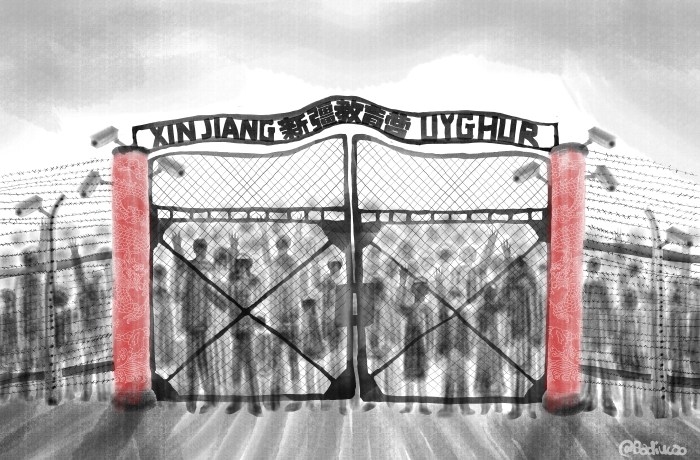
China’s Xinjiang Uyghur Autonomous Region is currently witnessing an unprecedented human rights crisis in which between one and three million predominantly Muslim Uyghurs, Kazakhs and members of other ethnic minorities have been detained without charge or trial in so-called ‘re-education camps.’ The following blog post is written by an expert on Uyghur culture and sheds light on what life is like for those inside the region.

“Imagine a world where your every movement is watched. Where who you meet, who you visit, and even what you talk about is monitored. Where you can be hauled off a bus mid-journey or dragged out of your car at a checkpoint, where your belongings, your identity, your face, your fingerprints and your irises are scanned several times a day, and where the contents of your phone could send you to prison for the rest of your life.

This is the new reality for more than 10 million Uyghurs (pronounced Weega) in China’s north-west Xinjiang province, since the former governor of Tibet, Chen Quanguo was summoned to take over the helm of, in the eyes of Xi Jinping and the Chinese Communist Party, China’s second most problematic province in 2017.

Continue reading ““No one is immune from the roundups”: Life for Uyghurs in China’s Xinjiang region”

VIDEO: Religious Freedom in Cuba: The lived reality

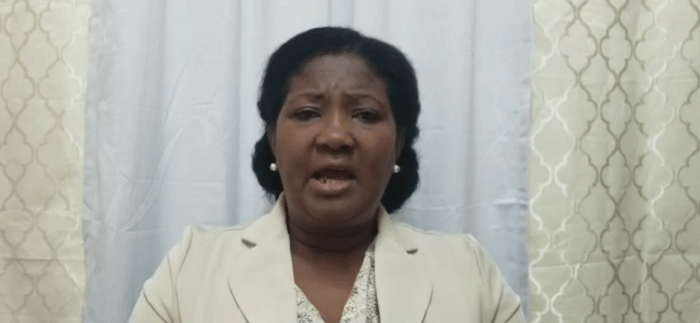
Marilín Alayo Correa is a Cuban pastor and a leader within the Apostolic Movement. Marilín is also married to Apostle Alain Toledano Valiente, who is one of the key leaders in the Apostolic Movement. As a result of their work, both Marilín and her husband have been extensively targeted by the Cuban authorities for over two decades.

Most recently, Marilín shared a video testimony with CSW reflecting on her family’s story and the situation for religious groups in Cuba nearly 15 years after CSW began documenting the family’s case. In the past year, her husband Alain has also been placed on a travel restriction list and is regularly summoned to appear at their local police station.

Continue reading “VIDEO: Religious Freedom in Cuba: The lived reality”

FoRB on the Frontlines: “We were ready for one of the family to be killed”

Dabrina Bet-Tamraz is an Iranian Christian human rights defender who currently resides in exile in Europe. In her home country, her entire family faces intense pressure from the Iranian government; her father, mother and brother have been charged with national security-related crimes for participating in everyday religious activities.

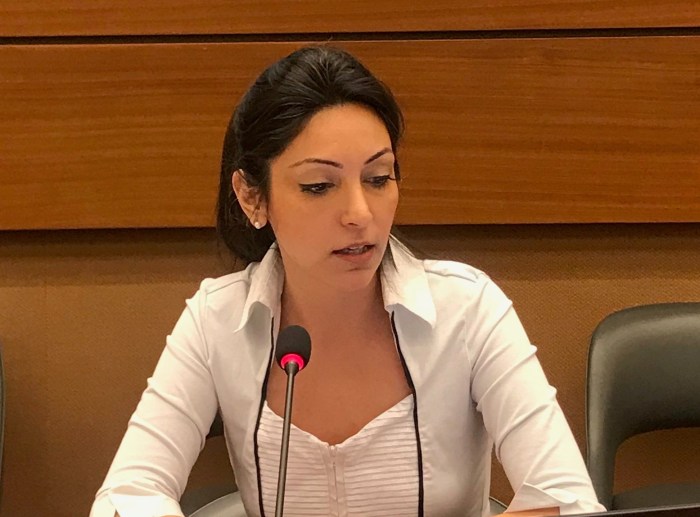
Dabrina has dedicated her life to advocating for her family and others like them facing persecution in Iran. She has raised their cases at the UN Human Rights Council in Geneva, as well as with President Donald Trump when she attended the second annual Ministerial to Advance Religious Freedom in the USA. In this interview she sheds light on her experiences as a young Christian in Iran, and on the current situation for her family and other Christians in the country.

“Growing up as a Christian in Iran, it was always obvious we were treated differently. Until I was about ten, the church experienced a decade of severe persecution. Pastors were being killed, churches were under massive pressure, and my parents were regularly taken in for interrogation.

When I was a teenager we were constantly under surveillance; we were bugged and there were spies in the church. It began to make us question everything everyone says. We didn’t know who we could trust.

Continue reading “FoRB on the Frontlines: “We were ready for one of the family to be killed””

The United Nations Human Rights Committee Unpacked

What is the Human Rights Committee?

The United Nations Human Rights Committee (HRCttee) reviews the commitments of States to, and implementation of, the International Covenant on Civil and Political Rights (ICCPR). All States party to the ICCPR are required to report to this treaty body comprised of independent experts after the first year of acceding to the ICCPR, and then at regular intervals thereafter.

The State under review is supposed to report on how well it feels it has been implementing the Articles of the ICCPR. This report is examined by the HRCttee members alongside submissions from civil society actors before each review, after which the State is questioned on its human rights record and commitment to the ICCPR. Violations, cases of concern, and constitutional inconsistencies are among some of the issues highlighted by the Committee during its review.

Once the concerns have been addressed, a document outlining the Committee’s concluding observations, i.e. its concerns and recommendations to the State Party, is published.

Continue reading “The United Nations Human Rights Committee Unpacked”