Uncertainty for Religious Minorities as Nepal Celebrates First Anniversary of its Constitution.

Notes to Editors: The eight Christians in Charikot, eastern Nepal were acquitted of all charges on 6 December 2016


“For the last two years we have been unsure about how long the doors will be open for us to practise our faith freely. We were not expecting this level of harassment”. Tanka Subedi, Christian leader and human rights defender, Kathmandu, Nepal

On 21 September, eight Christians in Charikot, eastern Nepal will attend their next (and possibly final) court hearing – one day after Nepal marks the first anniversary of the promulgation of its long awaited constitution. They all face charges of attempting to convert children to Christianity through the distribution of a comic book which explains the story of Jesus.

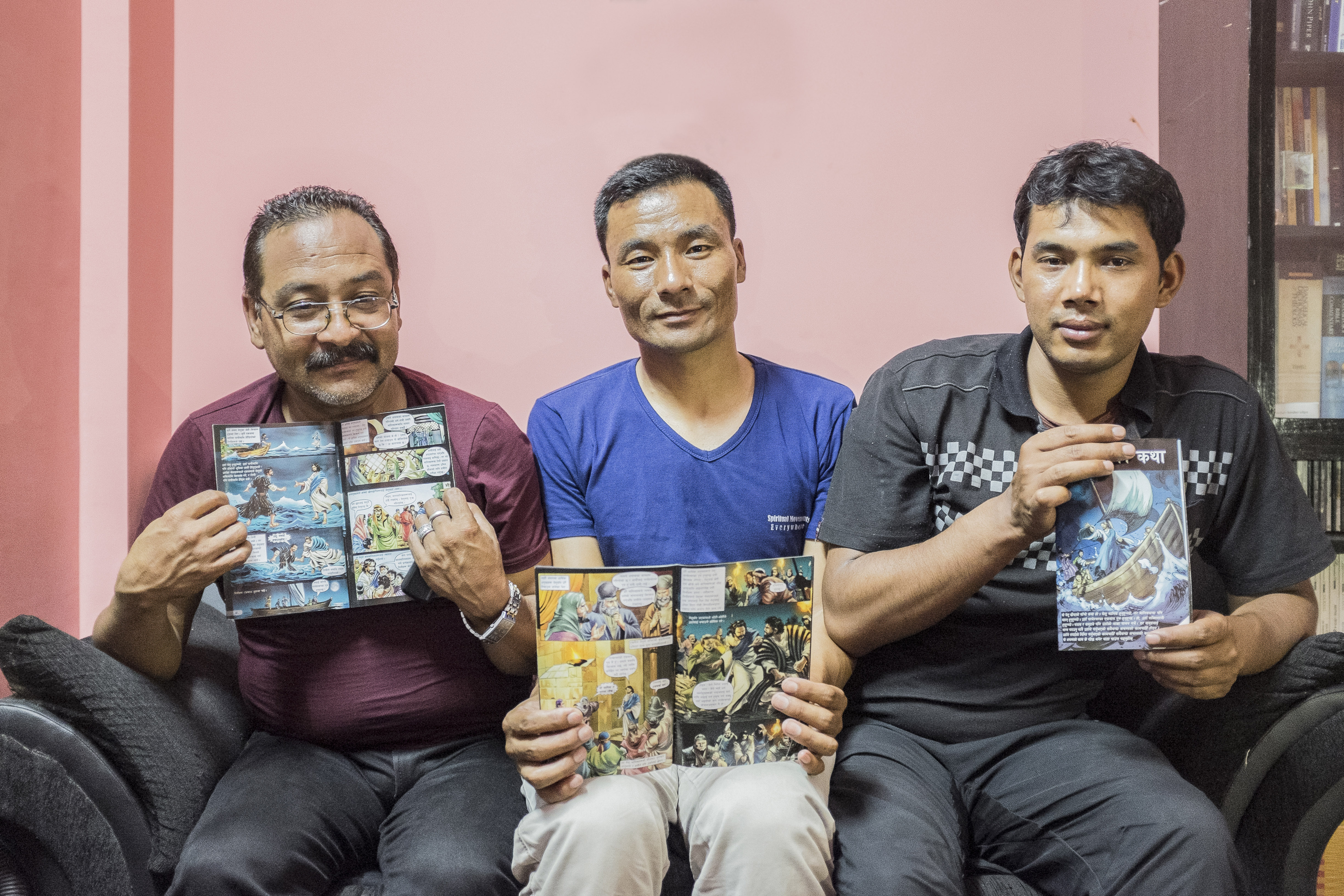
Bimal Shahi, Prakash Pradhan and Shakti Pakhrin of the Charikot group spent together 9 days in jail accused of illegal conversation because of the distribution of a small pamphlet "The Great story" with the story of Jesus explained for children
Bimal Shahi, Prakash Pradhan and Shakti Pakhrin from Charikot holding copies of “The Great Story”comic book. Photo Credit: Giulio Paletta/CSW 2016, Nepal

The arrests took place in June 2016, following two trauma counselling sessions organised by Teach Nepal, a Kathmandu-based non-governmental organisation (NGO). The sessions sought to address the psychological needs of children affected by the earthquakes that hit Nepal in April 2015 and were held on 8 and 9 June in two schools in Charikot: Modern Nepal School and Mount Valley Academy. When they finished, the organisers distributed a small gift pack to the children, which included a handkerchief and a 23-page comic book entitled The Great Story.

Continue reading “Uncertainty for Religious Minorities as Nepal Celebrates First Anniversary of its Constitution.”

In the Lead up to the G20 Summit, Questions Must be Asked About the Direction China is Taking.

When leaders of the G20 nations arrive in Zhejiang Province, China, next week for the G20 summit, they will be greeted by a different skyline than they might have seen five years ago.

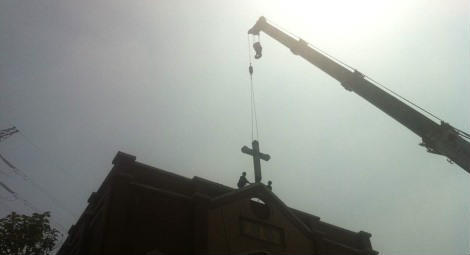
The sky scrapers and shopping malls that have become the hallmark of China’s phenomenal economic growth will still be there, but the bright red Christian crosses which were once just as much a feature of Zhejiang have been taken down.

Removal of crosses in Zhejiang Province

Hundreds of crosses have been removed by the authorities since early 2014, as part of a campaign allegedly introduced to rid the province of structures which violate building regulations. Under draft regulations, crosses now have to be flat against outer walls, and their size and colour are restricted. The authorities have sometimes employed violent tactics in the face of protests by church members. Christian leaders who have opposed the cross removals through letters or peaceful gatherings have been arrested and accused of economic crimes.

It may be no coincidence that the site of the cross removal campaign is the same province selected to host the G20.

Continue reading “In the Lead up to the G20 Summit, Questions Must be Asked About the Direction China is Taking.”

Remembering Kandhamal: a legacy of institutional failure

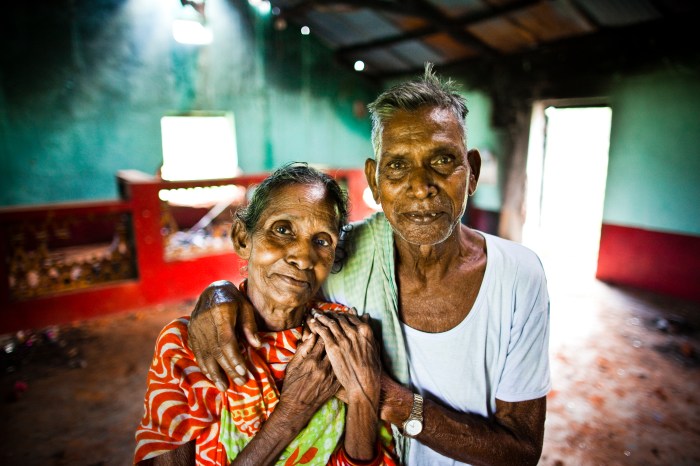
Featured image: Minasi (75) and his wife Sartabati (68) have seen their church in Mukundipur village attacked on five occasions, in 1966, 1975, 1998, 2007 and 2008. They said they did not think they could cope with another attack. Gajapati District, Orissa. Marcus Perkins/CSW 2009.

25 August 2016 is the eighth anniversary of India’s worst instance of communal violence against Christians. Many of the victim-survivors in Kandhamal, Odisha State, continue to wait for justice.

It is estimated that over 90 people were killed, 600 villages ransacked and 5,600 houses looted and burned in the 2008 attack. Approximately 54,000 people were left homeless, while 295 churches and places of worship were destroyed. Furthermore, an estimated 13 schools, colleges and philanthropic institutions for the sick were looted and burned. Approximately 2,000 Christians were forced to renounce their faith during the violence and 10,000 children were robbed of their education.

At every stage, the response of government, law enforcement and the criminal justice system to this tragedy has been woefully inadequate, undermining justice for the victim-survivors.

Continue reading “Remembering Kandhamal: a legacy of institutional failure”

The Lawyers That Were Left

It has been a year since over 300 human rights lawyers, activists, as well as those connected to them (including their friends and family), were detained by the Chinese government. That’s equivalent to one person harassed or disappeared every day since last July. Some of these lawyers have since vanished into China’s prison system. Others were released, but have lived with the threat of re-arrest hanging over them ever since.

Continue reading “The Lawyers That Were Left”

Interview with a Sri Lankan Human Rights Advocate – Part 1

Patterns of discrimination against religious minorities

CSW spoke to a human rights advocate in Sri Lanka whose identity for security reasons has been withheld. This post has been edited for clarity.

Q: Could you comment on religious extremism in Sri Lanka?

A: A recent surge of religious extremism in Sri Lanka began sometime in 2012 during the tenure of the previous government, with the emergence of extremist groups such as Bodu Bala Sena (Buddhist Force Army), or the Sinhala Ravaya, or Hela Bodu Pawura. These groups emerged after the ethnic war, which ended in May 2009. These extremist groups led violent attacks against religious minorities. Most violent attacks were led with impunity and tacit approval. The judiciary was also very much biased.

For example, there was one particular case that was filed against the General Secretary of the Bodu Bala Sena. There was video-document evidence submitted in the High Court of Colombo in that particular case. Even after video evidence was submitted, the General Secretary was released, and the case came to a settlement. The video evidence was not taken into consideration by the court – and this is the High Court of Colombo. That was [how] the situation used to be in Sri Lanka. These Buddhist extremist groups also led a lot of hate campaigns, against Muslim minorities as well. They also used the media as a tool to lead these hate campaigns. And even when they led violent attacks, they also used media to portrayed a biased attitude of the minority victim who actually got attacked rather than the perpetrators themselves.

Continue reading “Interview with a Sri Lankan Human Rights Advocate – Part 1”